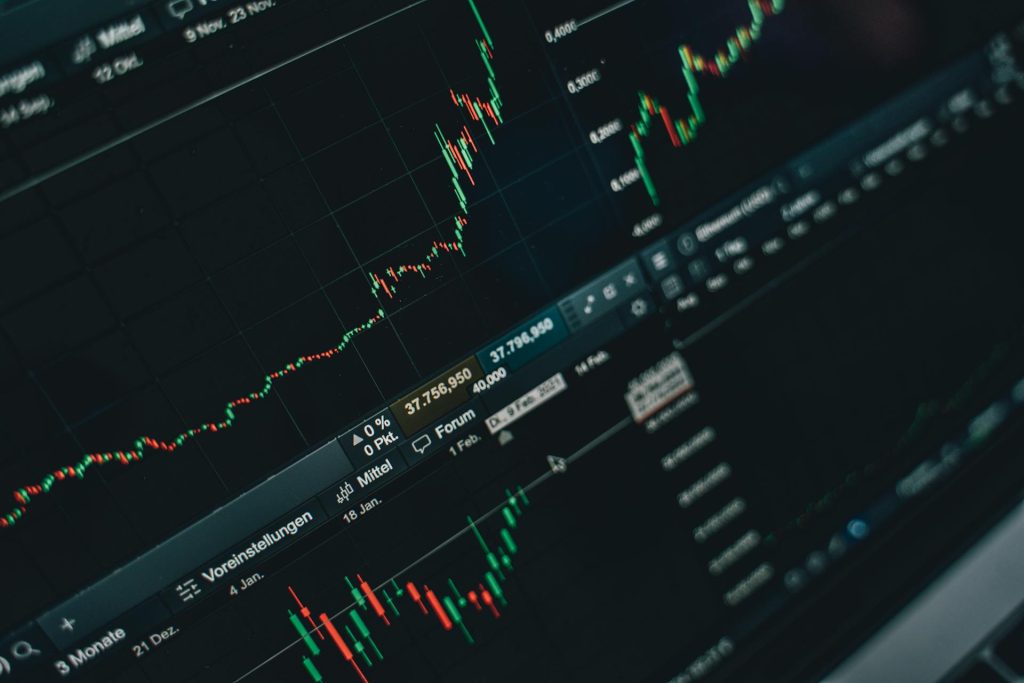
It’s after market close on Friday, and on the trading desks of the major Wall Street banks, a new term has established itself this week: NACHO. It stands for “Not A Chance Hormuz Opens.” The acronym is a direct variation of the famous “TACO Trade” from 2024 (“Trump Always Chickens Out”), which describes trader bets against Trump’s public promises. The story is this: while Donald Trump claims daily in his press conferences that the Strait of Hormuz is “practically open” and the Iran conflict “under control,” professionals are positioning themselves in exactly the opposite direction. They’re buying oil calls. They’re shorting energy-sensitive stocks. They’re building defensive portfolios. NACHO is a $2 trillion bet that the next 60 days will be politically and economically more brutal than the broader market assumes. Here’s why.
What’s Really Happening in the Strait of Hormuz
Trump’s statements over the past 7 days have told three different versions. Monday: “The strait is open, ships are passing through.” Thursday: “There were small skirmishes, all under control.” Today: “Iran will yield in the coming days.” This rhetorical volatility masks operational realities. Insurance premiums for Hormuz transits have jumped this week from 0.8 percent to 4.2 percent of vessel value. Shipping companies like Maersk and MSC have already rerouted 40 percent of their Hormuz routes — via the Bab el-Mandeb Strait or the Cape of Good Hope. These reroutes extend transit times by 15-25 days and increase container transport costs by 30-45 percent.
Concretely: while Trump says “the strait is open,” it’s operationally 60 percent closed. Tankers and LNG carriers passing through Hormuz today are primarily those with U.S. Navy escort or Iranian political clearance. Real civilian traffic — containers, bulk carriers, smaller tankers — has shifted to alternative routes. That’s not an “open strait.” That’s an operational embargo that’s being politically denied.
How the NACHO Trade Is Structured
The NACHO Trade has three components. Component one: long Brent crude futures with strike 110-130 dollars for July 2026 settlement. At current Brent of $100.87, that’s a bet on 9-29 percent rise in 60 days. Traders are paying currently about 4-6 dollars per barrel for options — cheap, because the market is pricing in “Iran peace.” If Hormuz remains actually closed for 30+ days, these options go in-the-money with 50-200 percent return.
Component two: short positions on airlines and consumer cyclicals. Lufthansa, Delta, IAG, American Airlines — all massively dependent on fuel costs. If Brent goes to $130, these stocks lose 15-25 percent. Consumer cyclical stocks like Whirlpool (already -21% this week) and Snap (already -8.5%) already show the effect. Lululemon, Macy’s, Best Buy are the next candidates.
Component three: long gold and defense stocks. Gold jumped 4.4 percent today — an unusual movement in a risk-on phase. Lockheed Martin, Northrop Grumman, RTX remain safely priced. NACHO traders use these as hedges in case escalation becomes real instead of just theoretical.
Why the Bulls Win — If NACHO Is Wrong
What’s remarkable about the NACHO Trade is its asymmetry. If Hormuz actually normalizes in the next 30 days, NACHO traders lose 100 percent of their option premiums. With a 4-dollar option on a $100 position, that’s 4 percent loss — manageable. If Hormuz stays closed for 60+ days and Brent goes to $130, they gain 30 percent or more. That’s a 1:7 asymmetry ratio. Even at 30 percent probability, that’s mathematically a good trade.
This math explains why the trader community is betting on NACHO. They’re not betting that Trump fails — they’re betting that the asymmetry is good. Even if Trump succeeds, the loss is small. If he fails, the gain is massive. That’s Trading Psychology 101.
The TACO Predecessor and What It Teaches Us
To understand NACHO, you have to know TACO. The TACO Trade emerged in 2024 as a Wall Street observation: Trump announces drastic measures (tariffs, sanctions) but regularly retracts them under pressure. “Trump Always Chickens Out.” The TACO Trade boiled down to betting against Trump’s public threats. On tariff threats in 2024, the S&P kept rising because traders knew: Trump would back down.
NACHO is not TACO. NACHO is the anti-thesis. With Iran, the situation is reversed: Trump promises peace, but operational realities contradict. NACHO traders are betting that reality is stronger than rhetoric. It’s a bet against Trump’s narrative, not for it.
What This Means for the S&P 500
If NACHO is right, the S&P 500 will correct 5-8 percent over the next 60 days. That’s not a crash — that’s a healthy correction after 6 weeks of all-time highs. The biggest losers would be semiconductor stocks (Nvidia, AMD, Broadcom) due to high valuations, consumer cyclical stocks due to fuel costs, and airlines.
The biggest winners: energy stocks (Exxon, Chevron, ConocoPhillips), defense stocks, gold/silver, and perhaps surprisingly utilities if power prices co-escalate. Bond markets would react mixed — under stagflation yields rise, under growth concerns they fall.
The CPI Wednesday — The Litmus Test
Wednesday at 8:30 AM Eastern Time the April CPI comes. Consensus expects 3.9 percent — a rise from 3.3 percent in March. That would be the largest monthly rise since 2022. If the number comes in even higher — say 4.2 or 4.3 percent — it confirms NACHO. The energy shock has reached consumer price levels, the Fed must decide between inflation fighting and growth support.
If the number comes lower — say 3.7 percent — NACHO is temporarily wrong. The Hormuz situation hasn’t yet produced full inflation effects, the market can keep rising. But: that would only be a temporary pause. Longer Hormuz closure would only show in May CPI, published mid-June.
The China Summit May 14-15 as Unwritten Deadline
Traders are using the Trump-Xi summit in Singapore on May 14-15 as an unspoken deadline. If the Hormuz situation isn’t resolved by the summit, that signals to markets: “long crisis, no quick end.” A correction wave would then strip 5-8 percent from the S&P over the following 2-3 weeks.
Conversely: if a Trump-Xi deal indirectly solves the Iran question (through Chinese mediation), the market would explode — 3-5 percent up-move in one session. Both scenarios are plausible. Both depend on factors no one outside these negotiations knows.
What Retail Investors Should Do
Three concrete steps. First: do NOT directly copy NACHO. Options trades are complex, expensive, and retail investors historically lose 70-80 percent of their option premiums. If you’re not trading professionally, stay out.
Second: review sector rotation. If you have large positions in semiconductors or consumer cyclicals, reduce by 20-30 percent. Park the proceeds in energy ETFs (XLE) or defense ETFs (XAR). That hedges your portfolio against NACHO scenarios.
Third: build cash reserves. When the correction comes — whether 5 percent or 8 percent — you want to use favorable entry levels. 15-20 percent cash in money market ETFs (FTSE Money Market) is a good position.
Bottom Line
The NACHO Trade is the most important new Wall Street story of the week, and it’s practically not covered in German media. While Trump continues to promise “peace,” professional traders are already betting against. The asymmetry is good: 4 percent loss if Trump is right, 30+ percent gain if not. Operational realities in Hormuz contradict political rhetoric. Insurance premiums are 5x higher, 40 percent of routes diverted, alternative paths take 15-25 days longer. That’s not an “open strait.” That’s a hidden embargo. Wednesday’s CPI and next week’s China summit will be the first real tests. Stay on plan, hold savings plans, review sector allocation, build cash reserves. If NACHO is right, the first real correction since early 2024 is coming — and most retail investors will be surprised. You don’t have to be surprised.
Try TradingView Free for 30 Days
Plus get a $15 discount on your first subscription through this link.
Read more in our topic hub: Topic Hub: Geopolitics & Your Portfolio