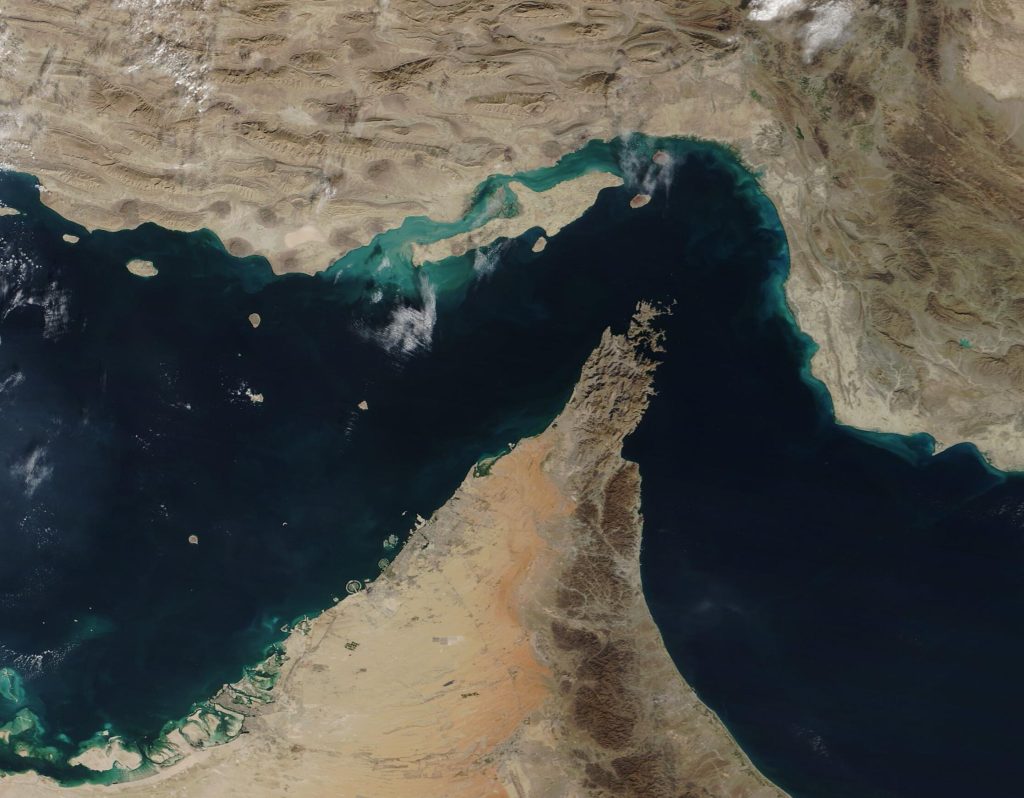
It’s happening in real time. As you read this article, Iran is reviewing a 14-point U.S. proposal that could end the 10-week conflict. Pakistan is mediating between the parties. Iran will return its response today. Donald Trump said Thursday morning that talks were “going very well” and that “it’s very possible we’ll make a deal.” Markets have already given their answer: Brent fell to $97.38 — from above $115 at the start of the week. The Nikkei jumped 5 percent yesterday and closed at 62,000 points. The S&P 500 shot up 1.5 percent on Wednesday. If peace actually arrives, it would be one of the strongest macroeconomic triggers since the COVID reopening. But there are stumbling blocks.
What’s in the 14-Point Plan
The exact 14 points are not public, but Axios and several Reuters sources have reconstructed the main points. The agreement is structured as a one-page memorandum of understanding — deliberately short to enable quick acceptance. Core points: immediate reopening of the Strait of Hormuz for civilian shipping under U.S. protection. Stop of all Iranian attacks on UAE, Saudi Arabia, and U.S. forces in the region. In return: lifting of certain U.S. sanctions, return to detailed nuclear negotiations within 60 days, no U.S. military strike against Iranian nuclear facilities.
The stumbling blocks are not trivial. Iran wants to ensure the memorandum is not interpreted as recognition of Israeli security interests. The U.S. wants to ensure nuclear talks actually take place and are not delayed. The point about “Iranian response” is decisive: if Iran signs all 14 points, that would be a massive bull market trigger. If Iran accepts only 12 or 13 and wants to negotiate the others, the process could drag on for weeks — the market would view this as negative.
Oil Price as Live Sentiment Indicator
Brent has fallen from above $126 on Monday to $97.38 on Thursday — a 22 percent decline in 4 days. WTI from $105 to $91. This is one of the strongest four-day moves in the oil market in the last 5 years. If Iran responds positively today or tomorrow, another 5-10 percent could follow, with Brent below $90 as a realistic target.
This move is macroeconomically enormously important. Lower oil prices reduce inflation expectations, which pushes down the 10-year Treasury yield — which in turn supports equity valuations. Simultaneously, it opens space for Fed rate cuts. Markets currently price about 1.5 rate cuts for 2026. If the Iran deal arrives and inflation falls below 2.5 percent in Q3/Q4, 2-3 cuts could be possible.

The Loser Sectors
Despite all the bull sentiment, there are obvious losers if Iran peace arrives. Energy stocks are first. APA Corp, Diamondback Energy, Marathon Petroleum had gained 2-4 percent on Monday — they are now losing 1-3 percent per day. The S&P 500 Energy Sector has dropped 8 percent from the weekly high.
Defense stocks are the second loser group. Lockheed Martin, Northrop Grumman, RTX (Raytheon) benefited from Iran escalation scenarios. If the conflict ends, near-term defense spending expectations decline. However: long-term geopolitics remains fragmented (China-Taiwan, Russia-Ukraine), defense stocks won’t crash, just consolidate.
Third: gold and safe havens. Gold prices were up 4.4 percent Thursday — odd in a risk-on day. Conjecture: investors are hedging against the case Iran rejects the 14 points and the market suffers a setback. Endeavour Silver gained 18.8 percent, B2Gold 16.2 percent. If peace arrives, these names correct.
The Winner Sectors
Winners are equally identifiable. First: airlines and travel. Lufthansa, IAG, American Airlines, Delta — all directly benefit from lower fuel costs. If Brent falls from $100 to $85, large airlines save hundreds of millions per quarter.
Second: cyclical consumer stocks. When consumers spend less at the gas station, money goes to restaurants, retail, travel. Disney already gained 8 percent yesterday — the market bet on consumer-sector recovery.
Third: emerging markets. Iran is not directly listed, but Turkey, Egypt, Saudi Arabia benefit regionally from de-escalation. The MSCI EM Index could gain 5-10 percent if Iran peace arrives.
What Microsoft, Disney, and Starbucks Said Yesterday
Attentive observers noticed an interesting detail in yesterday’s earnings reports. Microsoft has retracted its 2030 goals for 100-percent renewable energy. Reasoning: AI-driven data center requirements make the goal practically unreachable. This is important news for energy providers like Constellation Energy and Vistra — Microsoft wants to keep fossil power options open long-term.
Disney gained 8 percent after strong Q2 earnings — streaming, parks, and films all better than expected. CFO Hugh Johnston spoke in the conference of “robust U.S. consumers.” This is contrary to Whirlpool yesterday (-7.8 percent on weak numbers). The consumer story is split: experience economy growing, big-ticket appliances weakening.
Starbucks got an upgrade from Stifel to a $117 price target after announcing the China joint venture with Boyu Capital — 60% stake sale at $4 billion valuation. This positions Starbucks asset-light in China and significantly reduces geo-risk.
What Retail Investors Should Concretely Do
Four concrete steps for the next 7 days. First: reduce energy positions. If you hold Aramco, Shell, BP, or other energy names from the Iran trade, sell partially now. If the Iran deal arrives, these names fall 10-20 percent in weeks.
Second: watch airlines as a trade. If the Iran deal comes today or tomorrow, Lufthansa and Delta are 5-8 percent higher in the first 48 hours. This is a short trade — not for long-term investors.
Third: keep savings plans running. Volatility is good for savings plans — you buy at more favorable levels. If the Iran deal arrives and the market rises 3-5 percent, your May savings plan was at a good price. If it falls, you benefit even more.
Fourth: don’t build cash reserves because of the Iran story. The Iran escalation was a 4-day event, not a structural trend. Building cash reserves makes sense because of Paul Tudor Jones’s 1999 comparison, not Iran.
Bottom Line
The Iran peace agreement is not guaranteed, but probable. Iran has strong economic incentives to sign — the sanctions cost $50 billion per year. The U.S. has strong political incentives — Trump wants a “deal of the decade.” Pakistan is actively mediating. Market movements since Tuesday (Brent -22%, equities +3-4%) show participants are pricing a positive outcome. If the deal arrives today or tomorrow, there are 2-3 percent more equity gains, then consolidation. If it doesn’t arrive, correction by 3-5 percent. The asymmetry is okay but not compelling for aggressive buys. Stay on plan, hold your savings plans, watch Thursday afternoon and Friday morning for the Iranian response. When it comes, markets move fast.
Try TradingView Free for 30 Days
Plus get a $15 discount on your first subscription through this link.
Read more in our topic hub: Topic Hub: Geopolitics & Your Portfolio