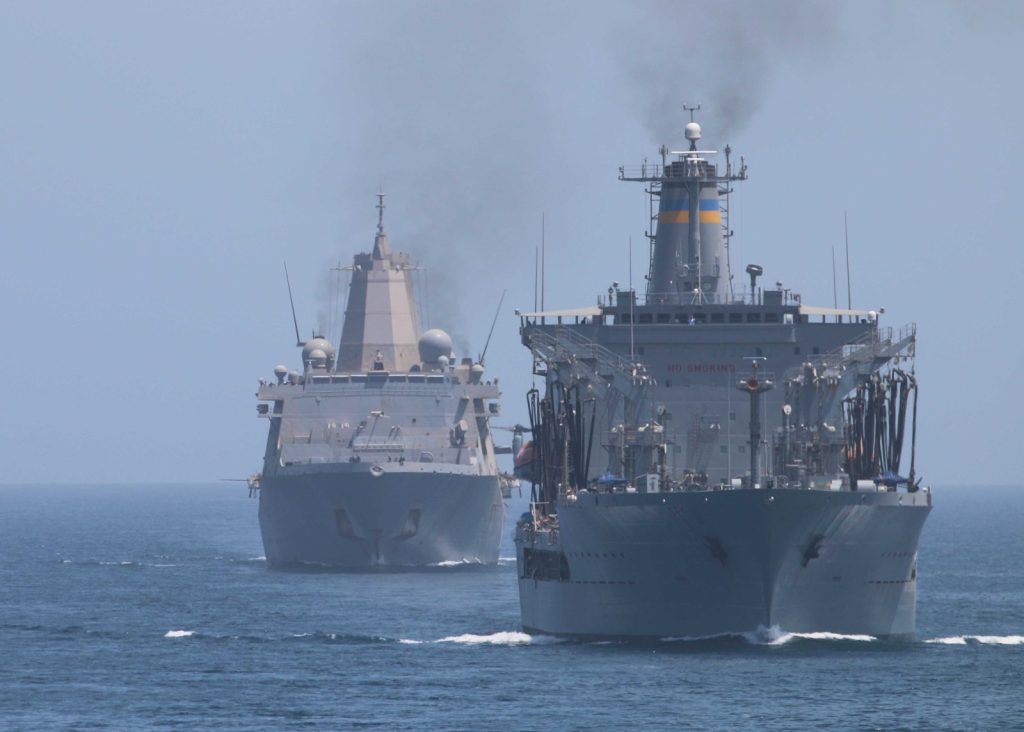
It’s Thursday evening 10:14 PM Eastern Time when the first Reuters breaking-news alerts hit screens. U.S. Central Command confirms: three U.S. Navy destroyers transited the Strait of Hormuz under the protection of Operation Project Freedom. During the transit, according to U.S. accounts, they came under "unprovoked Iranian attacks." The destroyers fired back. It’s the first direct military exchange between U.S. forces and Iran since peace negotiations began Sunday. Iran disputes the U.S. version: Iranian forces claim the U.S. fired first. Both sides claim defensive status. Both sides accuse the other of breaking the informal ceasefire. And both sides post their versions immediately on social media — driving escalation speed to a new level. What looked like a near-certain peace agreement Wednesday evening is, 24 hours later, open confrontation again.
Markets Friday Morning — Chaos Again
The market reaction is immediate and brutal. WTI futures jumped 2.3 percent overnight, Brent gained 1.8 percent to $100.87. S&P 500 futures lost their early upward move — they were +0.17 percent Thursday evening, the lead is now flat. Asia reacted brutally: Australia -1.51 percent, Hong Kong -0.85 percent, India -0.67 percent. Japan, which gained 5 percent yesterday and broke all-time highs, has a profit-taking minus of 0.36 percent today. China -0.58 percent.
The collective movement is unambiguous: markets are pricing out Iran peace, pricing in war. The Russell 2000 has lost its all-time highs. Industrials, tech equipment, and energy are selling — just two trading days after the all-time highs of the S&P 500 and Nasdaq.
What We Actually Know
The factual situation is thin and both sides have incentives to exaggerate. What is established: three U.S. destroyers transited the Strait of Hormuz Thursday evening between 9:00 and 10:30 PM Eastern Time. There was an exchange of fire. The exact sequence — who fired first — is disputed. Pentagon spokesman Sean Parnell emphasized this morning that U.S. destroyers acted "exclusively defensively" and that Iranian naval boats "fired missiles without warning." Iranian Foreign Minister Abbas Araghchi countered that the U.S. Navy operated "in a provocative manner deep in Iranian territorial waters."
What both sides are not saying: there were casualties. Confirmed: one Iranian naval boat damaged, crew possibly killed. Not confirmed but reported by unnamed Pentagon sources: one U.S. Navy crew member injured, no U.S. ship seriously damaged. The main dispute revolves around exact position — were the U.S. destroyers within or outside the 12 nautical mile territorial limit? Iran says inside. U.S. says outside.
What This Means for the 14-Point Agreement
Iran was still evaluating the 14-point agreement yesterday. An official response was expected today, Thursday. That response is now not coming — at least not in the form previously planned. Pakistan, the mediator, released a statement this morning: "diplomatic efforts continue," but "recent events require a reassessment of the negotiating position." That’s diplomatic jargon for "everything on pause."
Practically that means: the memorandum of understanding that seemed within reach yesterday is at least 1-2 weeks further away. Iran must respond domestically — hardliners will pressure to reject the 14 points. Trump must respond domestically — he was talking about "Project Freedom" yesterday, now the U.S. must demonstrate military strength. Both sides have short-term incentives to appear tougher than they negotiate.
Three Scenarios for the Next 7 Days
Scenario A (40 percent probability): localized escalation, then diplomacy resumption. Iran and U.S. exchange further blows, each limited. The 14-point agreement is modified and signed in 2-3 weeks. The market reaches current levels again in 4-6 weeks.
Scenario B (35 percent probability): Strait of Hormuz blockade. Iran closes the strait completely for civilian shipping for 5-10 days. Brent jumps to $130-140. S&P 500 loses 5-8 percent. Fed expectations change fundamentally, rate cuts are eliminated.
Scenario C (25 percent probability): full escalation. U.S. strike on Iranian nuclear infrastructure, Iran responds with attacks on U.S. bases in Bahrain/Qatar. Brent jumps to $160-180. S&P 500 loses 10-15 percent in 4 weeks. This is the worst scenario, but not improbable.
Whirlpool as Early Indicator of Consumer Pressure
Amid the geopolitics, there was an earnings report yesterday afternoon more important than the headlines. Whirlpool released its Q1 numbers — the appliance maker lost 21 percent in one session. Earnings and revenue below consensus, FY2026 guidance below Wall Street estimates. The justification from CFO Roxanne Warner was direct: "the Iran war has massively negatively impacted consumer confidence, particularly for major purchases over $1,000."
Whirlpool as canary in the coal mine. When consumers hold back on major appliances, that’s an early indicator for car purchases (Q2/Q3 risk), home purchases (Q3/Q4 risk), and travel (current risk). Snap also fell 8.5 percent despite earnings above consensus — the "cautious guidance" and the note that "large advertisers in North America remain a headwind" shows: ad spending is being pulled back. When advertising falls, that’s an early indicator for weaker consumer spending 6 months later.
What the Iran Escalation Effect on Equity Markets Actually Is
There’s a lesson from the first Iran shock Monday (Brent +15%, S&P 500 -1.1%) to the current situation. The market is much less sensitive to the second escalation than to the first. Why? Because in between, AMD released earnings, Microsoft raised capex, Fortinet jumped 22 percent. The AI rally has built absolute price-pressure cushion. An Iran escalation can cost 2-3 percent short-term — but no longer 5-8 percent like 6 months ago.
This is important for position sizing. If the Iran conflict escalates, we see a 4-7 percent drawdown — painful but not a crash. If the Iran conflict de-escalates, we see a 2-3 percent gain — good but no mega-breakout. Asymmetry currently: slightly negative. Anyone aggressively positioned should at least review stop-loss levels.
The NFP Report at Midday Today
Amid the geopolitics noise, the nonfarm payrolls report for April 2026 comes today at 8:30 AM Eastern Time. Consensus: 60,000 new jobs, significantly below the March figure of 178,000. If the number deviates significantly — either above 100,000 (very bullish) or below 30,000 (very bearish) — the market will react sharply. In normal times the NFP would be the story of the day. With the Iran shock, it has become a sub-story — which doesn’t mean it’s irrelevant.
If the NFP number negatively surprises (under 30k) and Iran simultaneously escalates, we have a crash scenario that can eat 5-7 percent of the S&P 500 short-term. If the NFP positively surprises (over 100k) and Iran de-escalates, we have a 2-3 percent rally today. Other scenarios are somewhere in between.
What Retail Investors Should Concretely Do
Three steps for the next 48 hours. First: don’t act in panic. If you feel the urge to sell this morning, the probability is high that you sell at the worst price. Volatility is normal in this phase.
Second: don’t stop savings plans. If the market falls 2-3 percent today, you buy more cheaply in your May savings plan. That is mathematically positive.
Third: don’t increase cash reserves now. If you have cash, hold it. If you don’t, don’t build it now in panic — just buy less new in the coming weeks. That creates the same position without sell panic.
Bottom Line
The Iran peace is broken, but not finally. Probability distribution over 7 days: 40 percent re-negotiation, 35 percent moderate escalation, 25 percent full confrontation. Markets react sensitively but have cushion. Whirlpool and Snap show that the consumer story is under pressure independent of the Iran conflict — that is more dangerous than the geopolitics. The NFP at midday could pull the story dramatically in one direction. Stay on plan, hold savings plans, buy volatility as a long-term investor. What you should not do: panic sell, go aggressive all-in now, or obsessively refresh the newsfeed over the weekend. The next update comes Sunday evening after Pakistan mediation statements.
Try TradingView Free for 30 Days
Plus get a $15 discount on your first subscription through this link.
Read more in our topic hub: Topic Hub: Geopolitics & Your Portfolio