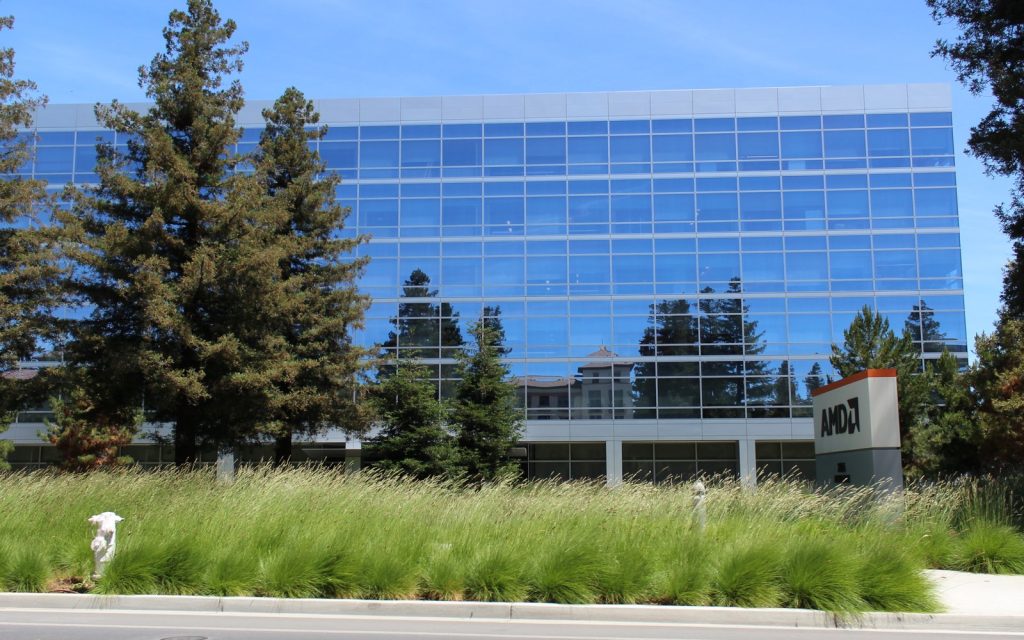
It took a single earnings report to flip the entire week’s narrative. On Tuesday evening, May 5, 2026, Advanced Micro Devices reported quarterly numbers that not only beat expectations — they convinced the market that the AI capex wave is accelerating, not slowing. AMD shares jumped 16 percent in early Wednesday trading. Super Micro Computer gained 15.5 percent. Disney rose nearly 8 percent, Uber 6 percent. The PHLX semiconductor index has been by far the strongest sector performance of 2026 after these numbers. Anyone still thinking on Monday about the Iran escalation and the end of the April rally faced a completely different market 36 hours later.
The AMD Numbers in Detail
AMD not only exceeded Q1 consensus estimates but delivered Q2 guidance that came in even more clearly above expectations. The company projected revenues for the second quarter that exceed consensus estimates by double digits. Data center revenues were the driver — the MI300 series and the successor MI355 architecture saw runaway demand from hyperscalers and Tier-2 cloud providers.
HSBC had downgraded AMD just on Monday, citing foundry capacity constraints that would limit 2026 performance. AMD’s response: TSMC allocation was successfully expanded, new supply agreements with Samsung Foundry compensate for bottlenecks. Lisa Su, AMD’s CEO, called the current market environment in the earnings call “early innings of a multi-year data center transformation” — language signaling that AMD sees this as a structural, not cyclical, trend.
What the Reaction Reveals About the Market
Here it gets interesting. 36 hours ago — on Monday — semiconductor stocks lost between 1.5 and 6 percent as the Iran-UAE confrontation escalated. Nvidia, Broadcom, AMD, Qualcomm, Intel — all in the red. Today, Wednesday, looks completely different. Micron, Intel, and ASML lead the market with gains. AMD jumps 16 percent. Super Micro Computer 15.5 percent.
This 180-degree turn in 36 hours shows something important: the semiconductor sector is no longer just one of eleven sectors — it has become the market narrative itself. When semiconductors rise, the market rises. When they fall, it falls. This is a concentration risk that Wall Street strategists have identified as problematic for months.
James “Rev Shark” DePorre summarized it after Wednesday’s open: “The message of this earnings cycle is that AI infrastructure demand is broadening, not narrowing.” This is the decisive point. Bears had argued in early 2026 that AI capex was concentrated on Nvidia and represented a single-stock risk without broader adoption. AMD’s quarter has dismantled that argument.
The Second Capex Wave Becomes Visible
When AMD jumps 16 percent, structural winners emerge behind it. Data center builders like Quanta Services, power providers like Constellation Energy and Vistra, cooling specialists like Vertiv — all benefit from the broader capex wave. The estimate for 2026 hyperscaler capex now sits at $751 billion, growth of 83 percent versus 2025. Four months ago, the same estimate was $546 billion. The escalation is happening in real time, from earnings report to earnings report.
This capex wave is now reaching the second stage. Stage one was the direct semiconductor winners — Nvidia, AMD, Broadcom. Stage two is the infrastructure suppliers and power providers. Stage three will be the SaaS providers integrating AI features into their products. Disney, gaining 8 percent today, is one example: streaming and parks benefit from AI-driven personalization and operations optimization.
Iran Conflict in the Background
While AMD dominated headlines, an important development emerged on the geopolitical side. The White House believes, according to Axios reports, that a one-page memorandum of understanding with Iran is within reach. Iranian responses on several key points are expected in the next 48 hours. A vessel successfully passed through the Strait of Hormuz under U.S. protection this morning. Brent fell back to $117, from $126 two days ago.
The market reaction is clear: less geopolitics risk plus AMD earnings equals risk-on mode. The Russell 2000 — the small-cap index — closed Tuesday at a new all-time high. This is a risk-on signal extending into the depth of the market, not just the top 10-20 stocks.
But: The Concentration Concern Remains
Despite the strength, there is one concern that won’t go away. Schwab’s own Trading Activity Index STAX fell to 50.10 in April — the second consecutive monthly decline. Schwab clients rotated out of high-beta individual holdings into broader ETFs. This could be interpreted as caution from retail investors: they are not fully in the equity game, they are defensively diversifying.
Simultaneously, semiconductors lead the market — but breadth is not expanding. If you removed semiconductors from the S&P 500, performance would be significantly weaker. This is a classic setup for a correction that comes precisely when the concentration assumption breaks.
What Palantir Showed Last Night
One data point underscoring this concentration concern: Palantir reported Monday evening earnings that exceeded all expectations. Revenue +85 percent year-over-year — the fastest quarterly increase since the direct listing in 2020. Net income more than tripled. The stock fell 7 percent on Tuesday. Despite record earnings.
Why? Because Palantir’s valuation sits at 146x 2026 earnings multiple and 48x sales multiple. Consensus was not only beaten — the stock was already priced so strongly that only a mega-beat could have carried the price. This shows: high valuations plus modest beat plus weak market breadth equals selling pressure. AMD delivered record beat and record guidance today — and gained 16 percent. But the bar is higher than it was 6 months ago.
What’s Coming This Week
The next 72 hours bring critical data. JOLTS numbers Tuesday morning — the March job openings report shows whether the labor market maintains its strength. Consensus expectation sits at 6.8 million openings, slightly below February. Quits rate (the rate of people voluntarily leaving) has been at or below 2 percent since summer 2025 — if this number drops significantly, it would be an early warning indicator for weaker economic conditions.
Thursday: Coinbase earnings. Disney today Wednesday. McDonald’s today Wednesday. Over 100 S&P 500 companies report this week alone. Plus ISM Services PMI and Friday’s nonfarm payrolls for April.
What Retail Investors Should Do Now
The lesson from these 36 hours is clear: the market is currently extremely nervous. An escalation like the Iran-UAE confrontation can cost the index 1 percent. An earnings surprise like AMD can win 1.5 percent. This volatility will likely continue in the coming weeks.
Three things are decisive from a risk-management perspective. First: don’t stop savings plans — volatility delivers more favorable entry levels, not more expensive ones. Second: diversification matters more than ever. Anyone holding 100 percent AI stocks will lose disproportionately in a capex correction. Third: cash is OK. Berkshire holds nearly $400 billion in cash at these valuations for a reason.
Bottom Line
AMD’s 16 percent jump on Wednesday is the strongest confirmation of the AI capex boom since Microsoft’s $392 billion backlog two weeks ago. The message is clear: hyperscaler demand has not collapsed, it has diversified. Lisa Su proved today that Nvidia is not the only beneficiary. But: market concentration on semiconductors is not resolved by a good earnings report — it grows. When the next correction comes, it will start exactly where the bull market drew its energy: at semiconductors. Until then: risk-on mode active, with elevated attention to next week’s macroeconomic data.
Try TradingView Free for 30 Days
Plus get a $15 discount on your first subscription through this link.
Read more in our topic hub: Topic Hub: AI Stocks Investing 2026