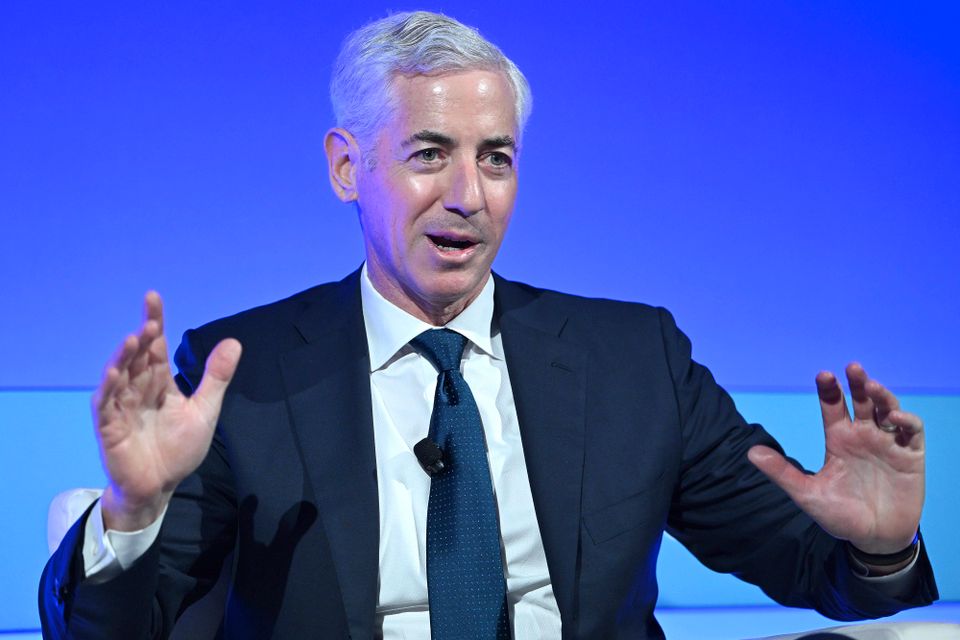
Bill Ackman disclosed it today on X, almost casually, in an industry that normally reveals such moves only weeks later through 13F filings. The Pershing Square founder and Warren Buffett acolyte disclosed that his hedge fund has taken a stake in Microsoft.
For an investor known for holding concentrated positions in only eight to twelve companies, entering Microsoft is no accident. It is a deliberate, long-prepared bet. The question isn’t whether Ackman is right – the question is what his move tells us about the next 12 to 24 months.
Who Bill Ackman is – and why this move matters
Ackman isn’t just another hedge fund manager. Pershing Square Capital manages around $18 billion and is known for concentrated long positions with hold periods typically of three to seven years. His hit rate on big calls is exceptional: he played the March 2020 pandemic crash short via credit-default swaps and made $2.6 billion. He was early in Chipotle, early in Hilton, early in Restaurant Brands.
His style isn’t day trading. Ackman enters a position only when he believes he has found a fundamental mispricing the market will correct in the coming years. When he buys Microsoft, it’s not for a trade setup next week, but because he believes today’s price will look cheap in three years.
That makes the move particularly relevant for BMI readers. Smart-money tracking isn’t “copy Buffett’s 13F.” Smart-money tracking is understanding what theses the world’s best capital allocators are currently pricing in. Ackman’s Microsoft bet is one such thesis.
Why Microsoft – and why now
Microsoft currently trades at around 35x forward earnings. That’s not cheap by historical comparison. Apple at around 30x is similarly expensive. Nvidia at 39x. The “AI Class of 2026” is broadly highly valued.
But Microsoft has structural advantages possibly not priced into that valuation.
First, the Azure AI stack. Microsoft’s OpenAI partnership and Azure’s buildout as primary AI training infrastructure is a multi-year asset. Anthropic closed a $30 billion funding round at a $900 billion valuation today. That shows AI compute demand is exploding further, and Microsoft is one of three companies globally (alongside Amazon and Google) that can serve this demand technologically and financially.
Second, enterprise stickiness. Microsoft 365, Teams, GitHub, LinkedIn, Dynamics – all products with extremely high switching costs. While consumer tech (Tesla, Meta) can have volatile quarters, Microsoft has enterprise cash flows that function more like utility stocks. Predictable, growing, hard to disrupt.
Third, Copilot monetization. Microsoft has integrated AI features into all main products and can charge premiums. An Office 365 user moving to Copilot 365 pays 30–50 % more for the same software, plus AI. That’s margin expansion without new sales costs.
Fourth, valuation relative to peers. At 35x, Microsoft is more expensive than the S&P 500, but cheaper than Nvidia (39x), with significantly less single-customer risk than Nvidia (which depends heavily on hyperscalers). In a “higher for longer” rate environment, defensive tech plays perform better than high-beta growth.
What Ackman likely saw
Here it gets interesting for smart-money observers. Ackman typically takes positions in stocks where the market specifically mispriced something. What could that be at Microsoft?
Hypothesis 1: Azure growth is underestimated. Most analysts model Azure growth at 25–30 % YoY. If AI workloads explode (which Anthropic’s $30 billion funding suggests), Azure growth could be at 40 %+ – and that’s not priced in.
Hypothesis 2: Copilot adoption is a turning point. Microsoft has been slowly rolling out Copilot since Q1 2024. If enterprise adoption rates jump from 10 % to 40–50 % in 2026 (which is possible), Microsoft gets margin expansion in the range of 200–400 basis points.
Hypothesis 3: Defensive play for 2026–2027. Ackman may simply be turning more defensive. With inflation back, Fed pivot dead, Iran war unresolved – who wouldn’t want Microsoft as a portfolio anchor instead of more aggressive bets?
We don’t know which of these theses is Ackman’s main motivation. But each is plausible and each has implications for other stocks.
What trades can be derived
Smart-money observation isn’t copy trading. Ackman buys Microsoft with $18 billion AUM and a 5-year horizon. You may be a retail investor with a $50,000 portfolio and 10-year horizon. Different games.
But three derivations are useful:
First, Microsoft itself. If the thesis holds (which Ackman’s track record suggests), Microsoft at 35x forward earnings isn’t a bad idea for buy-and-hold investors with 5+ year horizons. Risk-reward isn’t spectacular, but solid. Comparable to what Buffett did with Apple – big position built at “fair” valuations, not “cheap” ones.
Second, AI infrastructure broadly. If Microsoft is the thesis, the mechanical beneficiaries are also interesting: TSMC, ASML (EUV lithography), Schneider Electric (data center power), Vertiv Holdings (cooling). The “second-derivative” AI plays that haven’t run as hard as Nvidia, but structurally benefit from the same trend.
Third, what Ackman is NOT buying. Pershing Square’s current top positions (before Microsoft) are Chipotle, Hilton, Restaurant Brands, Howard Hughes, Universal Music. Notable absence: Apple, Nvidia, Tesla, Amazon. That’s also a signal. Ackman isn’t blindly investing in all mega-caps. Microsoft has something specific the others don’t.
What retail investors will get wrong
With smart-money disclosures via Twitter, two mistakes typically happen:
Mistake 1: Chasing too quickly. Ackman likely built his position over weeks before disclosing it publicly. If you buy Microsoft at today’s market prices, you’re paying more than Ackman. The first 5–10 % of upside he already took.
Mistake 2: Going in too big. Ackman makes concentrated bets of 10–15 % of his portfolio. That works for him because he has institutional-grade risk management plus $18 billion in diversification. A retail investor with a concentrated 15 % Microsoft position is doing something different than Ackman – namely, concentration risk.
Right approach: Microsoft as a 3–5 % portfolio position for the next 3–5 years, with dollar-cost averaging over several months. That’s Buffett style – not Ackman style.
What this week decides
Microsoft Q3 earnings are in late July. By then we have at least three data points: Azure growth, Copilot adoption statistics, capex guidance for AI infrastructure. These three numbers determine whether Ackman’s thesis is validated in the next 6 months or not.
Outside of earnings, the macro-relevant point is the Fed. If inflation stays at 3.8 % (which this week’s CPI data suggests), Microsoft gets structural tailwind: defensive tech with pricing power performs in higher-for-longer environments. If, conversely, a surprise disinflation path occurs, then aggressive growth (Nvidia, AMD) wins more.
Sam Stovall of CFRA put it pragmatically this week: markets price not stories, but probabilities. Ackman’s Microsoft bet is a bet on the probability that AI workloads keep growing, enterprise stickiness stays, and Microsoft can monetize its stack. Three probabilities, all three plausible above 70 %. That’s good math.
The honest bottom line: Ackman’s Microsoft buy isn’t a revolutionary move. Buying Microsoft has been the consensus trade for defensive tech allocations for years. But when an investor with Ackman’s track record makes this consensus bet instead of contrarian bets in unloved stocks, that itself is a signal: 2026 isn’t the year for hero trades. It’s the year for solid, fundamental long-term positions in quality companies.
Whoever understands that can position their portfolio accordingly.
Try TradingView Free for 30 Days
Plus get a $15 discount on your first subscription through this link.