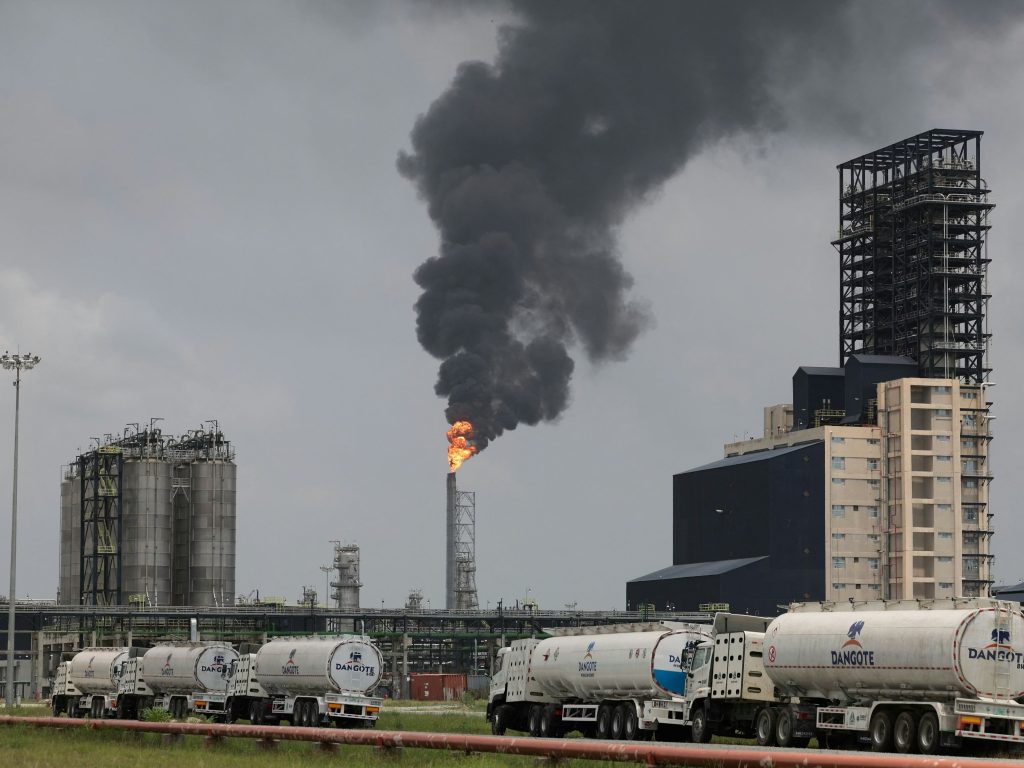
The International Energy Agency used a phrase in its monthly market report this week that has appeared only twice in the past 50 years: “Severely undersupplied.” The global oil market, according to the IEA, will remain severely undersupplied until at least October, even if the Iran war ends next month.
For most investors, this phrasing gets lost in the news flow. Trump-Xi summit, inflation, earnings, Nvidia China deal – everything competes for attention. But the IEA warning is mathematically more alarming than any of these stories, and it has direct implications for every portfolio with tech, consumer, or defensive exposure.
Most investors will make the wrong trades over the next 5 months because they ignore or underestimate this warning. Let’s look at the data honestly.
What “Severely Undersupplied” Means Mathematically
The IEA uses a five-tier scale for its market assessments: oversupplied, well-supplied, balanced, tight, severely undersupplied. The last tier has been used in only two periods since this classification began in 1974: during the 1979/1980 oil crisis and during the 1990 Iraq invasion. Both times, Brent spiked above 150 percent of starting levels.
What the IEA documented this week: The flow of crude oil and fuels through the critical Strait of Hormuz fell by nearly 6 million barrels per day in the first quarter, following the start of hostilities at the end of February. Only a trickle of tankers have been able to exit the Persian Gulf region during the war.
6 million barrels per day corresponds to roughly 6 percent of global daily consumption. But that’s just the ongoing damage. The cumulative inventory depletion over three months is about 540 million barrels – more than the entire US Strategic Petroleum Reserve contains.
At current Brent prices around $108, the math is clear: WTI futures at $102.74, Brent at $107.30 after Trump-Xi summit. Even with immediate reopening of the Strait of Hormuz, it takes months before global inventories return to normal levels. “Until October” isn’t pessimistic – it’s optimistic.
Why Even a Ceasefire Doesn’t Help
Here the story gets uncomfortable. Most investors expect an Iran deal would immediately crash oil prices. That’s wrong. Even the best peace treaty doesn’t solve the structural inventory problem.
Three reasons:
First, tanker logistics. A tanker takes 30–45 days from the Persian Gulf to Europe, 50–60 days to the US East Coast, 25–30 days to Asia. Even if the Strait of Hormuz opens tomorrow, it takes 6–8 weeks before the first new deliveries actually arrive in consumer countries.
Second, Iran production rebuild. Iranian oil infrastructure has suffered significant damage during 3 months of war. Even after ceasefire, an estimated 4–6 months are needed to bring production back to pre-war levels. Some facilities must be completely rebuilt.
Third, preventive inventory buildup. Once the Strait reopens, China, India, Japan, and South Korea will quickly refill their strategic reserves. This additional demand keeps spot prices elevated, even as production comes back. Trump announced on Fox News that China agreed to buy US oil: “They’re going to send ships to Texas, Louisiana, and Alaska.” That further intensifies competition for available barrels.
The combined consequence: Brent cannot fall below $90 until October even with optimistic diplomacy. With moderate geopolitical complications, we stay above $110. With escalation, we see $140–160.
Which Sectors This Really Hits
Here it gets concrete for your portfolio. High oil prices for 5+ months have different effects on different sectors – not all are obvious.
Direct winners
Energy is obvious. ExxonMobil, Chevron, BP, Shell, TotalEnergies produce extraordinary free cash flows at Brent above $100. Whoever has been energy underweight in the past 12 months has a problem. Whoever has already allocated 10–15 percent to energy can hold sideways – the story is priced in, but the cash flows come real.
Pipeline operators like Enbridge, Kinder Morgan, Enterprise Products benefit more clearly. They don’t depend on spot prices but on volume transport fees. With high global demand, their flows rise mechanically, and their dividend yields at 6–8 percent become more attractive in a higher-for-longer environment.
Defense stocks benefit indirectly but strongly. If the Iran war continues until fall, US defense spending expands further. Lockheed Martin, Raytheon, Northrop Grumman, plus European Rheinmetall, BAE, Leonardo.
Indirect beneficiaries
Insurers with tanker insurance exposure. Lloyd’s of London rates for tankers through Hormuz waters have risen an estimated 400–600 percent since February. Whoever insures these risks has seen enormous margin expansion.
Swiss reinsurers like Swiss Re and Munich Re are structurally positioned here. Insurance math on war risks is asymmetric: high premium income now, possible tanker losses sometime later. In the best case (no catastrophic tanker loss), premium profits remain.
Clear losers
Airlines are the most obvious victims. Kerosene makes up 25–30 percent of operating costs. With doubled kerosene prices, even Lufthansa and Ryanair become unprofitable without ticket price increases. But ticket prices in DACH and EU are already at the upper end – consumers can’t pay more. Margin squeeze is programmed.
Energy-intensive industry. Chemicals (BASF, Bayer), aluminum (Norsk Hydro), steel (ArcelorMittal), paper (UPM, Stora Enso). These firms have electricity price pass-through, but only partially and with delay. 5 months of high energy costs without full pricing power = margin pressure.
Auto manufacturers with combustion-heavy lineup. Whoever still makes 70 percent of their volume with ICE vehicles (Stellantis, Renault, Toyota in Asia) will see demand drop if fuel stays above €2 per liter permanently. Tesla benefits relatively, but with current Chinese competition only limited.
Consumer goods without pricing power. Discount retailers, restaurants, travel sector. When consumers spend €100 more per month on heating and fuel, they save elsewhere. Dollar Tree, McDonald’s, Royal Caribbean – all have this problem.
What Smart Money Is Doing
The last 13F filing season (Q1 2026 data, published in May) showed interesting movements. David Tepper at Appaloosa increased energy allocation by 25 percent. Stan Druckenmiller has similar focuses. Bill Ackman, who bought Microsoft this week, kept his existing Howard Hughes position – that’s defensively positioned real estate without energy sensitivity.
What none of the known managers did in Q1: aggressive buys of airlines, cruise lines, or discount retailers. The smart money convergence is clear: high oil prices will be normal for longer, so weight your portfolio accordingly.
For BMI smart money tracker users, the next 90-day period is particularly interesting. Q2 2026 13F filings come in mid-August – exactly in the phase where the IEA warning either confirms or proves too pessimistic. Which energy stocks the large funds add or reduce is a direct indicator of what they expect for H2 2026.
What You Should Concretely Do
First, honestly review portfolio allocation. What percentage of your portfolio reacts positively to high oil prices vs negatively? If the answer is 80 percent negatively (tech, consumer, travel), you’re structurally wrongly positioned for the coming 5 months.
Second, build energy exposure if not present. At least 5–10 percent in a broad energy ETF (XLE, iShares Global Energy) or directly in 2–3 integrated majors. That’s not a trade setup, that’s strategic allocation.
Third, don’t forget inflation hedge. The IEA documented this week that the Strait disruption causes global record-pace inventory depletion. That translates into inflation pressure that lasts months longer than most consensus models predict. TIPS (inflation-protected bonds), gold, possibly industrial goods are sensible hedges.
Fourth, don’t keep cash quota too low. In a market that can react any time to geopolitical shocks (Iran escalation, tanker incident, Hormuz closure extension), 15–20 percent cash makes more sense than 5 percent. Optionality is value.
Fifth, understand the Boeing lesson. Boeing shares fell over 6 percent in two days after Trump announced only 200 China jets instead of the expected 500. That’s exactly the pattern that returns in Iran diplomacy: every “deal hope” gets priced in, then the real outcome disappoints. Caution with “hope trades” on quick resolution. For the macro backdrop, see our Fed Policy, Rates & Bonds Hub, which maps the inflation and commodity drivers behind this regime.
Sam Stovall of CFRA said this week that bull markets die from mispriced risk perception. The IEA warning is mispriced risk in almost every consensus portfolio. The coming 5 months will show who understood that and who gets surprised.
Whoever allocates correctly now has outperformance potential. Whoever ignores pays the bill in summer.
Try TradingView Free for 30 Days
Plus get a $15 discount on your first subscription through this link.