30 days ago, the probability of a Fed rate hike in 2026 was exactly 1 percent. Today it stands at 45 percent. This isn’t just a mood swing — it’s a historic pivot in expectations not seen since the Volcker era.
According to the CME FedWatch Tool, chances of a Fed rate hike in 2026 climbed to 45 percent, with highest odds for a single hike to 3.75–4 percent. A month ago, chances of a 2026 hike were 1 percent. Two ugly inflation prints this week sent rate-cut chances to zero in futures trading.
“Fed rate hikes are now being priced in, rather than cuts” — this statement from Collin Martin, Head of Fixed Income Research at Schwab, summarizes what just fundamentally changed.
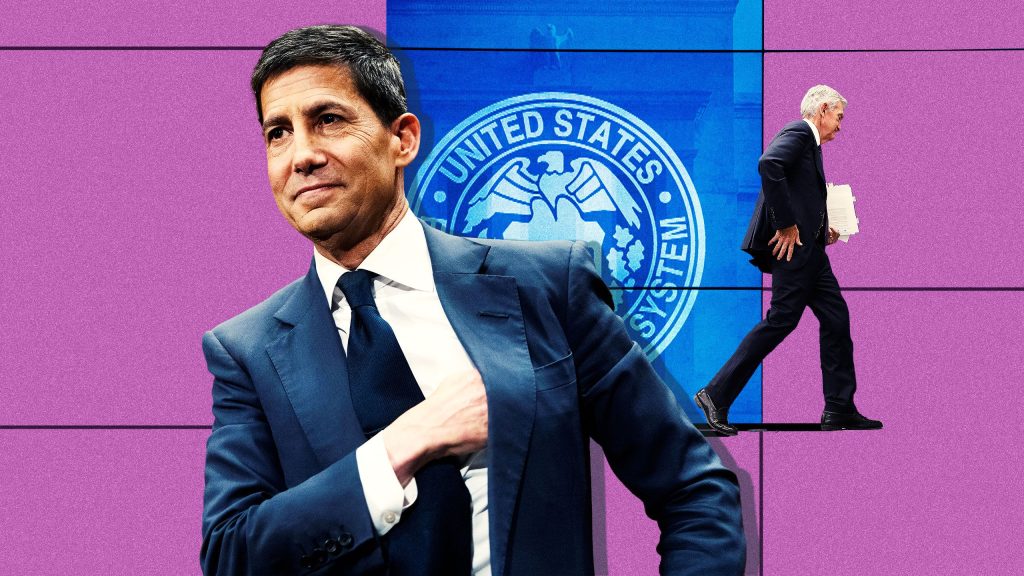
Today, May 15, 2026, additionally marks the end of Fed Chair Jerome Powell’s term. Kevin Warsh takes over. He inherits a Fed in a phase of historic FOMC division — at exactly the moment when inflation is reaccelerating.
For every investor, the question becomes: what does this concretely mean for your portfolio over the next 6–12 months?
How We Got Here
The Fed pivot was the consensus trade since summer 2025. Powell signaled disinflation was on track, that rate cuts would begin once the trend confirmed. Markets ran with it: tech valuations expanded, bond yields fell, the dollar weakened. The “Goldilocks trade” was back.
Then came February 2026. The Iran war escalates. Oil explodes from $75 to over $100 per barrel. The Strait of Hormuz is essentially closed. Global oil inventories shrink at record pace. The IEA warned this week the market remains severely undersupplied until October.
What began as a geopolitical event became an inflation story. This week’s CPI data showed 3.8 percent — far above the Fed’s 2 percent target. PPI also significantly above expectations. Suddenly the disinflation on track story was dead.
Markets react brutally now. The 10-year Treasury yield rose to 4.55 percent, highest in a year. The 30-year Treasury above 5.1 percent, highest since 2007. This isn’t just a yield movement. This is a repricing of the entire economy.
Why 45 Percent Hike Probability Changes Everything
When the market sets a probability for an event at 45 percent, that event is already half priced in. This has three immediate consequences.
First, tech valuations collapse. AI stocks were valued with discounted cash flow models assuming low risk-free rates. At 5.1 percent on the long end, net present values fall dramatically. Wall Street offloaded semiconductor companies and other high-flying tech this week. S&P 500 fell 1.2 percent, Nasdaq 100 sank 1.5 percent — both benchmarks posting their worst day since late March.
Concrete: Intel minus 6 percent. AMD minus 5.7 percent. Micron minus 6.6 percent. Nvidia minus 4.4 percent. Cerebras, which debuted yesterday with 68 percent, gives back 10 percent today.
Second, defensives become more attractive. When risk-free yields sit at 5 percent, the thesis “bonds yield nothing, so stocks” becomes obsolete. 5 percent guaranteed return is a no-brainer trade for many institutional investors. Money flows from growth to income.
Third, the mortgage market freezes. US 30-year mortgages now sit at roughly 7.8 percent. This is a massive burden on housing markets, consumer spending, REIT stocks. The real-economy effect of high yields comes with 6–9 month delay — and is starting now.
What Warsh Will Likely Do
Kevin Warsh takes over the Fed today. He is not Powell. He made clear in his recent public statements that inflation is top priority — more important than growth, more important than employment, more important than equity markets.
Collin Martin from Schwab said it clearly: “It will be very difficult for him to argue for lower rates when inflation has reaccelerated.” Warsh won’t actively lobby for hikes — but he won’t fight for cuts either.
That means practically: the Fed becomes passively hawkish. It will react to inflation rather than anticipate. If CPI stays above 3.5 percent in June/July/August, a hike comes. If it falls to 2.5, it stays quiet. Active cuts? Only when real recession arrives.
This is a different world than the Powell Fed of recent years.
Which Sectors Will Outperform Now
The math isn’t complicated if you understand the logic. With higher for longer plus possible hike, four areas win.
Energy remains a structural winner. High oil prices, high cash flows, low valuations. ExxonMobil, Chevron (despite Buffett’s reduction here too), BP, Shell, TotalEnergies. Energy isn’t just an inflation hedge — it’s the cause of inflation, so direct beneficiary.
Insurers and banks with net interest margin exposure. Higher rates mean higher margins for banks. JP Morgan, Bank of America, Wells Fargo will outperform tech in a higher-for-longer environment. Insurers like Berkshire Hathaway, Allianz, AXA profit from higher bond yields on their massive float investments.
Defense sector. Iran war continues, US defense spending expands, defense stocks are structurally positioned. Lockheed Martin, Raytheon, Northrop Grumman, Rheinmetall, BAE Systems.
Utilities with pricing power. Not all utilities — only those with real tariff pass-through capability. NextEra, Iberdrola, Verbund (Austria). These pay 4–5 percent dividend and benefit from high energy prices.
Which Sectors Will Suffer
Tech with high valuations is the obvious loser. When Nvidia trades at 39x forward earnings and risk-free rate rises from 4.5 to 5.1, the market’s multiple tolerance shrinks. That doesn’t mean tech crashes, but tech will relatively underperform. Microsoft (Bill Ackman’s choice) as defensive tech position now makes more sense than Nvidia or Tesla.
REITs and real estate. High yields = low property valuations plus higher financing costs. Even good REITs like Realty Income or Prologis will face pressure.
Discount consumer. When mortgages are at 8 percent and energy is high, consumers save at the discount end. Dollar Tree, Five Below, low-priced retailers suffer. McDonald’s already warned.
Growth stocks without profitability. Cerebras yesterday, other AI IPOs of the last 12 months. When investor risk appetite falls, the most speculative plays sell first.
What BMI Readers Should Concretely Do
First, portfolio stress testing. What happens to your portfolio at 30-year yield at 6 percent? If the answer is “minus 20 percent,” you’re structurally wrongly positioned. Yields can rise further.
Second, examine bonds as a hedge. At 5 percent yield on 10-year Treasuries or Bunds, bond allocation makes sense again. A 60/40 portfolio structure, dead during the low-rate phase, lives again.
Third, build cash position. Money market funds currently pay 5 percent risk-free. Whoever sits in 6-month US T-Bills earns without risk. That’s opportunity.
Fourth, actively execute sector rotation. If you have 70 percent tech, that’s concentration risk. Shifting 20–30 percent into energy, defense, banks dramatically reduces your inflation risk.
Fifth, prepare a patience trade. When tech falls 20–30 percent, entry opportunities return. But that doesn’t happen in a week. Keep cash ready for the next 3–6 months.
The Bigger Question
The bigger question behind the 1-to-45-percent pivot is: has the world’s fundamental inflation regime changed?
Sam Stovall of CFRA pointed out this week that bull markets don’t die from geopolitics, but from mispriced risk perception. Until 30 days ago, inflation was wrongly priced in most portfolios — as a short-term spike, not as structural change. Now the market is correcting that.
Nobody knows if inflation is really structurally back. It’s possible the Iran war ends, oil falls to $70, and inflation normalizes again. Then today’s pivot was overshooting, and tech stocks will see growth again.
Equally possible is that globalization has really broken, that reshoring structurally raises inflation, that energy scarcity remains permanent, and that the Fed can no longer create low-inflation worlds like 2010–2020. Then today’s pivot is just the beginning.
The honest answer: we don’t know. But the risk-reward has changed. 30 days ago, a defensive position on inflation cost 5 percent underperformance. Today it costs nothing and protects against potential 20 percent downside.
That’s the definition of an asymmetric trade. And it’s exactly what the smartest investors in the world are taking — Buffett rotates out of Visa, Mastercard, Amazon into Macy’s, Delta Air Lines, NY Times. Ackman goes into Microsoft, defensive tech. Druckenmiller and Tepper rotate into energy.
Whoever understands can adapt. Whoever ignores pays the bill when hike probability rises from 45 to 70 percent.
Try TradingView Free for 30 Days
Plus get a $15 discount on your first subscription through this link.