
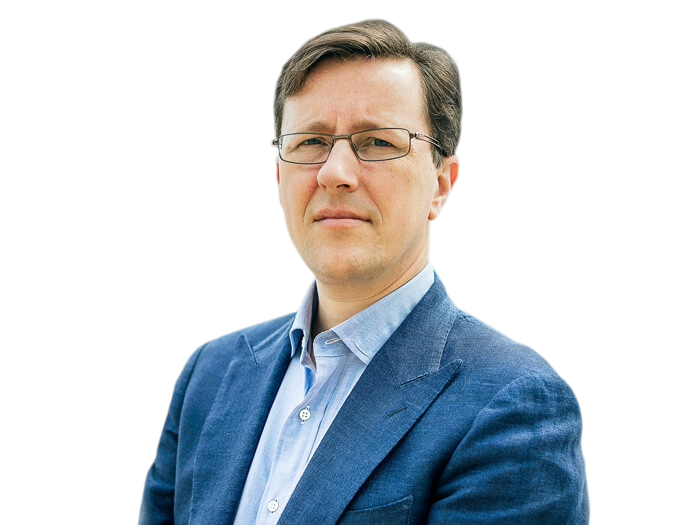
Pat Dorsey
Investment Philosophy
Pat Dorsey is the founder of Dorsey Asset Management and spent over a decade at Morningstar building its Economic Moat rating system — one of the most influential conceptual frameworks in modern fundamental investing. His books The Five Rules for Successful Stock Investing and The Little Book That Builds Wealth have become standard references for identifying competitive advantages. The core principle of his investment philosophy is unambiguous: only companies with durable Economic Moats — sustainable competitive advantages that protect high returns on invested capital from erosion — deserve a place in the portfolio.
Dorsey classifies moats rigorously into four categories: intangible assets (patents, regulatory licenses, brands with genuine pricing power), switching costs (business-critical software and platforms with prohibitively high switching barriers), network effects (ecosystems that become exponentially more valuable with each additional user), and cost advantages (structural cost structures that competitors structurally cannot replicate). What distinguishes Dorsey from other moat investors: he insists on valuation discipline. An excellent moat bought too expensively destroys returns just as much as a weak moat.
His portfolio is typically concentrated in 10–15 positions — more radical than the institutional standard of 40–60 positions. This concentration is not accidental but conviction-driven: Dorsey only invests in companies whose moat he fully understands and whose intrinsic value he can estimate with high confidence. Holding periods of 5–10 years are the norm, because moat companies need time to convert their competitive advantage into free cash flow — and the market regularly underestimates this conversion.
The philosophical DNA of his strategy combines Charlie Munger’s conviction (“A wonderful company at a fair price is better than a fair company at a wonderful price”) with the analytical rigor of Morningstar’s research methodology. Dorsey is one of the few investors who not only describes the moat concept theoretically but systematically applies it as an operational screening and valuation tool.
Q4 2025 · Portfolio Moves & Analysis
In Q4 2025, Dorsey remained true to his core thesis: he maintained concentration in payment-rail moats (Visa and Mastercard), financial infrastructure (MSCI, S&P Global), and niche monopolies with regulatory moats (ASML, Veeva, CoStar). The absence of significant rotations is itself a signal — Dorsey does not sell when the market temporarily fluctuates. He only sells when the moat fundamentally deteriorates or when the valuation so far exceeds intrinsic value that the risk-reward ratio becomes unattractive.
Particularly revealing is his continued overweighting in ASML as the top position. ASML is a classic Dorsey moat: the company holds a de-facto monopoly on EUV lithography machines essential for manufacturing next-generation chips. No competitor is even remotely capable of reproducing this technology — a cost moat combined with a regulatory/patent moat of the first order. In a world where everyone invests in AI chips, Dorsey invests in the shovel makers.
Financial infrastructure (MSCI, S&P Global, Morningstar) represents Dorsey’s bet on the permanent shift to passive investing and indexation. These companies are the toll booths of modern finance: every time a dollar flows into an ETF, MSCI earns licensing fees. That is a network effect combined with enormous switching costs — nobody replaces MSCI indices for cost reasons.
Current Portfolio
Source: SEC 13F Filing (Q4 2025)
| Ticker / Security Name | Shares | Δ Shares (%) | Value (Full $) | Portfolio (%) |
|---|---|---|---|---|
| ASML / Asml Holding N V | 192.3K | — | $205,800,000 | 17.89% |
| DHR / Danaher Corporation | 827.5K | — | $189,400,000 | 16.47% |
| AER / Aercap Holdings Nv | 1.22M | — | $174,700,000 | 15.18% |
| META / Meta Platforms Inc | 160.4K | — | $105,900,000 | 9.21% |
| BKNG / Booking Holdings Inc | 16.3K | — | $87,400,000 | 7.60% |
| RPRX / Royalty Pharma Plc | 2.26M | — | $87,300,000 | 7.59% |
| LYV / Live Nation Entertainment In | 603.0K | — | $85,900,000 | 7.47% |
| AZO / Autozone Inc | 25.1K | — | $85,200,000 | 7.41% |
| GOOGL / Alphabet Inc | 216.9K | — | $68,100,000 | 5.92% |
| ENOV / Enovis Corporation | 2.28M | — | $60,700,000 | 5.28% |
Outlook 2026 · What to Watch
For 2026, three themes are particularly relevant for Dorsey’s portfolio: First, the sustainability of AI chip demand and what that means for ASML’s order volume — TSMC’s capex plans will be the most important leading indicator. Second, valuation developments at MSCI and S&P Global: both companies trade at significant premiums justified by their growth potential — but also sensitive to interest rate cut expectations.
Third: Veeva Systems in the context of life sciences digitalization. Veeva has successfully reduced its dependency on Salesforce and is building its own cloud ecosystem. The renewal rates of existing customer contracts will be a key moat-strength indicator in 2026.
What Dorsey’s Q1 2026 filing will reveal: if he reduces positions, it is almost certainly a valuation signal — not a moat signal. Those are two completely different statements, and the market regularly confuses them. For new positions, we look for companies with fresh regulatory moats or newly established network effects in early markets.
This is BMInsider PRO Content
You are reading a deep analysis — our most detailed research.
Unlock full access to all analyses, Smart Money insights & more.
Unlock BMInsider PRO →