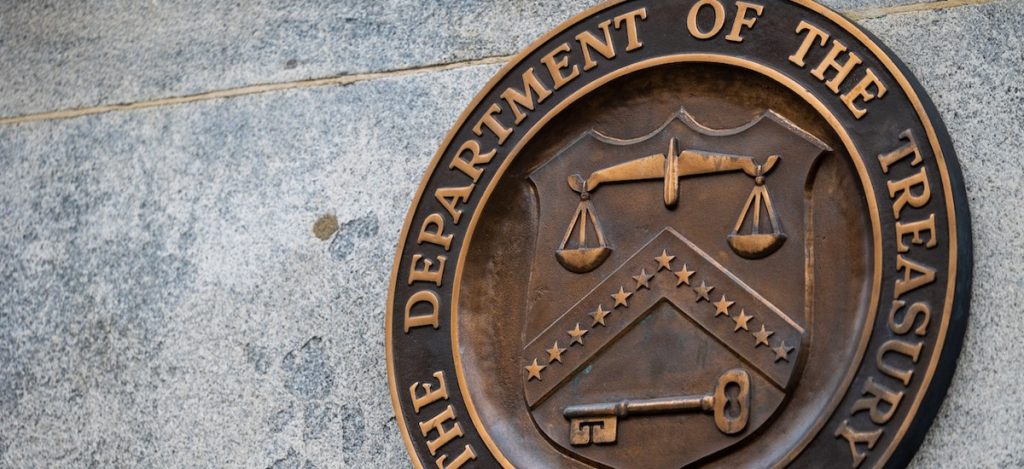
Today at noon in New York, something happened that displaced most financial headlines, but is more important than any single stock movement: The 30-year US Treasury yield exceeded 5.1 percent. Highest level since 2007.
For most investors, a bond yield is an abstract number somewhere in Bloomberg charts. But for the valuation of every single stock in the world — including your Microsoft, Nvidia, or Tesla position — the 30-year Treasury yield is the most important number in the financial system.
When this number rises from 4.5 to 5.1 percent, it has mathematically traceable consequences that will become visible in your portfolio over the coming weeks. Let’s go through it, without jargon.
Why the 30-Year Treasury Is the Most Important Market in the World
The 30-year US Treasury defines what counts as “risk-free return.” Nobody gets better security than US Treasury paper. The US government has never failed to service a sovereign bond — not since 1789. That makes this bond the global reference point.
Every asset in the world is valued relative to this risk-free rate. If Treasuries pay 5.1 percent, riskier assets must offer more — otherwise the investment doesn’t make sense.
Mathematically it works like this: A stock at its core is the future cash flow of a company, discounted to today. The discount rate we use is based on the risk-free rate plus risk premium. When the risk-free rate rises, today’s value of future cash flows falls.
A simple example: If a company generates $100 cash flow in 10 years, this cash flow is worth about $64 today at a 4.5 percent discount rate. At 5.1 percent it’s only $61. That sounds minimal, but multiplied over 30 years of cash flow projection for a growth stock, these 5-percent discounts sum up to massive valuation corrections.
Concretely: A stock like Nvidia, trading at 35x forward earnings, is based on the assumption that the risk-free rate stays low. At 5.1 percent instead of 4 percent, the same earnings multiple is suddenly no longer justified. The market is recalculating this in real time.
Why 5.1 Percent Is a Psychological Turning Point
There’s a historical reference. In 2007, just before the financial crisis, the 30-year Treasury was at exactly these levels. Back then, the consequence was that tech stocks fell 50 percent, real estate collapsed, and a decade of lower rates began.
Nobody is saying 2026 will be a second 2008. But the math of valuations works similarly. If 5.1 percent is risk-free available, stocks at 22x earnings (S&P 500 average) are not attractive. The risk premium is negative — meaning you get less expected than the risk-free asset, plus you take on all loss risks.
That’s why large asset managers like BlackRock, Vanguard, and Fidelity are rebalancing their allocations right now. Money flows from stocks to bonds because the math demands it.
What This Means for Different Sectors
Not all stocks react equally to higher yields. Sensitivity depends on when the cash flows come.
Growth stocks (tech, AI, biotech) are most affected. These stocks are bought for cash flows not yet here, that are supposed to come in 5–15 years. At higher discount rates, these future cash flows become less valuable.
Concretely: If the 30-year Treasury rises another 50 basis points, Nvidia, Tesla and similar growth stocks typically fall 15–25 percent. Not because earnings change, but because multiples contract.
Value stocks (banks, energy, industrials) are less affected. These stocks are bought for current cash flows, not future. A bank paying 4 percent dividend today and profitable at current cash flow is relatively stable. When yields rise, it even benefits (higher net interest margins for banks, higher discount rates for insurers on float).
Defensives (consumer goods, healthcare) are mixed. Procter & Gamble or Johnson & Johnson pay 3 percent dividend. When Treasury pays 5.1 percent risk-free, this dividend becomes less attractive. But: P&G has 70+ years of dividend growth, which makes the long-term yield curve look different.
REITs and real estate suffer particularly. REITs are at their core yield plays — they pay 4–6 percent dividend and are what investors see as “bond substitute.” When real bonds pay 5 percent, REITs no longer need to be bought. Plus: higher mortgage rates kill the real estate market directly.
What Smart Money Is Doing Right Now
Look at the latest movements of the largest investors:
Warren Buffett sells Visa, Mastercard, Amazon, UnitedHealth completely (per Q1 2026 13F). These are all “growth-at-reasonable-price” stocks. He rotates into defensive value: Macy’s, Delta Air Lines. That’s a clear rates-will-stay-high statement.
Bill Ackman buys Microsoft. Microsoft is more defensive than Nvidia — enterprise cash flows, lower volatility, somewhat less AI sensitivity. That’s also a higher-for-longer statement.
David Tepper increases energy allocation by 25 percent. Classic inflation hedge.
Stan Druckenmiller has shown similar movements. Defense, energy, banks up. Tech down.
These four investors together manage over $500 billion. They are all positioning for a different rate regime. That’s not coincidence.
What You Should Concretely Do
When the 30-year Treasury is at 5.1 percent, you as a retail investor have three strategic options.
Option 1: Active defense. Reduce your tech exposure by 20–30 percent. Increase cash quota. If tech falls further, you can buy back cheap. That’s conservative but pragmatic.
Option 2: Increase bond allocation. If you were previously 100 percent in stocks, start allocating 20–30 percent to 10-year Treasuries or bond ETFs. At 5 percent yield, that’s finally a sensible trade again. ETFs like TLT (US long bonds) or iShares Core EUR Govt Bond ETF in Europe.
Option 3: Hold cash at 5 percent. Money market funds in the US currently pay 4.8–5.0 percent. In Europe, money market accounts pay 3–4 percent. That’s guaranteed return without risk. Sometimes doing nothing is the best strategy.
Which of these options is right depends on your time horizon and risk tolerance. But a portfolio based on “risk-free rate is 0 percent” assumption is structurally wrong today.
The Bigger Question About Valuations
If risk-free is 5.1 percent and stocks historically must deliver a risk premium of 4–6 percent over risk-free, then expected stock return should be 9–11 percent per year. That corresponds roughly to an S&P 500 P/E of 17–19. Currently the S&P 500 trades at 22x.
That means purely mathematically: either stock valuations must fall 15–20 percent, or earnings must grow 15–20 percent, or yields must fall again.
The question is which of these three will happen. Earnings can grow, yes. But 15 percent in 12 months? Difficult. Yields can fall, but only if inflation collapses or Fed cuts — both look unlikely right now. Remaining: stocks fall.
Nobody can predict timing. But Sam Stovall of CFRA put it pragmatically this week: bull markets don’t die from geopolitics, they die from mispriced risk. Today, with 30-year yield at 5.1 percent and stock multiples at 22x, risk is structurally mispriced.
What Won’t Happen
An important clarification: this isn’t a “tech crashes, all stocks down” prediction. This is a “the rules of the game have changed” observation.
There will be outperformers. Energy, defense, banks, defensive tech like Microsoft will likely perform well. Stocks as an asset class won’t die.
But the last 15 years’ investment strategy — just buy tech ETFs, hold, profit — might not be the strategy of the coming years. Selectivity becomes important again. Stock picking becomes relevant again. Sector allocation becomes a performance driver again.
Exactly what BMI readers have been reading for months. That’s not clairvoyance — that’s understanding the math.
Whoever ignores the 30-year Treasury yield ignores the math. And you can fight the math short term, but not win long term.
Try TradingView Free for 30 Days
Plus get a $15 discount on your first subscription through this link.
Read more in our topic hub: Topic Hub: Fed Policy, Rates & Bonds 2026