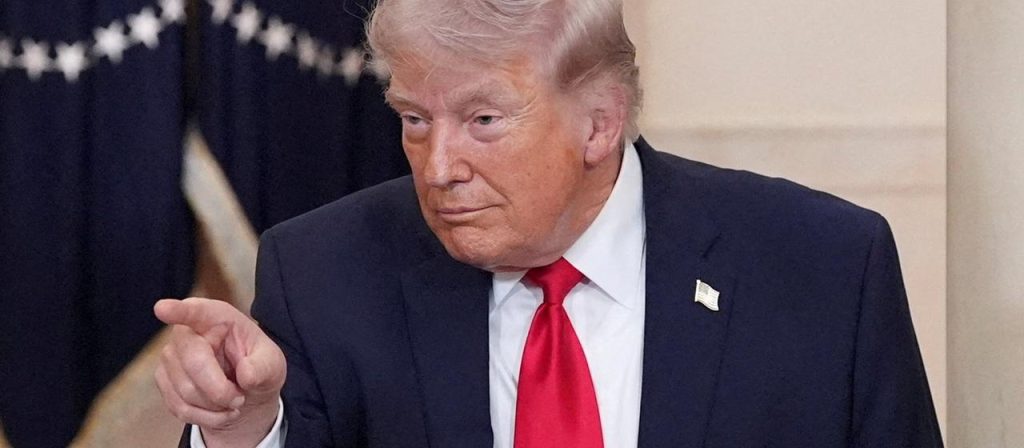
Sunday evening, May 17, 2026, Donald Trump posted on Truth Social: “The clock is ticking” for Iran. “TIME IS OF THE ESSENCE.” Markets priced in escalation. Brent jumped to $112. S&P 500 fell sharply Monday. Wall Street prepared for a war.
Then Monday evening, a second Truth Social post. Trump announced he had called off a Tuesday-scheduled military strike against Iran after the leaders of Saudi Arabia, Qatar, and the United Arab Emirates asked him “to hold off on our planned Military attack of the Islamic Republic of Iran, which was scheduled for tomorrow, in that serious negotiations are now taking place.”
Within 48 hours, the world situation has completely changed. What Sunday looked like imminent war entry, is Tuesday afternoon back to a negotiation status. Brent fell over 1 percent to $110.69 per barrel. WTI to $108.21.
But markets aren’t trading back to pre-Sunday levels. Something has structurally changed. Three Gulf allies have shown they can convince Trump in decisive moments — but only in specific configurations. What these 48 hours tell us about coming months is more important than any daily price movement.
What Actually Happened
Let’s go through the chronology honestly because the sequence is critical.
Sunday May 17, 14:30 Washington time: Trump posts on Truth Social: “The Clock is Ticking” and directly threatens Iran. Asian markets open Monday weaker. Brent gaps above $111.
Monday May 18, US market open: S&P 500 falls 0.8 percent. Dow loses 537 points. Nasdaq minus 0.9 percent. Treasury yields keep rising. Volatility index VIX jumps to 22.
Monday May 18, during the afternoon: Behind the scenes, Mohammed bin Salman (Saudi Arabia), Sheikh Tamim (Qatar), Sheikh Mohamed bin Zayed (UAE) telephone with Trump. Content not public, but outcome clearly documented.
Monday May 18, evening: Trump posts again on Truth Social. The leaders of Saudi Arabia, Qatar, and the UAE had asked “to hold off on our planned Military attack of the Islamic Republic of Iran, in that serious negotiations are now taking place.” Trump added he could order a “large scale assault” on Iran “on a moment’s notice.”
Tuesday May 19, Asian markets open: Relief rally. Brent falls 2.7 percent. Asian stocks mostly higher. US futures positive.
Tuesday May 19, Europe noon: Brent stabilizes at $110.69. WTI at $108.21. Markets process what these 48 hours really mean.
Why Saudi Arabia, Qatar and UAE Intervened
The three Gulf states have very specific economic and security interests opposing an Iran war.
Saudi Arabia: Riyadh has been running a rapprochement process with Iran since 2023, mediated by China. Saudi Arabia has no appetite for another regional war on its border. Plus: Saudi Aramco IPO values would collapse on escalation because insurance costs for ships through the Persian Gulf would explode.
UAE: Dubai and Abu Dhabi are the most important financial and logistics hubs of the region. An Iran war would close Hormuz and directly hit 30 percent of UAE’s economy. Plus: UAE has had its own diplomatic channels to Tehran open for years.
Qatar: Doha has a special position. Qatar was the main mediator in Gaza negotiations, also mediates between US and Hamas, US and Taliban. Qatar has 50,000 American troops on its soil (Al Udeid Air Base) — but simultaneously very close economic ties with Iran (shared gas field). Qatar has the largest interest in de-escalation.
These three jointly mediated. That’s new. So far, individual Gulf states have intervened, never all three coordinated.
What the Intervention Structurally Means
This is more important than the daily news value. Three Gulf allies successfully got Trump to cancel a military attack. That changes several things.
First, Trump’s negotiating position is exposed. When three phone calls from Gulf allies can stop a planned attack, it signals that Trump’s threats are primarily negotiating leverage, not fixed decisions. Markets will price this into future Trump threats.
Second, Iran has indirect mediators. Iran itself didn’t have to concede or capitulate. Saudi Arabia, UAE and Qatar mediated for Iran. That’s a face-saving mechanism enabling further negotiations.
Third, China’s “similar feelings” statement from last week gets context. Xi announced at the Trump-Xi summit having “similar feelings” toward Iran. The Gulf intervention may have been partly coordinated by Chinese background talks.
Fourth, Trump’s “TACO” pattern confirms itself. In Finance Twitter, the term “Trump Always Chickens Out” is making the rounds. This describes the pattern: Trump threatens escalation, markets price worst-case, Trump pauses, markets recover. We saw this pattern in 2025 with China tariffs, in March 2026 with Iran, and now May 2026 again.
What the Math of the Next 30 Days Says
Sunday we sketched three scenarios with probabilities. With Tuesday’s knowledge, we need to recalibrate probabilities.
Scenario 1: Military escalation (probability now 20%, down from 30%). Trump has shown he can be paused. That lowers immediate escalation probability. But Trump’s hint at “attack on moment’s notice” shows the threat remains in the room.
Scenario 2: Negotiation oscillation (probability now 60%, up from 50%). This becomes the dominant scenario. Three weeks, three months, possibly longer we’ll see similar sequences: threat, market reaction, pause, recovery. Volatility stays high but no clear trend.
Scenario 3: Diplomatic breakthrough (probability now 20%, same). The Gulf intervention could actually be the prelude to real negotiations. If Saudi, UAE and Qatar find a face-saving framework, Iran could agree. But Trump’s inconsistency makes that difficult.
What Markets Must Now Price In
Oil price stays at $109–110 Brent, despite Trump’s attack cancellation. That’s an important observation. Markets aren’t pricing “war over” but “war paused.”
Three reasons why Brent stays above $100:
First, Iran war isn’t ended, just the acute US engagement. Fundamental supply situation remains. Brent and WTI have risen over 54 percent since Iran war start on February 28. Both had recorded their sixth positive day in seven in the previous session.
Second, the IEA warning from last week remains: “severely undersupplied until October.” Even with immediate peace, it would take months until inventories return to normal.
Third, Trump volatility itself is a risk premium. If a Sunday tweet can cause 5 percent market movement, insurers and traders must price in a permanent volatility surcharge.
Which Sectors Are Doing What Now
Energy gives up war premium. Exxon, Chevron, BP were strong Monday, give back slightly today. But the sector remains structurally positioned: Iran war paused, not ended. IEA warning still applies.
Defense stocks also give back slightly. Lockheed Martin, Raytheon, Rheinmetall benefited Monday from war speculation, some correction now. But long-term thesis intact: defense spending continues rising, regardless of Iran war.
Gold is the interesting story. Gold fell from $4,583 last week to roughly $4,500. Trump’s “war paused” post has reduced safe-haven demand. But gold bulls will argue the structural threat continues and this is a buying opportunity.
Tech gets breathing room. S&P 500 stabilizes. Nvidia earnings tomorrow will create more market movement than any Iran news of the next 48 hours. Whoever aggressively sold tech could regret it tomorrow. Whoever stayed defensive remains structurally on the right side.
Treasury yields are the most important signal. The 30-year yield stays at 5.1 percent, highest level since 2007. Trump’s Iran pause hasn’t massively lowered yields. That says: markets aren’t pricing out inflation risk. Higher-for-longer stays the consensus thesis.
What BMI Readers Should Concretely Do
First, don’t overreact in either direction. Whoever panic-sold Monday, whoever panic-bought-back today — both have losses. Trump’s TACO pattern means: stick to your plan, ignore daily news volatility.
Second, check energy allocation but don’t trade hectically. If you bought energy yesterday and it falls today: that’s not the end of the energy story. Brent at $109 is still +54 percent since February. The structural thesis remains.
Third, prepare for Nvidia earnings tomorrow. That’s the more important event this week. If you hold Nvidia, clarify what you do at earnings miss (sell plan). If you don’t hold, clarify if you want to enter after earnings (watchlist).
Fourth, establish Gulf allies as indicator. When Saudi, UAE and Qatar coordinately intervene, that’s a market signal. They have more insider knowledge about regional diplomacy than any Wall Street analyst. When all three say “negotiate, don’t attack,” you should take that seriously.
Fifth, price TACO pattern into future trades. If Trump tomorrow, next week, next month dramatically threatens again, buy the dip on threat day. Sell into the “pause” rally. The pattern has now confirmed three times: April 2025 (China tariffs), March 2026 (Iran first escalation), May 2026 (Iran second escalation).
The Bigger Question
The bigger question isn’t “how long does the Iran war last?” The bigger question is: “How does market behavior adapt to Trump’s chaotic negotiation method?”
Current answer: Markets become calmer at Trump threats because they internalize the TACO pattern. Volatility stays high but directional bias disappears. Traders make money with swing strategies (buy-the-dip, sell-the-rip).
Long-term this becomes problematic. If markets price all Trump threats as bluffs, Trump eventually risks a real attack to restore credibility. That’s game theory classic: a bluffer who bluffs too often must eventually show he’s not just bluffing.
Smart money continues positioning defensively. Buffett stays out of big tech. Ackman stays in defensive Microsoft. Tepper and Druckenmiller stay energy-heavy. These positions don’t change because Trump sends a Sunday tweet or pauses Monday evening.
Sam Stovall of CFRA put it pragmatically this week: bull markets don’t die from geopolitics but from mispriced risk perception. The Iran crisis isn’t the end of the world. But it’s also not over. Whoever aligns their portfolio accordingly has an advantage over the majority swinging between panic and euphoria.
Whoever understands can navigate the next 30 days calmly. Whoever ignores reacts to every tweet emotionally. Which of the two strategies is superior shows not tomorrow, but in 90 days when we’ll look back at “the Iran saga of May 2026” as one of many Trump-induced market waves.
Try TradingView Free for 30 Days
Plus get a $15 discount on your first subscription through this link.
Read more in our topic hub: Topic Hub: Geopolitics & Your Portfolio