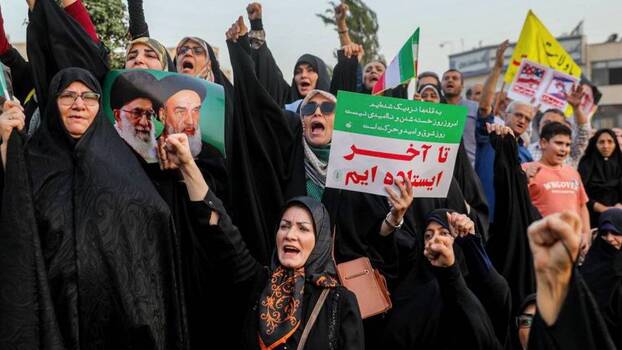
The official numbers were already shocking. Acting Pentagon Comptroller Jules Hurst told lawmakers today that the Iran war has cost US taxpayers 29 billion dollars so far. Defense Secretary Pete Hegseth had previously put the price tag at 25 billion last month. US officials familiar with internal assessments suggested at the time that costs may already have reached nearly 50 billion dollars.
The real shock number came from an unbiased observer. An expert from Harvard Kennedy School said in April the conflict could ultimately cost US taxpayers up to one trillion dollars. One trillion. That is half the entire US defense budget for a year. It is more than the annual economic output of the Netherlands.
For investors, this is not a moral question – it is a hard economic one. Who finances one trillion dollars? Who receives it? And which stocks profit from this massive capital transfer that is currently underway – even though nobody is openly talking about it?
The Anatomy of a Trillion-Dollar Bill
The 29 billion Hurst mentioned are only direct operations costs. Munitions, fuel, personnel deployment, ship movements. What Harvard’s 1 trillion dollar estimate includes are the true costs of a modern war:
First, operations: 29 to 50 billion so far, estimated 80 to 150 billion by war’s end, depending on duration.
Second, replacement of munitions and equipment: Tomahawks cost 1.8 million dollars each, Patriot interceptors 4 million, Standard Missile-6 around 4.3 million. The US Navy has expended an estimated 200+ Patriot interceptors since February. An Iranian commander said today that military drills in Tehran have demonstrated the Islamic Republic’s readiness to confront a potential new US confrontation. That means more munitions will be consumed.
Third, long-term veteran costs: Brown University’s Costs of War Project has documented that every dollar spent on war operations today generates an average 4 dollars in later veteran healthcare costs. Vietnam veteran costs peak in 2024-2025 – 50 years after war’s end. Iran veterans will peak in 2070-2080.
Fourth, indirect economic costs: Higher energy prices, disrupted supply chains, capital allocation away from investments toward security. Brent above 100 dollars costs the US economy an estimated 30 to 50 billion per quarter in reduced growth.
Fifth, geopolitical second-order costs: If China or Russia exercise options in the shadow of the Iran conflict (Taiwan, Ukraine), the bill explodes.
One trillion dollars is not exaggerated. It could be conservative.
Who Pays
Here it gets politically sensitive but investor-relevant. Economic uncertainties have tanked consumer sentiment to record lows amid the Iran war. The obvious answer: the American taxpayer. But that’s just the surface.
Realistically, a trillion is financed through three channels:
Debt issuance (70 percent probable): Treasury bonds. Meaning: inflation as a hidden tax. Anyone holding US dollars – including Europeans with dollar investments, including savers in DACH countries with world ETFs – pays.
Direct taxes (10 to 20 percent): Possibly an “Iran War Recovery Tax” like after 9/11. Primarily hits higher incomes.
Foregone spending (10 to 20 percent): Infrastructure programs, social programs, research. The “opportunity costs” are the most invisible but most real category.
For DACH and European investors, the debt issuance channel is particularly relevant. When the US issues another trillion in debt, it pushes Treasury yields higher – which influences mortgage rates worldwide, shifts exchange rates, and pressures ECB policy.
Who Receives It – The Obvious Winners
Defense stocks are the only sector where the majority of cash flows come directly from wars. Iran tensions have caused oil stocks to rally. With a trillion-dollar program volume, the biggest chunks go to:
Lockheed Martin (LMT): F-35 maintenance, Aegis systems, THAAD missiles. Defense backlog already at record. With a prolonged Iran conflict: +20 to 30 percent backlog growth by 2028.
Raytheon (RTX): Patriot systems, Tomahawks, Standard Missile. Direct munition supplier. At current consumption rate plus replacement procurement: 40 to 50 billion additional orders over 5 years realistic.
Northrop Grumman (NOC): B-21 stealth bomber, reconnaissance satellites. Indirect beneficiary of increased procurement.
General Dynamics (GD): Submarines, munitions (ATK division), armored vehicles.
Hexcel and TransDigm: Component suppliers with high margins.
In Europe: Rheinmetall, BAE Systems, Thales, Leonardo, Saab – the “Trade of the Decade” story that BMI analyzed extensively last month. Rheinmetall has been on a multi-year upward path since 2022; the Iran war is just the next episode.
Who Receives It – The Hidden Winners
This is where it gets more interesting. Defense is obvious. But war is a complex system with dozens of sectors that benefit indirectly – and often aren’t priced in.
Energy: With Brent above 100 dollars, Exxon, Chevron, BP, Shell produce extraordinary free cash flows. Iran tensions have caused oil stocks to rally. But selectively: pure upstream plays like EOG Resources or Pioneer Natural Resources benefit more than integrated majors.
Logistics and transport: War shifts supply chains. Shippers like Maersk and Hapag-Lloyd benefit from disrupted routes (higher freight rates). Defense-oriented logistics like Kuehne+Nagel benefit too.
Cybersecurity: With Iran as a cyber-adversary, government contracts for Palo Alto, CrowdStrike, Fortinet explode. Already +20 to 40 percent on top names since February.
Semiconductors with defense components: Texas Instruments, Analog Devices, Mercury Systems. These chips go into Patriot systems, drones, reconnaissance. Less volatile than consumer-tech semiconductors.
Gold: The classic crisis hedge. But importantly: gold has already run hard in 2026. The question is not “gold yes or no” but “at what price gold.” Currently between 2,800 and 2,950 USD per ounce, the risk-reward is less attractive than 2023.
Who Loses
Every capital transfer has losers. At one trillion dollars in war costs:
Consumer goods without pricing power: Discount retailers like Dollar Tree, restaurant chains like Cheesecake Factory. When consumers have less money, non-essential discount purchases get cut first.
Travel sector: Airlines, cruise lines, hotels. Higher fuel costs plus reduced disposable income plus security concerns in certain regions.
Growth tech without profits: Unprofitable SaaS and biotech companies dependent on cheap capital. With rising yields, their future cash flows become worth less.
Real estate sectors: REITs, especially office and retail. Higher rates plus weakened consumer.
What Investors Should Concretely Do Now
First, reality check. Is your portfolio structurally prepared for a long Iran conflict? If 80 percent of your positions are in S&P 500, you have defense and energy only indirectly. With a trillion-dollar capital transfer, that’s a significant underweight.
Second, build or strengthen defense exposure. iShares U.S. Aerospace & Defense ETF (ITA), VanEck Defense ETF (DFEN), or direct positions in LMT, RTX, and NOC. European alternative: Rheinmetall, BAE, Leonardo directly or via corresponding ETFs.
Third, review your energy position. If energy share is below 5 percent: consider increasing. If above 15 percent: possibly take profits, because a Trump-Xi deal could drop Brent by 20 to 30 dollars in 48 hours.
Fourth, adjust cash quota. In a conflict of unknown duration, 10 to 15 percent cash makes more sense than 5 percent. Optionality is valuable in volatile times.
Fifth, watch BMI Smart Money Tracker. Hedge funds like David Tepper (Appaloosa) and Stan Druckenmiller have acted counter-cyclically in past conflicts – selling defense during peaks, buying tech during troughs. What are they doing now?
The uncomfortable truth: a trillion-dollar war will happen, with or without your portfolio. The only question is whether you stand on the side receiving the capital transfer, or on the side financing it. For all its moral complexity, this is a decision investors make every day with their allocation – even if most don’t do it consciously.
Try TradingView Free for 30 Days
Plus get a $15 discount on your first subscription through this link.
Read more in our topic hub: Topic Hub: Geopolitics & Your Portfolio