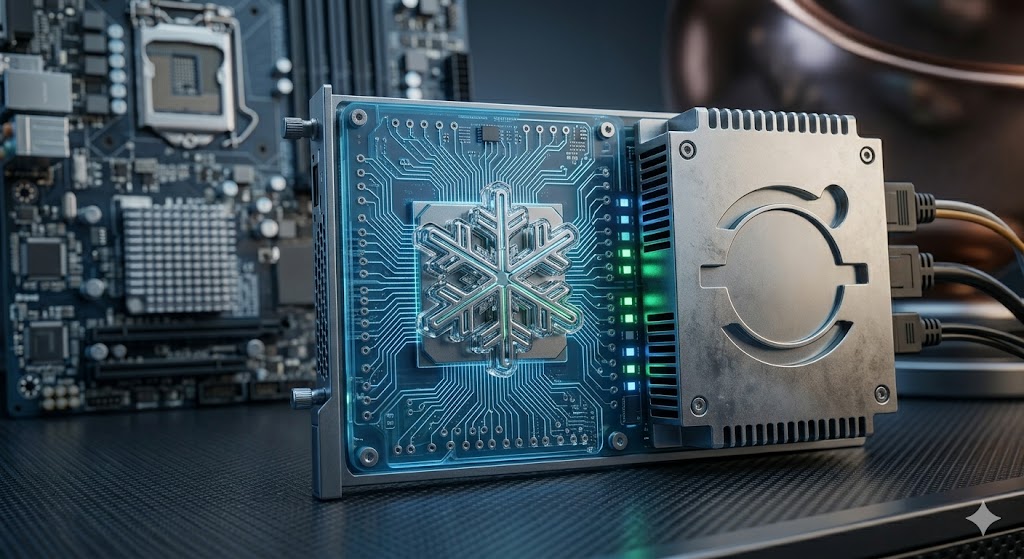
Snowflake delivered solid numbers after the bell on Wednesday. Revenue above expectations, guidance raised, every metric green. The stock jumped 25 percent. But here is the interesting part: the beat was not the reason. The reason was one sentence about chips — a 6 billion dollar bet on Amazon’s Graviton CPUs. This is the story that shows how the market’s valuation logic has shifted in 2026.
The numbers first
Snowflake reported for Q1 of fiscal 2027 (quarter ended April 30, 2026):
- Product revenue: 1.33 billion dollars — +34 percent YoY
- Total revenue: 1.39 billion dollars — +33 percent YoY
- Net revenue retention: 126 percent (customers spending more than a year ago)
- Customers with >1 million dollars in revenue: 779 (+29 percent YoY, with 46 new in Q1 alone)
- Remaining performance obligations: 9.21 billion dollars — +38 percent YoY
And the real driver: Snowflake raised full-year guidance — product revenue growth of 31 percent to 5.84 billion dollars, up from 5.66 billion.
Solid. But 34 percent growth is not a shock for Snowflake. So why +25 percent?
The sentence that moved the stock
As part of earnings came the actual bombshell: Snowflake is entering an agreement with Amazon Web Services under which Snowflake will pay 6 billion dollars over the next five years for access to Amazon’s Graviton CPUs in its data centers.
This is one of the largest commitments to AWS’ own chip architecture ever. And the market rewarded exactly that — not the revenue beat, but the signal: Snowflake is scaling its AI infrastructure so aggressively that it is locking itself into a single chip provider for five years.
Why this moved more than the beat
Here is the deeper logic. In 2026, the market values AI companies not primarily on what they earn today — but on what their infrastructure investments reveal about future demand.
A 6 billion dollar chip commitment is a vote of confidence in your own pipeline. You don’t commit to compute for five years unless you’re convinced the demand will be there. The deal is Snowflake’s way of saying: Our AI products — Cortex Code, Snowflake Intelligence — are growing so fast that we have to secure compute capacity now.
CEO Sridhar Ramaswamy called Q1 a clear inflection point in the AI journey. The market reaction was essentially: we believe you.
The Tale of Two SaaS
Meanwhile a counter-story runs in the background. While Snowflake explodes, Salesforce (CRM) — also reporting this week — sits under pressure over concerns about soft guidance. In 2026 the market separates brutally: SaaS companies with a clear AI growth story get rewarded, those with maturity concerns get punished.
This is no longer a sector trade. It’s a selection trade. Software as a category says nothing anymore — what matters is whether the company sits on the right side of the AI wave.
The chip-mania context
Snowflake’s deal doesn’t come in a vacuum. This week was the week of memory and chip stocks:
- Micron crossed 1 trillion dollars market cap (+200 percent in 2026) after UBS nearly tripled its price target
- SK Hynix jumped 11 percent and also crossed the trillion-dollar mark
- Intel has tripled in 2026
AWS’ Graviton push is part of the same megatrend: hyperscalers are building their own chips to reduce Nvidia dependence and protect margin. When Snowflake puts 6 billion into Graviton instead of Nvidia GPUs via AWS, that’s a data point for the thesis that custom silicon is redistributing the data-center market.
The warning nobody wants to hear
This is exactly where the danger lies. Market strategists increasingly warn openly of froth — chip valuations have run far ahead of fundamentals. Micron has eight-folded in 12 months. Historically, chip boom cycles are followed by bust cycles. That’s not a question of if, but when.
Snowflake’s 6 billion dollar bet is rational — if AI demand keeps growing this way. If it cools, Snowflake sits on an expensive five-year contract for compute it may not fully need. That’s the risk behind the cheering.
Three scenarios for AI infrastructure
Scenario 1 — Demand holds (~50 percent): AI adoption keeps accelerating, Snowflake’s bet pays off, the custom-silicon trend prevails. Bullish for the whole data-center chain.
Scenario 2 — Consolidation (~35 percent): Growth stays strong, but inflated valuations correct. Snowflake’s business runs, the stock not necessarily. A healthy cooldown.
Scenario 3 — Bust (~15 percent): The AI capex bubble pops, overcapacity, write-downs of compute contracts. The strategist warnings come true.
What investors should concretely do
- Understand the difference: AI stock is not a category. Ask of every name: does the company earn from AI or only spend for AI? Snowflake does both — that’s the strength.
- Chip valuations with caution: Micron +800 percent in 12 months is not a sustainable pace. Buying in now means buying the peak of the hype cycle.
- Watch RPOs and NRR: For SaaS, remaining performance obligations (9.21 billion at Snowflake) and net revenue retention (126 percent) are the more honest metrics than quarterly revenue.
- Diversify across the chain: Instead of chasing a single chip stock, look at the whole infrastructure — compute, memory, software, energy.
- Plan for taxes: US tech gains are subject to your local capital gains tax plus possible US withholding. Calculate net.
The honest bottom line
Snowflake’s +25 percent wasn’t a reward for a good quarter — it was a reward for a signal. The 6 billion dollar chip deal told the market what earnings alone couldn’t: this company believes so strongly in its own AI pipeline that it’s locking in for five years.
This is the new valuation logic of 2026 — the market buys conviction, not profits. That works wonderfully as long as the conviction is justified. The day AI demand stalls is the day all these five-year contracts turn from fuel into ballast. Snowflake won today. The question is whether it still wins in five years.
Try TradingView Free for 30 Days
Plus get a $15 discount on your first subscription through this link.
Read more in our topic hub: Topic Hub: Quarterly Earnings Tracker 2026