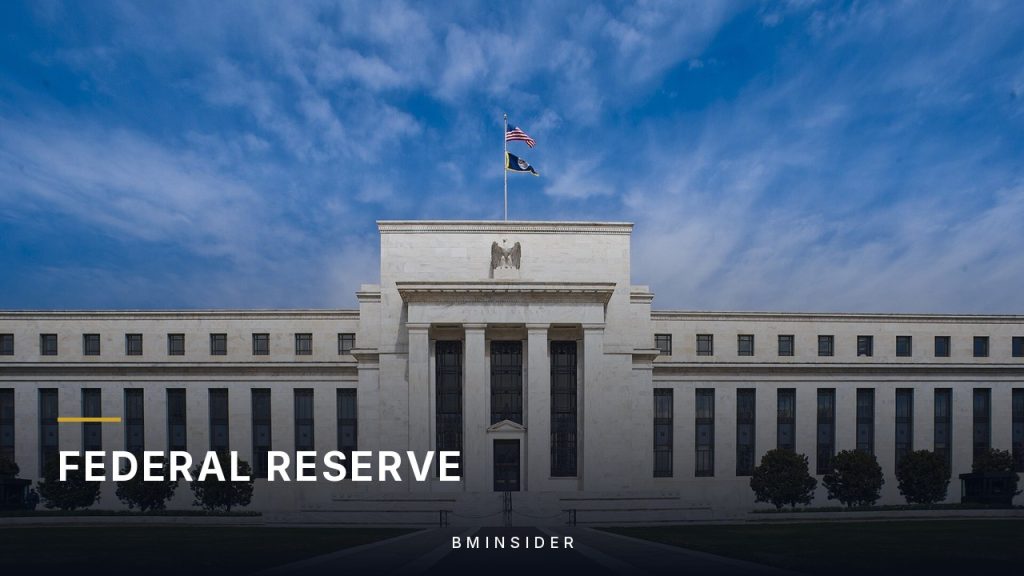
There are central bank speeches you judge by what is in them. And there are speeches you judge by what has been deliberately left out. Kevin Warsh’s Jackson Hole debut last Friday, 28 August, belongs firmly in the second category. On his hundredth day as Chair of the Federal Reserve, standing on the most closely watched monetary stage in the world, he took considerable care not to say what his committee will do on 15 and 16 September.
That was not an oversight. It was the subject. Warsh delivered a text titled In Our Time, and early in it came the line that summarises the whole thing: you can call it an outline, you can call it a trail map, just don’t call it forward guidance. That practice, he said, has overstayed its welcome. Elsewhere, more compactly still: he stands committed to a discipline, not to a decision.
Anyone who takes away only the headline — the Fed is worried about inflation — has missed the more consequential half. The structural story is that America’s central bank is throttling back its own information output. Fewer advance signals, possibly fewer meetings, explicitly less commentary. For a market that has spent fifteen years trading the Fed’s next sentence rather than the economy underneath it, that is the most important change of the year, and it appears in nobody’s rate forecast.
What was actually said in Wyoming
The Kansas City Fed’s symposium this year carried the theme of financial innovation and its implications for payments and policy. Warsh largely set that aside and delivered instead a statement of intent about how he means to run the institution. He laid out seven principles, and the list repays close reading, because it tells you more about the coming months than any dot plot would.
First, decisions belong on timely, accurate data rather than stale series or isolated readings. Second, policy must align aggregate demand with supply — carrying the built-in admission that an economy’s underlying supply capacity cannot be directly observed, which is a source of permanent uncertainty. Third, the two percent target is firm and fixed, and inflation must not be treated as something that fades on its own. Fourth, price stability and maximum employment are not inherently in conflict, because high inflation damages prosperity itself.
The final three concern the toolkit. The policy rate is the primary instrument; unconventional measures designed to stimulate the economy may be appropriate in genuine crises but should otherwise be used sparingly, if at all. Money matters again — both the money the central bank creates and the money the financial system generates on its own, however much payment innovation complicates the measurement. And seventh: a quieter Fed, more purposeful in its communications, would be better positioned to meet its objectives.
Then came a line that addresses the market relationship head on. Warsh wants a central bank where participants are not looking primarily to the Fed for their next trade. That is unusually blunt. Chairs normally say they do not wish to surprise markets. This one is saying he does not wish to be the main character.
He has already built the machinery. Warsh has stood up five task forces to review the Fed’s operations: communications, balance sheet policy, data, productivity and jobs, and the inflation framework. Each is staffed with outside academics and business figures rather than exclusively with central bank personnel — which is itself a statement about where he thinks the institution’s blind spots are.
The real break: eight meetings, unchanged since 1981
The furthest-reaching idea did not surface on Friday at all. It is written into the minutes of the 28–29 July meeting, where it is recorded that the Chairman raised the notion that six scheduled meetings per year, held roughly every two months, would allow more information to accumulate between meetings and leave more room for strategic deliberation. No decision was taken. It was floated as a discussion topic, not a proposal.
It is worth registering which constant is being put on the table. The Federal Open Market Committee has met eight times a year since 1981. That is not a statutory requirement — the Banking Act of 1935 sets the minimum at four — but a practice adopted under Paul Volcker in the middle of his campaign against inflation, and untouched for forty-five years since. Before that the committee met monthly, and more often under stress. The eight is itself already a reduction from something busier.
Warsh has not hidden the view. At his confirmation hearing in April he told Senator Ruben Gallego that four meetings would be too few, while indicating that something above four would be appropriate. The political resistance has organised accordingly: Gallego has since raised a public alarm, on the straightforward ground that a central bank with six dates instead of eight necessarily takes longer to respond when conditions deteriorate.
The objection is serious, though technically solvable. The committee can convene at any time. The trouble is that doing so carries a cost in the current vocabulary: an unscheduled Fed meeting reads as an emergency. What would be a routine adjustment on an eight-date calendar becomes a headline event on a six-date one. The flexibility survives on paper and gets more expensive in practice.
The numbers behind the hard tone
The reason for the sharpness is in the price data. Headline PCE inflation, the Fed’s preferred gauge, ticked up to 3.7 percent year over year in July. Core PCE, stripping out food and energy, came in at 3.3 percent annually and rose 0.2 percent on the month. Wall Street had penciled in 3.2 percent for the core reading. Warsh’s assessment was clinical: the summer figures were better than expected, but they do not tell him that underlying trends have meaningfully improved.
The target is two percent. Core is running 130 basis points above it. And the federal funds target range sits at 3.50 to 3.75 percent after the late-July meeting, where the committee held by a vote of nine to three. The three dissents came from Beth Hammack, Neel Kashkari and Lorie Logan, each of whom preferred to raise the range by a quarter point. A third of the voting committee was already there in July.
That frames the actual question. It is not whether the Fed cuts — that debate is over. It is whether it hikes. Following the speech, economists put the probability of an increase at the 15–16 September meeting at roughly sixty percent. Warsh never used the word. His formulation was the coded version: the committee must be confident that underlying inflation is moving to its objective, clearly and at sufficient speed; otherwise, it has work to do.
What the market made of it on Friday
The equity response was muted. The S&P 500 slipped 0.25 percent to close at 7,711.76, the Nasdaq Composite fell 0.52 percent to 26,402.42, and the Dow Jones Industrial Average finished essentially flat, down 9.45 points at 53,559.99. On the week all three still finished higher: the S&P up about half a percent, the Nasdaq up 0.9 percent, the Dow up half a percent for its first winning week in three. Semiconductors did the dragging on Friday, having already run on Nvidia’s strong results earlier in the week.
The bond market answered more precisely, as it usually does. The two-year Treasury yield added roughly twelve basis points to finish near 4.35 percent, having sat at 4.24 percent the day before. The ten-year moved from about 4.67 toward 4.72 percent — call it five basis points.
That asymmetry is the actual news of the day. When the front end rises twelve basis points and the long end five, the curve flattens. Translated: the market raised the odds of a near-term hike while declining to raise its long-run inflation expectations. It believes him. Not in the sense of knowing what the Fed does in September, but in the sense of crediting the institution with getting the two-handle back eventually. A chair who promises nothing and still leaves long-run expectations anchored won more on Friday than one who had pre-announced a move.
Europe has been living in this regime since 2022
Before treating this as an American experiment without precedent, look across the Atlantic. The European Central Bank abandoned pre-commitment in the summer of 2022. Christine Lagarde said at the time that she had felt bound and compelled by her own forward guidance, and moved the Governing Council to a meeting-by-meeting, data-dependent approach with no preset path. Communication was not abolished but reoriented: away from statements about what the bank will do, toward statements about how it reads incoming data — what Lagarde called framework guidance.
Four years on, the results are legible. The shift did not stop the market from trading ECB decisions. It relocated when the trading happens: the price action migrated from Governing Council days to inflation release days. That is the realistic forecast for the Fed. A quieter central bank does not make markets less dependent on monetary policy; it moves the volatility from meeting days onto data days.
The current European setup sharpens the parallel. On 23 July the Governing Council held rates: deposit facility at 2.25 percent, main refinancing operations at 2.40 percent, marginal lending at 2.65 percent, following a 25 basis point increase in June. Chief Economist Philip Lane has called euro area inflation running close to three percent unacceptable, and money markets assign a high probability to a further increase at the 10 September decision. So the same question stands on both sides of the Atlantic in September — and on both sides the relevant central bank declines to answer it in advance.
Who gets paid and who pays
For investors the load-bearing insight is that what is being repriced here is not the level of rates but the uncertainty about the level of rates. Those are different exposures and they sit in different securities.
The cleanest beneficiaries are the operators of the infrastructure on which uncertainty is traded. CME Group runs the SOFR and Treasury futures complex where rate risk is actually transferred; a world in which participants must hedge a wider distribution of possible paths is structurally good for that volume. Cboe Global Markets owns the volatility franchise itself, from the VIX complex to the index options that get bought when the distribution widens. Interactive Brokers and Charles Schwab earn on activity and on client cash balances at a higher policy rate. It is an unglamorous argument but a clean one: the house that runs the scale gets paid regardless of which way it tips.
On the other side sit the long-duration names. Homebuilders such as D.R. Horton and Lennar are levered not to today’s rate but to the mortgage rate borrowers expect over the next decade, and the wider the plausible range, the larger the discount the market demands for holding that range. The same logic runs through equity REITs and through the long Treasury complex directly. Regional banks are messier than the rule of thumb suggests: a higher policy rate lifts asset yields, but a flatter curve squeezes the maturity transformation that the business model depends on, since that spread is the product. Twelve basis points at the front and five at the back is not a friendly combination for a loan book. Life insurers, by contrast, benefit fairly unambiguously from a durably higher reinvestment rate.
For American private investors, the tax layer matters more here than in most trade ideas, because a call on a specific meeting is by construction a short-horizon position. A holding sold inside one year is taxed as ordinary income at rates up to 37 percent, while a position held beyond twelve months qualifies for long-term treatment at 0, 15 or 20 percent, with the 3.8 percent net investment income tax on top for higher earners. The gap between the two regimes is often larger than the move being predicted. And there is a subtler point for index investors: if you own a broad market fund, you already hold CME, Cboe, the banks and the homebuilders in their index weights, so an explicit rate view expressed on top of that is a smaller marginal bet than it looks.
The counterarguments, and they are not weak
It would be dishonest to present the rising-uncertainty-premium thesis as settled. The dispute is live and both sides have substance.
George Catrambone, head of fixed income for the Americas at DWS Group, puts the warning plainly: it is certainly going to increase volatility, because less transparency forces market participants to hedge or to price a wider dispersion of outcomes. That is the standard logic — less information, more hedging demand, higher premiums. Critics add that less frequent decisions do not reduce volatility so much as concentrate it: instead of eight smaller events you get six larger ones.
Against that stands an argument with its own empirical backing. Russell Rhoads of Indiana University’s Kelley School of Business points out that volatility around Fed meetings has diminished greatly precisely because of increased transparency. Take that finding seriously and it can be read either way — if transparency damped the swings, removing it brings them back; but it also implies the market adapted to a communication regime once before and can adapt again.
The third objection is the most fundamental, because it attacks the premise. It is not at all obvious that a market told less by the Fed will look at the Fed less. The likelier outcome is that it aims the same attention at a narrower signal band — every word of the remaining statements, every regional president’s speech, every data point read as a trigger. Less information does not automatically produce less interpretation. Sometimes it produces more, on a worse basis. The European experience since 2022 supports that reading rather more than it supports the hope of a calmer market.
What to watch now
The next hard date is 15 and 16 September. Anyone positioning for it should recognise that they go in with less advance information than for any comparable decision in fifteen years. Roughly sixty percent is not a consensus; it is a weighted coin. The three July dissenters remain on the committee and remain in favour of a hike.
More important than September itself is the calendar question. If the committee does move to six meetings, that is the first change to this structure since 1981 and far more than an administrative detail. It would determine how often the most important price in the world economy is even put to a vote. The five task forces are the better leading indicator here than any speech: what emerges from the communications group and the inflation framework group will decide whether Jackson Hole was a snapshot or the start of a different operating mode.
Which leaves the sentence Warsh offered as the core of his own job description: he stands committed to a discipline, not to a decision. For a central banker that is a remarkably confident thing to say, because it asks to be trusted on the discipline without disclosing the decisions. The bond market extended exactly that credit on Friday, in the form of a flatter curve. Whether he keeps it will not be settled in Wyoming but in the inflation prints of the coming months — and in whether a quieter Fed turns out to be one that is easier to listen to, or merely one that is harder to understand.
Try TradingView Free for 30 Days
Plus get a $15 discount on your first subscription through this link.
Read more in our topic hub: Topic Hub: Fed Policy, Rates & Bonds 2026