President Donald Trump took to social media on Sunday evening to declare what markets had been pricing in fits and starts for the past five trading days: the U.S.-Iran peace deal is “now complete.” Within minutes, Iranian deputy foreign minister Kazem Gharibabadi confirmed the agreement on state TV, and Pakistan’s Prime Minister, the surprise mediator that brokered the final language, set a signing ceremony in Switzerland for Friday, June 19. By Monday’s premarket open in New York, Brent had collapsed nearly five percent, Nasdaq-100 futures were up two, and Lockheed Martin was indicated sharply lower for the first time in months.
This is the largest single geopolitical de-escalation Wall Street has digested since 2024, and it lands four days before a Federal Reserve meeting already shaping up as the most consequential of the year. The market is being asked to reprice oil, defense, airlines, gold, the dollar, the long end of the Treasury curve, and the Fed’s reaction function — all in one session. The opening prints are the easy part. The hard part is figuring out which moves stick.
What’s Actually in the Deal
The 14-page memorandum of understanding leaked overnight is more substantive than the diplomatic theater of the past week suggested. The headline provision is a hard commitment to reopen the Strait of Hormuz “toll free” within 30 days, with the U.S. naval blockade of Iranian ports — imposed after last week’s Apache helicopter shootdown — ending immediately upon signing. Roughly 20 percent of the world’s seaborne oil and gas moves through that 21-mile chokepoint, and its functional closure since early June had been the single largest factor in the spring crude spike.
In exchange, Washington commits to lifting oil sanctions and a tranche of financial sanctions, while Iran formally pledges not to pursue a nuclear weapon. The “no nuclear weapon” language is the diplomatic prize Trump has sought since his first term, and it goes further than the 2015 JCPOA framework on enforcement, with the U.S. and its allies committed to submitting reconstruction plans for Iran within the next 60 days. That same 60-day window is the negotiating runway for the final, lasting deal — which means what gets signed Friday is the architecture, not the finished house.
Pakistan as mediator is the wild card nobody had on their bingo card. Islamabad’s involvement reflects both its long-standing back-channel with Tehran and its desire to be seen as a regional peace broker rather than the perennial proliferation concern. For markets, the identity of the mediator matters less than the credibility of the timeline. The 30-day Hormuz clock starts ticking Friday.
The Oil Shock
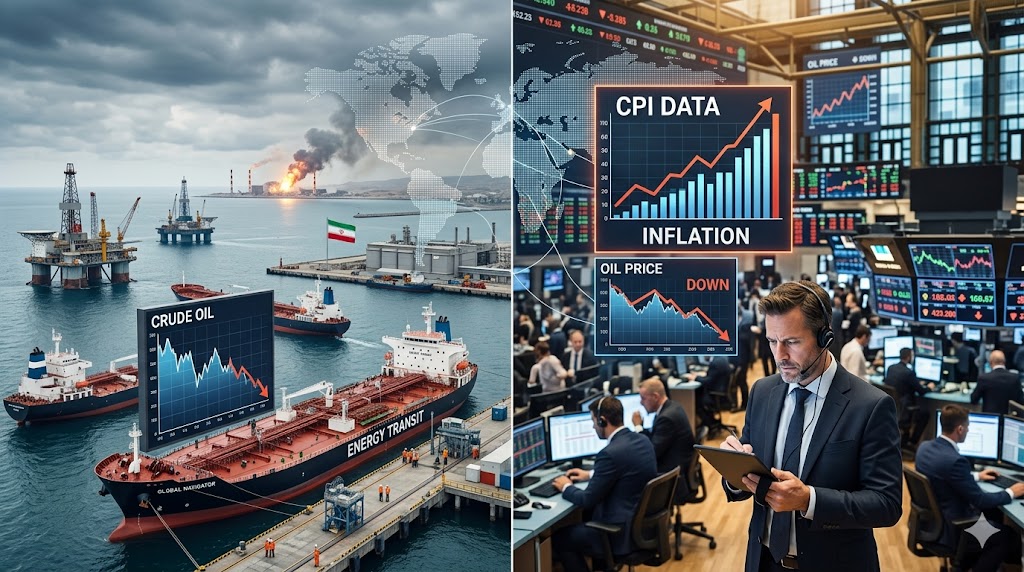
Brent crude is trading at $83.25 a barrel as of the European open, down $4.08 or 4.7 percent on the session and now sitting at its lowest level since March 10. West Texas Intermediate is down even harder, off $4.35 or 5.1 percent at $80.53. That puts both benchmarks roughly $15 to $18 below their early-June panic highs, when the market was pricing in extended Hormuz closure and the tail risk of a broader regional war.
The move is mechanically simple: a strait that carries one in every five barrels of globally traded oil is about to reopen, the largest geopolitical risk premium of the year is being extracted from the curve, and speculative long positioning built up over the past month is being unwound at once. The forward curve is steepening in contango at the front, suggesting traders expect physical supply to normalize faster than demand can absorb it. Refiner crack spreads, which had blown out on supply scarcity fears, are compressing sharply.
U.S. retail gasoline, which had pushed toward $4.20 a gallon nationally, should ease back toward the $3.70 range over the next three to four weeks as refiner input costs reset. That’s a meaningful disinflationary impulse heading into Wednesday’s FOMC. For oil exporters, sovereign budgets built around $90 Brent are suddenly under pressure, and OPEC+’s months-long defense of price discipline just got rendered moot by a diplomatic stroke from outside the cartel entirely.
Wall Street Rips
Risk assets are doing what they do when a tail risk gets removed: they go up, hard and fast. Nasdaq-100 futures are bid two percent higher, the S&P 500 contract is up 1.2, and the Dow is indicated about 0.8 percent firmer in a 50,800 to 51,400 range. Breadth is the tell — every cyclical and growth corner of the market is participating, and the only red on the screen is in defense, energy, and precious metals.
The dollar is sliding against everything except the yen, with the DXY off about six tenths of a percent. That sounds counterintuitive on a risk-on day, but it tracks: peace reduces safe-haven demand for the greenback, and disinflation from cheaper oil makes the Fed more, not less, likely to cut. Treasuries are rallying across the curve, with the 10-year yield down roughly eight basis points to a 4.06 handle and the 2-year off ten. The bond market is voting that lower oil means lower CPI means a more dovish Fed.
Gold, the perfect hedge on the way up, is the perfect victim on the way down. Spot is off about two percent, with the move concentrated in the safe-haven premium rather than the real-rate component. Bitcoin is up sharply on the same risk-on logic.
Winners
Airlines are the cleanest beneficiaries on the tape. Alaska Air is indicated up 4 percent, Delta and United are bid 3 to 3.5 percent higher, Southwest is up roughly 3, and JetBlue is showing a 4 percent gain. The math is straightforward: jet fuel accounts for 25 to 30 percent of operating costs at U.S. carriers, and a sustained $15 drop in crude translates directly to several hundred million dollars of annualized margin at each of the majors. Reopened Middle East airspace and the prospect of resumed Tehran and broader Gulf routings is a smaller but real second-order benefit.
Cruise operators are seeing similar enthusiasm. Carnival, Norwegian Cruise, and Royal Caribbean are each up between 3.5 and 5 percent in the premarket, reflecting both the fuel tailwind and the reopening of Persian Gulf and broader Middle Eastern itineraries that had been suspended since May. Container shipping is up across the board, with the Hormuz reopening removing the rerouting penalties that had bloated freight rates over the past month.
The mega-cap tech complex is participating for a different reason: lower oil compresses inflation expectations, which lowers the discount rate, which is mechanical fuel for long-duration cash flows. Nvidia is up nearly 3 percent, Microsoft and Apple are each indicated about 2 percent higher, and Tesla is bid up 4. The semiconductor index is following along, with the entire AI capex theme getting a tailwind from the risk-on rotation. Consumer discretionary is in on the move too — every dollar that doesn’t get burned at the gas pump is a dollar that can flow into Amazon, Home Depot, or Chipotle.
Losers
Defense is the obvious other side of this trade. Lockheed Martin had been up roughly 40 percent year-to-date 2026 on the war buildup thesis, and it’s indicated lower by 5 to 6 percent in the premarket. Northrop Grumman, RTX, General Dynamics, and L3Harris are all down between 3 and 7 percent. The selling pressure is sharpest in names that derived the most of their recent rally from Middle East conflict premium and softest in names with longer, more diversified backlogs.
There’s a nuance the tape is starting to recognize. Northrop’s backlog is heavy with B-21 bomber production and ICBM modernization — programs that aren’t getting canceled because Iran signed a piece of paper in Geneva. RTX has more direct Middle East munitions exposure through Patriot and Stinger, which is why it’s the sharper drop. Lockheed sits in between, with F-35 international demand likely robust regardless of the Iran outcome. Investors fading today’s defense selloff should pick on backlog composition, not sell the index reflexively.
Oil majors are getting hit hard. ExxonMobil is down 3.5 percent, Chevron is off 3, ConocoPhillips is down 4. The oilfield services names are bleeding worse, with Schlumberger and Halliburton each indicated 5 percent lower. Refiners are down too in the immediate read, though they should recover some ground as crack spreads find a new equilibrium over the coming sessions. Occidental is the relative loser among integrateds given its Permian leverage to lower WTI.
Gold miners are the third leg of the losers’ table. Newmont and Barrick are both off about 3 percent, tracking the underlying metal lower as the safe-haven trade unwinds. The lower-rates tailwind partially offsets the safe-haven hit, but in the immediate move, the risk-off premium dominates.
The Fed Connection
This deal lands forty-eight hours before the FOMC’s June meeting, and it changes the conversation in Washington in a way that nobody on the committee anticipated when they sat down to draft last week’s pre-meeting materials. Wednesday is Kevin Warsh’s debut as Chair, and futures markets had been pricing roughly a 56 percent probability of at least one hike before year-end given his hawkish reputation and the inflationary pressure from $90 oil.
That thesis just took a body blow. If Brent holds in the low $80s — or, more bearishly, drifts toward the $75 range over the summer as Iranian barrels return to the market — the headline CPI math gets meaningfully softer over the next two quarters. Energy contributes roughly 7 percent to the CPI basket directly and bleeds into transport, food, and goods inflation indirectly. A sustained $15 drop in crude could shave 30 to 50 basis points off the headline CPI run rate by Q4.
The market’s read this morning is that Warsh’s hawkish opening will get diluted. The dot-plot reform that’s been telegraphed for weeks — fewer dots, longer horizons, a more explicit reaction function — is still expected, but the directional bias of those dots is now shifting marginally dovish. The two-year yield’s ten basis point rally is the bond market’s vote that the hiking thesis is dead. The harder question is whether Warsh, on his first meeting, accepts that gift or pushes back against the market’s complacency.
What Could Break
Four days separate Sunday night’s announcement from Friday’s signing, and a lot can go wrong in four days. Saudi Arabia and Israel were notably absent from the diplomatic prelude, and both have public reasons to oppose any deal that legitimizes Tehran without commensurate concessions on proxy networks. Netanyahu’s government has reflexively rejected past Iran deals, and Israeli airstrikes inside Iran at any point this week would put the framework in jeopardy.
The Iranian side has its own internal split. The Revolutionary Guard hardliner faction has spent a decade building its political identity around resistance to U.S. demands, and the optics of signing in Switzerland with American sanctions relief as the carrot will not sit well with that constituency. Khamenei’s apparent endorsement is holding the line, but his health and succession are market risks the consensus tape has not priced.
In Washington, a permanent lifting of sanctions ultimately requires Senate ratification, and the Senate is not going to move on a 60-day timeline. What Trump can do executively is freeze enforcement and issue waivers — meaningful, but reversible.
The hardest test is operational. Reopening Hormuz within 30 days requires Iranian commitment to non-interference with tanker traffic, U.S. naval drawdown on a synchronized schedule, and reinsurance markets willing to underwrite Gulf routes at non-emergency rates. Until tankers are physically transiting the strait at pre-crisis volumes — which won’t be clear for three to six weeks — the oil rally back to $90 remains a credible tail scenario.
Bottom Line
The trade for this week is straightforward; the trade for the next quarter is hard. This week: airlines and cruise lines are cleaner adds than tech mega-caps because the catalyst ties more directly to operational news than to discount-rate math. Defense rotation should be selective — names like Northrop with B-21 and ICBM backlog deserve to be held through this print, while names with concentrated Middle East munitions exposure deserve to be trimmed. Energy positions need cutting or hedging, not abandonment, given the risk of Hormuz reopening slower than the 30-day timeline implies.
The bigger picture trade is about the Fed. If Wednesday’s FOMC accepts the disinflationary gift and Warsh’s dot plot tilts marginally dovish, the rally extends and the duration trade — long Treasuries, long growth, long quality — works for the next three to six months. If Warsh pushes back on market pricing and reasserts a hawkish bias despite the oil collapse, the equity rally truncates and the curve flattens.
Watch three triggers. First, Friday’s Switzerland signing — anything short of a clean ceremony with all parties present invalidates the premium. Second, FOMC Wednesday and the press conference around it. Third, the first tanker transits through Hormuz in early July, the real-world test of whether this paper deal has operational legs. Oil at $75 by Labor Day is the bull scenario for equities; oil back at $90 within sixty days is the unwind that forces a violent rerating of everything Wall Street is bidding higher this morning.
Try TradingView Free for 30 Days
Plus get a $15 discount on your first subscription through this link.
Read more in our topic hub: Topic Hub: Geopolitics & Your Portfolio