When a Regulator Kills a $3.7 Billion Merger
Some Mondays the market-moving story comes not from an economic release but from a regulator’s office in London. As Wall Street reopens after the long Independence Day weekend — the Dow closed Thursday at a record near 52,900 even as technology and semiconductor names buckled under selling pressure — a company far from the megacap spotlight has pulled the plug on a deal it spent a year and a half building. Getty Images is walking away from its planned merger with rival Shutterstock. The combination, which would have fused the two largest suppliers of licensed imagery into a roughly $3.7 billion enterprise, is dead. And Shutterstock shareholders paid the bill in a single session: the stock cratered about 30% in after-hours trading.
For investors, this is more than a footnote from the media business. It is a case study in two forces that are shaping equity prices in 2026 as rarely before: the growing willingness of competition regulators to torpedo large mergers even at the finish line, and the generative artificial intelligence that is hollowing out an entire business model from below. In this instance the two collide in one concrete event. That is exactly why it is worth looking behind the headline.
What Actually Happened
The timeline is sobering in its simplicity. The merger was announced in January 2025 — a strategic answer from two established players to a market shifting under their feet. The plan folded Shutterstock into Getty Images to create an imagery giant with combined bargaining power, shared costs and a deeper archive. In April 2026 the U.S. Department of Justice cleared the deal. Everything pointed toward completion.
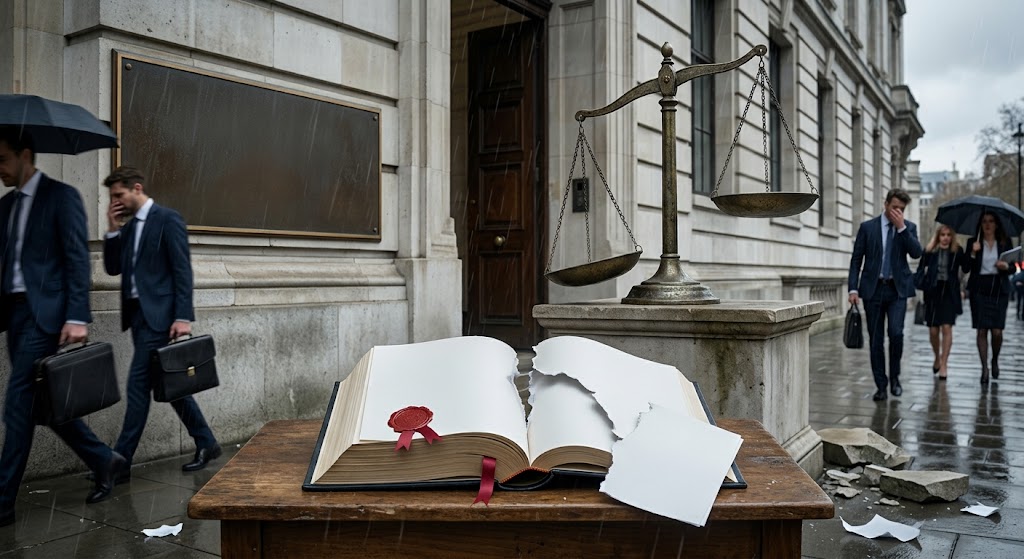
But the last obstacle sat not in Washington, but in London. Britain’s Competition and Markets Authority (CMA) tied its approval to a hard condition: Getty would have to sell off Shutterstock’s editorial business — its news, sports and entertainment imagery unit — to prevent an excessive concentration of power in editorial pictures. That divestiture is precisely what Getty’s board refused to accept. The directors voted unanimously to terminate the merger rather than carve up the very asset they were buying. The termination is formally tied to the so-called Second Extended End Date of July 6, 2026. Absent a material change in circumstances, the agreement is now history.
The role reversal is striking. It was not the antitrust watchdogs who delivered the final blow but Getty itself, on the conviction that the demanded break-up of the target would destroy the strategic logic of the acquisition. A deal you can only get approved by gutting its core rationale is, in the end, no deal at all.
That the editorial unit became the sticking point is no accident. News, sports and celebrity imagery is a business with high barriers to entry: exclusive accreditations, worldwide photographer networks, verified chains of rights. It is precisely in this segment that Getty and Shutterstock combined would have commanded a dominance the British regulator judged a danger to publishers and media customers. That the authority chose to intervene here, rather than across the broader library of commercial stock, shows how surgically modern merger reviews now dissect individual sub-markets — and how little it helps for a combination to look harmless in aggregate when one slice of it does not.
The Numbers Behind the Break
For Shutterstock, the merger promised a premium and a more powerful combined entity. The disappearance of that prospect explains the brutal roughly 30% after-hours plunge. When a combination that has been priced in for months evaporates, the takeover premium evaporates with it, and the stock falls back to its value as a standalone company fighting in a difficult market. Getty came off more lightly; its shares reacted in comparatively composed fashion and far less violently than those of the target.
A collapsed deal, though, is never free. Reports point to a break fee on the order of roughly $40 million. More consequential for Getty’s balance sheet is a financial-engineering side effect: the 10.5% senior secured notes due 2030, issued to help fund the transaction, are subject to a special mandatory redemption — an early, obligatory repayment triggered precisely when the deal falls through. Getty must now reorder its financing and has already signaled that it will bring on a financial adviser to weigh strategic options. Both companies go their separate ways again — each alone in a market that had driven them into each other’s arms in the first place.
The Real Reason for the Merger: Generative AI
To understand why two rivals wanted to combine at all, you have to look at the tectonic shift in the imagery market. For decades the model was simple and lucrative: a photographer or agency produces an image, a platform licenses it thousands of times, and everyone earns on each use. Generative image AI has upended that equation in just a few years. Tools such as Adobe Firefly, OpenAI’s image models, Midjourney, Stability AI and Google Imagen conjure bespoke visuals on demand — in seconds, without a shoot, often for a fraction of the licensing cost. A marketing team that once bought twenty stock photos now generates a handful of tailor-made variants itself.
The force of the shift shows up on the cost side. Where a professional shoot — model, location, post-production — can run into four or five figures, and a licensed image costs anywhere from tens to hundreds of dollars depending on usage, a generative model spits out a hundred variants for the price of a coffee. For advertising agencies, e-commerce sellers and budget-strapped newsrooms, that is a seductive proposition; for the platforms whose business rested on the scarcity of licensed imagery, it is an existential threat. Scale was meant to fight precisely this erosion: a bigger archive, more data to train proprietary AI models, more pricing power over customers who now have alternatives. The irony is that Getty is fighting on a second front at the same time: the company is pursuing high-profile copyright lawsuits against generative-AI providers over models allegedly trained on protected images. Getty is thus simultaneously victim, plaintiff and — through its own licensing-clean AI offerings — a participant in the very technology threatening its core business. That the defensively conceived tie-up with Shutterstock now fails on a regulator’s desk sharpens the strategic bind for both houses.
Why This Matters Beyond the Picture Business
The episode is a textbook illustration of a risk many investors underrate: regulatory and completion risk in takeovers. Over the past few years, agencies on both sides of the Atlantic have shown their teeth. The British CMA has grown from a local watchdog into a body of global reach, capable of blocking or attaching costly conditions even to mergers of American companies. The European Commission and the U.S. agencies — the FTC and DOJ — act with comparable severity in concentrated digital and content markets. An investor betting on an announced merger is always also betting on the blessing of the antitrust authorities, and that blessing has become both dearer and less certain.
This bears directly on merger-arbitrage strategies, where traders buy the target below the offer price to capture the spread on closing. The Getty case is a reminder that the spread is not free money: it is compensation for exactly the tail risk that just materialized — the chance that a regulator imposes an intolerable remedy, or that a board would rather let the deal die than sell its crown jewel. Shutterstock’s 30% drop is the receipt for that underappreciated residual uncertainty. In a year when the S&P 500 sits near records and cross-border M&A is picking up, pricing that risk properly is not a niche skill but a core one.
Affected Stocks and Beneficiaries
For investors looking to draw practical conclusions, the more interesting angle is who wins from the shift. The most obvious beneficiary of the generative wave is Adobe: with Firefly it has embedded generative AI directly into its creative suite and positioned itself as a licensing-clean supplier for exactly the customers who used to buy stock photos. Playing the theme more broadly leads inevitably to the AI infrastructure layer — from the chip suppliers led by Nvidia to the hyperscale cloud platforms on which image models are trained and served. Those names came under correction pressure the prior week, but they remain the structural beneficiaries of the technology that is pushing Getty and Shutterstock onto the back foot.
There is a subtler read for the broader U.S. media complex, too. Content houses whose value rests on scarce, licensed material — from image libraries to video archives — face the same underlying question Getty does: how much of a licensing-based model survives when content becomes a generable commodity? And for any investor holding a name that is itself a takeover candidate, the Getty saga is a warning: a signed agreement is not a closed agreement so long as a single authority in London, Brussels or Washington has yet to give up its veto.
Risks and Counterarguments
For all its symbolism, the sober counterpoint deserves airtime. First, Getty-Shutterstock is a single case with a very specific cause — the refusal to shed an editorial unit — and does not map one-to-one onto every pending takeover. Plenty of deals are cleared with remedies and completed; the exception makes headlines, not the rule. Second, the thesis that AI spells doom for stock photography is plausible but incomplete. Legally clean, verified, editorially curated images — especially in news, sports and celebrity coverage — cannot simply be hallucinated; that is a niche generative models do not yet serve. The very editorial business the fight was about may prove the market’s most resilient segment.
Third, the muted reaction in Getty’s own stock suggests the market does not read the retreat as purely negative. A company that disciplines itself to abandon a strategically questionable acquisition, and declines to dismember its own target, at least demonstrates capital discipline. Whether that is enough to stand alone against generative competition is the real open question — and it will be settled not on a Monday morning but over years.
Conclusion and Outlook
The collapsed Getty-Shutterstock combination is a double signal. In the short term it shows how fast takeover optimism can evaporate when a regulator imposes an inconvenient condition, and how brutally the market punishes a target once the premium disappears. In the medium term it throws a spotlight on perhaps the single most important structural question of this market year: which business models survive generative AI, and which are commoditized by it?
For investors, the practical takeaway is unspectacular but valuable. Merger arbitrage is not a riskless bet but a wager on regulatory goodwill. Content businesses whose value rested on scarce, licensed material must prove their worth anew in a world where content is effectively infinite to generate. And the true beneficiaries of the shift sit not with the incumbent platforms but with those building the tools of the new imagery era. On this Monday a single boardroom decision made all of that visible at once. The rest of the year will show who draws the right lessons from it.
Try TradingView Free for 30 Days
Plus get a $15 discount on your first subscription through this link.