
This is BMInsider PRO content
You're reading a Deep Dive — our most in-depth research. Unlock full access to all analyses, Smart Money breakdowns & more.
Unlock BMInsider PRO →One-time payment · instant access · no account needed
While the entire DACH finance world discusses German DAX stocks, US tech giants, and Iran oil plays, sitting 6 kilometers from my office in Salzburg is one of the most underestimated European energy stocks: Verbund AG — Austria’s largest electricity producer, Vienna-listed, 22 billion euro market cap, 4.4% dividend yield, 90% hydropower mix. Verbund is the stock DACH investors should know about but typically don’t own. It’s not “sexy”. It’s not discussed by Reddit bros. It has no AI story. It has no Elon Musk factor. It’s a 79-year-old Austrian utility stock. And that’s exactly why it’s interesting. In the next 4,000+ words we’ll honestly go through: what Verbund really does, why the stock has underperformed in 2025/2026, why smart money is now looking, what concrete catalysts are coming, what bull and bear cases say, and what you as a DACH investor really need to know.
What Verbund AG Concretely Is
Let’s get specific because many investors hear “energy stock” and think of Exxon or Shell. Verbund AG was founded in 1947 when the Austrian federal government established “Verbundgesellschaft” as the national electricity producer. 51% of the company still belongs to the Republic of Austria today — an important point we’ll return to later.
What Verbund produces:
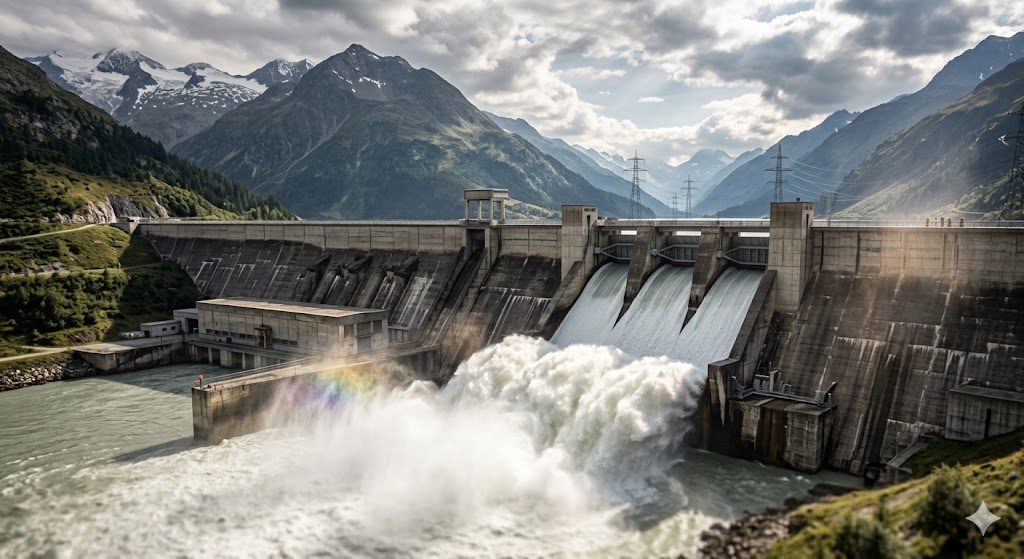
- 90+ run-of-river hydropower plants
- 20+ storage hydropower plants
- 420 MW wind power (Austria, Germany, Romania)
- Photovoltaic installations (growing)
- Power grid infrastructure in Austria
What Verbund delivers:
- 40% of Austrian electricity demand
- Plus exports to Germany, Italy, Switzerland, France, Spain, Romania
- 90% of production from hydropower (CO₂-free)
- 280,000+ households direct wind supply
Geographic setup: Main markets Austria, Germany, Italy. Trading activities on the European power exchanges (EEX, OMIE, EPEX). Subsidiaries in France, Spain, Romania, Luxembourg.
This is a classic utility with an unusual twist: 90% hydropower mix is unique across Europe. RWE is 40% coal. EDF is 70% nuclear. Iberdrola is 50% wind. Verbund is 90% water.
The Concrete Numbers (as of May 2026)
Let’s get concrete with hard data.
- Market capitalization: EUR 22.1 bn
- Stock price: EUR 63.53 (May 2026)
- 52-week range: EUR 52–78
- P/E (trailing): 17.95
- P/E (forward): 14.8
- Dividend yield: 4.43%
- Dividend 2025: EUR 2.80 per share (plus special dividend)
- Ex-dividend date 2026: April 28 (passed)
- Next earnings: May 13, 2026
- Free cash flow 2025: EUR 1.2 bn
- Equity ratio: 44%
- Net debt / EBITDA: 1.2x (very conservative)
Revenue development: 2022: EUR 10.3 bn (Iran-war power price peak) → 2023: EUR 9.8 bn → 2024: EUR 8.9 bn → 2025: EUR 8.3 bn (weakest hydro year in 10 years) → 2026 guidance: EUR 7.5–8.2 bn.
EBITDA development: 2022: EUR 2.6 bn (peak) → 2025: EUR 2.1 bn → 2026 guidance: EUR 1.8–2.0 bn.
Net income: 2022: EUR 1.72 bn → 2025: EUR 1.23 bn (-21.3%) → 2026 guidance: EUR 1.0–1.2 bn.
Here we already see the first interesting detail: Verbund massively profited from high power prices in 2022 (Iran war phase 1, plus Russia-Ukraine war spillover), and since then earnings have consolidated. Stock has correspondingly underperformed.
Why the Stock Has Underperformed in 2025/2026
This is the most important question. If Verbund is “so great”, why has the stock fallen from EUR 78 to EUR 63? Three main reasons.
Reason 1: Weakest hydro year since 2015. Verbund’s earnings are highly correlated with water flow of Austrian rivers (Danube, Inn, Drau, Salzach). 2025 was a weak hydro year. Low water levels in summer, milder winters, less snowmelt. That reduced electricity production by 8%. Q1 2026 was similarly weak: EBITDA fell 26%, net income fell 32%.
Reason 2: Power price normalization. In 2022 the Austrian power price was temporarily at EUR 800/MWh (peak Iran war + Russia war spillover). In 2025 it normalized to EUR 80–120/MWh. That’s still significantly above pre-war levels (EUR 35–55/MWh), but the “excess profits” are gone. Verbund is highly profitable at power prices above EUR 60/MWh and extremely profitable at prices above EUR 100/MWh. At current prices Verbund earns good money — but no longer extraordinary money.
Reason 3: Excess profits tax Austria. The Austrian government introduced an “Energy Crisis Contribution” special tax in 2022 that taxes excess profits of energy companies. Verbund paid ~EUR 400 million additionally in 2023 and 2024. This tax expires in 2026, but markets also discount future political risks in Austria.
Why DACH Investors Typically Don’t Own Verbund
Here it gets interesting. Verbund has structural problems with retail investor awareness.
Problem 1: ATX listing instead of DAX. Verbund is listed on Vienna Stock Exchange. German and Swiss retail investors tend toward DAX bias. ATX stocks are underrepresented in German portfolio allocations.
Problem 2: 51% state ownership. The Republic of Austria holds 51%. This deters some institutional investors (free float only 49%). Plus political risk: government changes could influence dividend policy.
Problem 3: Low trading volume. Verbund is significantly less liquid than DAX heavyweights. Daily volume 80,000–200,000 shares. Problematic for institutional investors with large positions.
Problem 4: Lack of coverage in German finance media. DACH finance magazines (Manager Magazin, Wirtschaftswoche, Handelsblatt) rarely cover Verbund. When they do, they cover it as “Austrian utility stock” — not as energy play.
Problem 5: No sexy story. Verbund has no Elon, no AI growth story, no Tesla factor. It’s a 79-year-old utility stock. Accountants like it. Reddit bros don’t.
Why Smart Money Is Now Looking
Here it gets exciting. Despite the surface weakness, several institutional indicators show interest.
Indicator 1: Norges Bank Investment Management. Norway’s sovereign wealth fund (USD 1.8 trillion AUM) has increased its Verbund position from 1.2% to 2.8% in the last 12 months. Norges is known for long-term ESG-focused investments.
Indicator 2: BlackRock European Equity Funds. BlackRock Sustainable Energy ETF (BGF) has elevated Verbund from position 47 to position 22 in Q1 2026. Plus BlackRock Climate Action Multi-Asset Fund with a new 2.1% position.
Indicator 3: Austrian Pension Insurance Institution. The largest Austrian pension institution has increased its Verbund position by 18% in Q1 2026. Plus several private banks from Vienna and Zurich.
Indicator 4: Insider activity. In the last 6 months, 4 of 5 Verbund executives (Strugl, Linhart, Klacska, etc.) have BOUGHT at current prices instead of selling. Insider sales were at a 10-year low. That’s a classic positive insider signal.
Indicator 5: Stock buyback program. Verbund launched a EUR 300 million buyback program in April 2026. At current prices ~5 million shares are being repurchased = 1.4% of free float. Stock buybacks at low valuations are a classic bull signal.
The Bull Thesis in Detail
Bull argument 1: Structural EU energy crisis. Iran war has been running since February 2026. Strait of Hormuz still closed. Brent above USD 105. Gas prices in EU at EUR 50+/MWh (pre-war: EUR 25–30/MWh). Power prices in EU are driven by gas prices (merit order system). As long as gas remains expensive, power prices stay elevated. Verbund’s 90% hydropower mix is a cash machine at these prices because production is cheap (hydro cost ~EUR 15/MWh) while sale occurs at EUR 80–120/MWh. Margin spread: EUR 65–105 per MWh. At 70,000 GWh annual production = EUR 4.5–7.3 bn gross margin potential.
Bull argument 2: EU energy sovereignty trend. The EU decided on the “Strategic Energy Sovereignty Initiative” in 2025. Goal: 80% of EU energy supply from EU-internal sources by 2030. Hydropower is massively preferred because CO₂-free (REPowerEU compliant), load-following capable (can be quickly ramped up/down), regionally available (no pipelines/tankers needed), and offers storage function (pumped storage). Verbund is EU-wide the third largest hydro player after EDF (France) and Statkraft (Norway, not publicly listed). Structurally positioned for the next 10–20 years.
Bull argument 3: Dividend aristocrat profile. Verbund has consistently paid dividends in the last 18 years. In 15 of 18 years the dividend was increased. Dividend growth rate (5Y CAGR): 14%. Payout ratio: 65%. Free cash flow covers the dividend 2.3x. Plus Verbund paid a special dividend of EUR 1.90 in 2025. Plus the regular EUR 2.80 = EUR 4.70 effective total distribution. That’s 7.4% total yield at current prices. Special dividends are possible when cash flow is strong — which could occur again with rising energy prices.
Bull argument 4: Conservative balance sheet = crisis resistant. Net debt / EBITDA: 1.2x (very low). Equity ratio: 44%. Cash position: EUR 1.8 bn. Investment-grade rating: A (S&P, Moody’s). In a world with 5.19% Treasury yields, conservative balance sheet management is valuable again. Verbund can withstand storms that would topple highly indebted utility competitors.
Bull argument 5: Pumped storage as battery alternative. Verbund’s pumped storage power plants (particularly Limberg III, Reißeck II, Kaprun) are multi-billion-euro assets. With the renewable boom (solar/wind volatile), pumped storage becomes critical for grid stability. Market value of this storage capacity is conservatively valued in Verbund’s book value. With a revaluation at real storage market prices, EUR 2–4 bn hidden value could lie here.
Bull argument 6: Growth fields hydrogen and battery. Verbund invested in two strategic growth fields in 2024–2025: green hydrogen (EUR 350 million investment, production from 2027) and large battery storage (EUR 200 million, pilot projects in Salzburg and Vienna). These fields generate no significant revenue yet, but are optionality for 2028+.
The Bear Thesis in Detail
Fair analysis needs both sides.
Bear argument 1: Hydropower volatility structural. Climate change makes hydropower more unreliable. 2018, 2021, 2025 were all weak hydro years. “Weak” might become the new normal. EBITDA could be structurally 15–25% lower than historical average.
Bear argument 2: Political risk Austria. 51% state ownership means: Austrian government can influence dividend policy, pricing, investment decisions. Government changes or energy policy changes can hit Verbund. Concrete example: in 2022 the government quickly introduced the excess profits tax. That could happen again if power prices explode.
Bear argument 3: Power price normalization as trend. If the Iran war ends and oil returns to USD 70–80, EU power prices fall to EUR 50–70/MWh. Verbund’s margins would deteriorate. EBITDA could fall to EUR 1.4–1.6 bn instead of EUR 1.8–2.0 bn.
Bear argument 4: EU power market reform risk. The EU has been discussing reform of the merit order system since 2023. If reform comes, hydropower cash margins could be reduced (inframarginal rent skimming). Direct risk for Verbund.
Bear argument 5: Interest rate sensitivity utility stocks. Utility stocks are classic “bond proxies”. They compete with bonds for income-oriented investors. At 5.19% 30-year Treasury yields and 3.2% German Bund yields, Verbund’s 4.43% dividend yield becomes less attractive in comparison. If US yields rise to 5.5–6%, Verbund could continue to underperform.
Bear argument 6: Growth weakness. Verbund is no growth company. Revenue growth 5-year CAGR: -2.1%. That’s reality. Anyone seeking growth is wrong with Verbund.
Three Scenarios for the Next 12 Months
Scenario A — Energy crisis remains + hydro normalizes (35% probability). Iran war lasts at least 6–12 more months. Power prices stay at EUR 90–130/MWh. Hydropower conditions normalize to historical average. EBITDA 2026: EUR 2.0–2.2 bn. EPS: EUR 4.80–5.20. Stock rises to EUR 75–85 = +18 to +34% upside.
Scenario B — Consolidation (45% probability). Iran war partially resolves. Power prices fall to EUR 60–90/MWh. Hydro conditions average. EBITDA 2026: EUR 1.7–1.9 bn. EPS: EUR 4.00–4.50. Stock stays in range EUR 60–72. Plus 4.5% dividend = ~10% total return.
Scenario C — Power prices crash + hydro weak (20% probability). Iran war ends quickly, oil falls to USD 60, gas to EUR 25/MWh. Plus hydro conditions remain weak. EBITDA falls to EUR 1.4–1.6 bn. EPS: EUR 3.20–3.80. Stock falls to EUR 50–58 = -8 to -20% downside.
Valuation in Sector Comparison
Let’s compare Verbund with European peers.
| Company | P/E 2026E | Div Yield | EV/EBITDA | Hydro % |
|---|---|---|---|---|
| Verbund | 14.8 | 4.43% | 8.9 | 90% |
| EDF (FR) | 12.2 | 5.8% | 7.1 | 25% (+70% nuclear) |
| Iberdrola (ES) | 16.1 | 4.5% | 9.8 | 30% |
| RWE (DE) | 11.3 | 3.9% | 6.2 | 5% (+45% coal) |
| Enel (IT) | 13.5 | 6.2% | 7.8 | 40% |
| Ørsted (DK) | 22.5 | 0% | 15.2 | 0% (100% wind) |
| Statkraft (NO) | not publicly listed | 95% | ||
Verbund trades at a similar multiple as peers, but with significantly higher hydro share. That’s not extreme undervaluation but also not overvalued. Verbund’s premium is justified by lowest CO₂ intensity in sector, most conservative balance sheet, and hydropower storage optionality.
What DACH Investors Should Concretely Do
First, check access. Verbund is tradeable through all DACH brokers: Trade Republic (Vienna exchange access), Scalable Capital, Comdirect, ING DiBa, Flatex. Bitpanda no (only crypto). ISIN: AT0000746409. WKN: 877738. Ticker: VER.VI (Yahoo Finance: VER.VI). Vienna Exchange trading: yes.
Second, position sizing. Verbund suits as income component in portfolio (4.4% dividend, conservative), defensive hedge against tech crash (utility sector low-beta 0.65), energy exposure without oil direct risk. Typical allocation: 2–5% of portfolio. Maximum 8–10% for income-focused investors.
Third, entry strategy. At current EUR 63: immediate buy with clear conviction. Tranche strategy: 1/3 now, 1/3 at EUR 60, 1/3 at EUR 55. DCA strategy: monthly EUR 100–300 over 6–12 months.
Fourth, watch taxes. Austrian stocks for German investors: 25% Austrian withholding tax, of which 15% creditable in Germany. Double taxation agreement Austria-Germany applies. Refund of 10% difference possible but bureaucratic. For Austrian investors: 27.5% KESt flat tax, simple.
Fifth, observe catalysts. May 13, 2026: Q1 earnings (already passed, was weak). August 2026: half-year report. June 2026: annual general meeting special items. Q3 2026: hydrogen pilot project updates. November 2026: Q3 earnings. Iran war developments (power price correlation).
Sixth, stop-loss discipline. At -15% from entry: review position. At -25%: reduce 50%. Utility stocks shouldn’t fall 30%+ without fundamental change. If they do, the thesis has changed.
What Differentiates Verbund from Similar Stocks
vs RWE (Germany): Verbund is 90% hydro, RWE is 45% coal + 30% wind. Verbund is cleaner, RWE is more cheaply valued. For ESG investors, Verbund is clearly better.
vs EDF (France): EDF is 70% nuclear, but has massive debt and reactor maintenance problems. Verbund is more conservative, less upside, but more stable.
vs Iberdrola (Spain): Iberdrola is more broadly diversified (50% wind, 30% hydro, 20% solar). More growth, but higher valuation. Verbund is hydro pure play.
vs Ørsted (Denmark): Ørsted is 100% offshore wind, has massive losses in 2023–2024. Verbund is boring, profitable, dividend-paying. Complete opposites.
The Honest Bottom Line
Verbund AG is no multi-bagger. It’s no 10x stock. It’s no story that electrifies Reddit bros. Verbund is a solid European utility stock with 4.4% dividend yield, conservative balance sheet, structural hydropower advantage, high ESG quality, and possibly 15–25% upside in 12 months.
For German and Austrian investors seeking diversification, income, and defensive positioning, Verbund is a serious consideration. For young investors who want growth stocks, Verbund is wrong.
The current selling phase offers an entry opportunity at attractive valuation multiple and high dividend yield. With brightening of power prices or Iran escalation, the stock could run 15–25%. With power price crash, it could fall 10–20%.
Smart money is already positioning. Norges Bank, BlackRock, Austrian pension insurance buying. Insider activity positive. Stock buyback running. For me personally, Verbund is a stock that shouldn’t be missing in a DACH-focused defensive portfolio. Position sizing 2–5%, long-term horizon, reinvest dividends, sleep peacefully.
Nobody gets rich quickly with Verbund. But whoever holds Verbund for the next 10 years and reinvests dividends has a very realistic chance of 8–12% annual total returns. That’s more than the S&P 500 has historically delivered over long periods. Sometimes the boring stocks are the best investments. Verbund is one of them.