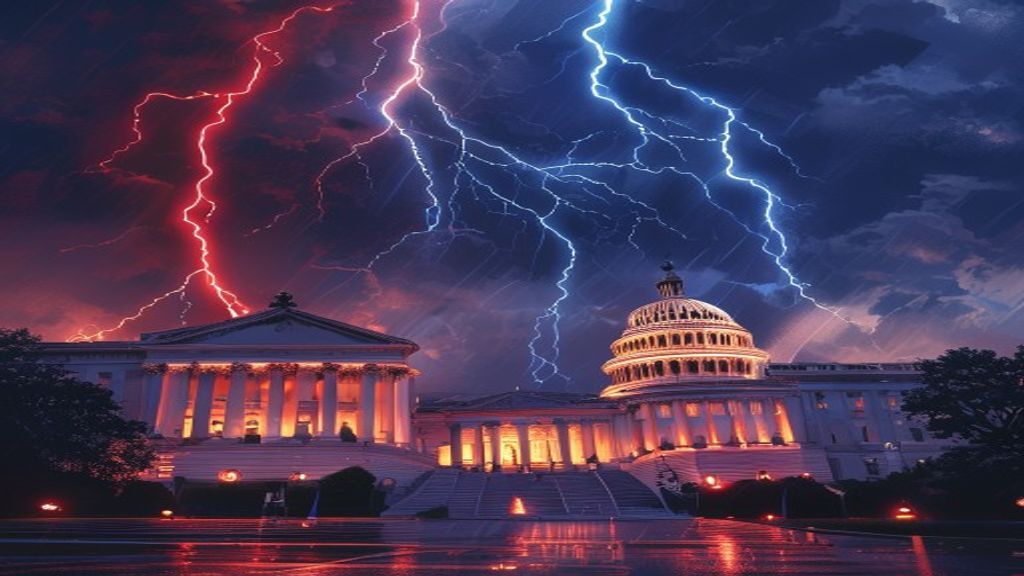
Three Shockwaves in One Morning: The Tuesday That Decides the Record Rally
Some trading days announce themselves weeks in advance, like a scheduled visit to the doctor — you know the diagnosis is coming, you just don’t know what it will say. Tuesday, July 14, 2026, is one of those days. Within the span of a few hours, three of the year’s biggest market-moving events collide, and they arrive at a market that is about as expensive and as complacent as it has been all cycle. The Dow Jones Industrial Average has just cracked 53,000 for the first time in history, the S&P 500 sits a whisker below its own record, and the VIX volatility index is loitering near 15 — the reading of a market that has priced out fear.
At 8:30 a.m. New York time, the Labor Department releases the Consumer Price Index for June. In that same hour, before the opening bell, the five largest banks in the United States open their books simultaneously: JPMorgan Chase, Goldman Sachs, Bank of America, Wells Fargo and Citigroup. And on that same morning, Kevin Warsh walks up to Capitol Hill to deliver his first semiannual monetary-policy testimony to Congress as Chair of the Federal Reserve. Three examinations, one morning. Anyone trying to understand where equities are headed in the second half of the year will get more hard information in this single session than in the three quiet weeks that preceded it.
Why Five Bank Reports Are More Than Five Bank Reports
You can begin an earnings season from many angles, but there is a reason it traditionally opens with the big banks: no other sector offers such an immediate X-ray of the real economy. JPMorgan lends to millions of households and tens of thousands of companies; Goldman Sachs sits at the seam where mergers, initial public offerings and the global trade in bonds and equities all meet. When these institutions speak at once, you do not hear five separate opinions — you hear the pulse of American commerce.
Three metrics will decide the reaction. The first, and by far the most important, is net interest income, and the margin behind it — the spread between what a bank earns on loans and securities and what it must pay depositors. As long as the Federal Reserve holds its policy rate at 3.50 to 3.75 percent and the shape of the yield curve remains contested, that margin is the gauge of whether the banks’ profit growth is sustainable at all. The second metric is trading revenue: the volatile weeks around the semiconductor sell-off and the geopolitical shocks were good for the trading desks, with mid-quarter guides pointing to gains of ten to fifteen percent year over year. The third, and the trickiest to read for the economy, is the loan-loss provision: how much money are the banks setting aside for bad loans? Rising reserves are the single most honest recession signal a balance sheet can send — more honest than any chief economist’s forecast, because here an institution is wagering its own capital on its outlook.
Expectations are set high. For JPMorgan, the consensus looks for earnings of roughly $5.44 to $5.61 per share, about ten percent above a year ago, on revenue near $51 billion. Goldman Sachs, riding a boom in trading and advisory work, is projected to earn around $14.47 per share — a jump of more than thirty percent. Analysts have been raising their price targets into the prints. That is precisely the danger: when the bar is high, a solid result is no longer enough; it has to be a beat, or the market sells the news. Delta Air Lines demonstrated the pattern only last week — the numbers topped estimates, and the stock fell anyway.
The Inflation Number and the Catch of the Rear-View Mirror
Alongside the bank results, the June Consumer Price Index lands on the trading screens. The consensus expects a headline annual rate of about 3.8 to 3.9 percent — a meaningful step down from May’s 4.2 percent, which was the hottest reading since 2023. At first glance that is good news: inflation is cooling, and part of the decline comes from crude oil, which had softened in mid-June after the temporary de-escalation in the Middle East.
But here is the catch, and it is decisive: the June index is a look in the rear-view mirror. It measures what happened last month — not what is happening now. And what is happening now is the opposite of calm. Over the weekend of July 11 to 13, the United States and Iran again traded missile strikes, the fear of disruption to shipping through the Strait of Hormuz is back, and the price of crude has climbed once more. It was exactly that oil jolt that knocked the Dow back from its record at 53,055. The June index will not capture this new round — it suggests a serenity that the commodity markets no longer possess. An investor who reads the 3.8 percent as an all-clear is mistaking a snapshot for a trend.
On Wednesday, at the same hour, comes the Producer Price Index, whose annual rate is expected near 6.2 percent, down from 6.5 percent in May. The direction is right, but the core rates remain sticky, and the input costs of businesses help decide whether consumer prices really keep falling in the months ahead.
Warsh on the Hill: The Debut of the Most Hawkish Chair in a Generation
Above all of this hovers the third and perhaps most consequential shockwave. Kevin Warsh — since May 22, 2026, the seventeenth Chair of the Federal Reserve — appears before the House Financial Services Committee on July 14 and the Senate Banking Committee on July 15, his first semiannual testimony as head of the world’s most powerful central bank. That the inflation figure lands on the very morning of his House appearance is a quirk of scheduling that only sharpens the stakes: every representative will confront him with the fresh number.
Warsh is not a central banker in the mold of his predecessors. He has scrapped formal forward guidance — the years-long ritual of telegraphing the future path of rates to markets in advance — and replaced it with a strict, backward-looking data-dependency: the Fed acts only once the hard numbers deliver. His first meeting as chair, in June, produced a hawkish rate outlook in which roughly half of officials saw at least one more hike as possible. Then, in early July, he let it be understood that inflation risks had eased somewhat — whereupon the Dow and the S&P 500 turned positive that day.
It is exactly this ambiguity that makes his testimony so delicate. The market goes into Tuesday with one question: does Warsh confirm the softer tone of early July, or does he restore the hard line? Every word about the yield curve, about oil prices, about the timing of a possible cut will be weighed to the milligram. And because the next Fed meeting is already set for July 28 and 29 — with no new economic projections at that gathering — this testimony is, in effect, the last major verbal signpost before the rate decision.
Why It All Counts at Once: A Market Priced for Perfection
Each of these three events would, on its own, be reason enough to look more closely. That they fall on the same morning turns an ordinary trading day into the eye of a needle. The reason lies in the starting point: a VIX of 15 and indices at record highs mean the market is pricing in virtually no bad news. It is set for perfection — for falling inflation, robust bank profits and a central bank that eases soon. If even one of those three assumptions fails to hold, the disappointment potential is asymmetric: there is little room to rise, because the good news is already in the price; there is plenty of room to fall, because almost no cushion is built in.
That is precisely why the combination is more dangerous than the sum of its parts. A slightly hot inflation number alone, the market could digest. Disappointing net interest margins alone, likewise. A harsh Warsh tone alone, the same. But all three on the same morning, with the VIX at 15 — that is the script from which sharp corrections are written. Conversely, of course, the reverse also holds: if the triad lands in harmony, the rally could get its next leg up, as the last doubters capitulate.
Who Is in the Game — the Stocks and Sectors to Watch
For investors, the American bank Tuesday is far more than a spectator sport. What JPMorgan says about loan demand and credit reserves colors the entire financial sector within hours. The Financial Select Sector — tracked by the widely held XLF exchange-traded fund — will move as a bloc on the tone of the reports, and the read-through does not stop at the money-center giants. The regional banks, followed through the KRE regional-bank fund, are the more sensitive credit tell: it is on their books that commercial real estate strain and consumer delinquencies show up first, and their reaction to Tuesday’s numbers will say more about the health of the middle of the economy than the headline results of the five titans.
Beyond the banks, the ripple effects fan out. Payment networks and asset managers — BlackRock reports Wednesday, alongside Morgan Stanley — take their cue from the same interest-rate story. Rate-sensitive corners of the market, from homebuilders to real estate investment trusts, hang on Warsh’s every syllable about the timing of a cut. And because so much of the S&P 500’s record run has been carried by a handful of mega-cap names, any rotation triggered by the bank prints — out of crowded technology and into financials, or the reverse — could move the index far more than the earnings themselves warrant. This is a week in which the plumbing of the market, not just its marquee names, is on display.
The Oil Wildcard That Warps the Equation
No preview of this Tuesday is complete without the factor that resists clean statistics: the price of crude oil. The renewed escalation between Washington and Tehran over the weekend has revived the old fear of a disruption to shipping through the Strait of Hormuz — the chokepoint through which a substantial share of the world’s traded oil flows. If crude climbs and stays elevated, it seeps, with a lag, into transport costs, production costs and finally consumer prices.
That is the real irony of the day: the inflation number that could soothe the market in the morning measures a month in which oil was cheaper — while the present has already opened a new source of price pressure. Warsh will almost certainly be pressed on Capitol Hill about exactly this discrepancy: how does a backward-looking, data-dependent central bank respond to a supply shock that does not yet appear in the official figures? His answer — or his evasion — will reveal more about the second half of the year than the 3.8 percent itself.
Risks, Counterarguments, and What Could Go Right
For all the warning about the narrowness of the needle’s eye, the other side deserves its say. The bulls have solid arguments. The earnings season as a whole is on track for a second straight quarter of profit growth above twenty percent — a pace that, to the optimists, justifies the valuation. The banks’ trading desks likely benefited from the volatility, advisory business is picking up, and consumer credit has so far shown no dramatic defaults. If the June index really falls to 3.8 percent and Warsh holds his mild tone, the market could celebrate the combination as confirmation of the gentle scenario — cooling inflation without a collapsing economy, the ideal picture of any rally.
The risks sit as a mirror image beside them. A surprisingly high core rate would dampen hopes of an imminent cut and hit the rate-sensitive part of the market. Disappointing net interest margins, or reserves rising more than expected, would stoke the growth doubts precisely because expectations sit so high. And a Warsh who emphasizes the hard line, or names the oil shock openly as an inflation risk, could erase in minutes the rate-cut hope embedded in prices. The Strait of Hormuz, finally, is the wildcard capable of overturning every forecast.
Bottom Line: The Most Honest Day of the Summer
July 14, 2026, will matter not because a single number seals the fate of markets, but because three independent sources of truth happen to gush on the same morning: the real-economy truth of the bank balance sheets, the price truth of the Consumer Price Index and the monetary truth of Kevin Warsh’s voice in Congress. Taken together, they form the sharpest picture of the U.S. economy the summer has to offer — and they do it at a moment when prices leave barely any room for error.
For investors, that does not mean panic; it means calibrating expectations. A market at record highs with a VIX of 15 rewards confirmation only faintly and punishes disappointment hard. Those holding positions should know which of the three examinations hits them hardest; those with dry powder may find opportunities. Only one thing is certain: after this Tuesday, the road into the Fed meeting on July 28 and 29 will lie far less in the fog — for better or for worse. BMInsider will be tracking the three shockwaves, and their aftershocks, closely.
Try TradingView Free for 30 Days
Plus get a $15 discount on your first subscription through this link.