
This is BMInsider PRO content
You're reading a Deep Dive — our most in-depth research. Unlock full access to all analyses, Smart Money breakdowns & more.
Unlock BMInsider PRO →One-time payment · instant access · no account needed
Oil is surging, defense stocks are flying, and fear is spreading. But the real story is in the data — and it tells a very different story than the headlines suggest.
[membership level="2,5,6,7"]
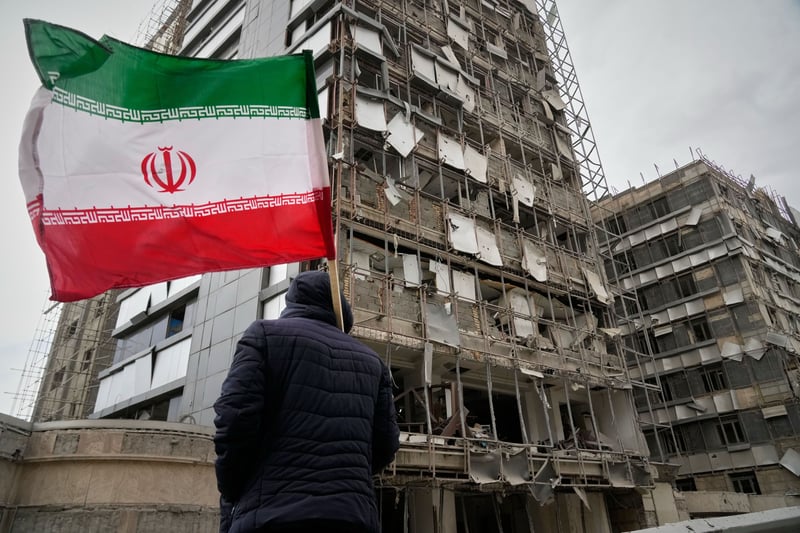
War broke out between the United States and Iran. Oil prices spiked past $85. Defense stocks surged. Airlines dropped. Gold hit new highs. The headlines screamed panic.
But if you have been investing through geopolitical crises before, you know that the initial market reaction is almost never the final one. History has a clear pattern here, and understanding it can be the difference between panic selling and strategic positioning.
The Immediate Market Impact
The numbers right now tell a straightforward story. Energy is the only sector in the green. Defense names like Lockheed Martin, Raytheon, and Rheinmetall are up double digits since the conflict escalated. Meanwhile, the broader market is pulling back — the S&P 500 has dropped over 2% on risk-off sentiment, with tech and consumer discretionary leading the decline.
Oil is the obvious flashpoint. Brent crude has surged on fears of supply disruptions in the Strait of Hormuz, through which roughly 20% of the world's oil supply flows every single day. If that chokepoint gets disrupted, the impact would dwarf anything we saw during the 2022 Russia-Ukraine energy crisis.
But here is the thing most people miss: markets have already priced in a significant risk premium. The question is whether the actual disruption will be worse or less severe than what is currently expected.
What History Tells Us
Every major geopolitical conflict since 1990 has followed a remarkably consistent pattern in the stock market:
Phase 1 — Shock (Days 1-14). Markets drop 3-8% on fear and uncertainty. Volatility spikes. Safe havens rally. This is where we are right now.
Phase 2 — Digestion (Weeks 2-6). Markets stabilize as the initial shock fades. Investors start separating the actual economic impact from the emotional reaction. The VIX comes down from its peak.
Phase 3 — Recovery (Months 2-6). Unless the conflict causes a genuine, sustained economic disruption (like the 1973 oil embargo), markets recover and often make new highs within 6-12 months.
The Gulf War in 1990, the Iraq invasion in 2003, the Russia-Ukraine war in 2022 — all followed this pattern. The market dropped, stabilized, and then recovered once the worst-case scenario did not materialize.
The Energy Question
The critical variable this time is oil. If oil stays between $80-$95, the global economy can absorb it. Growth slows slightly, inflation ticks up modestly, but it is not a crisis.
If oil crosses $120 because of a Strait of Hormuz disruption, everything changes. At $120+ oil, you get a genuine stagflationary shock: higher prices across the board, central banks forced to choose between fighting inflation and supporting growth, and a real recession risk in energy-dependent economies like Europe and Japan.
Current smart money positioning suggests the market consensus is somewhere in the middle — elevated risk, but not a worst-case scenario. Hedge funds have been adding energy exposure while trimming growth names, but they have not gone into full crisis mode.
Sectors to Watch
Winners (for now): Energy is the obvious play. ExxonMobil, Chevron, ConocoPhillips, and Shell are all benefiting from higher crude prices. European defense stocks — Rheinmetall, BAE Systems, Leonardo — continue their multi-year run. Gold miners like Newmont and Barrick benefit from the flight to safety.
Losers (for now): Airlines are getting squeezed by jet fuel costs. Consumer discretionary suffers from higher energy bills eating into household spending. Emerging markets with large oil import bills — India, Turkey, much of Southeast Asia — face currency pressure.
The contrarian play: If you believe this follows the historical pattern and resolves within 3-6 months, the biggest opportunities may be in the names getting punished the hardest right now. Airlines and travel stocks that drop 15-20% on oil fears but have strong balance sheets could be interesting recovery plays once the dust settles.
What the Smart Money Is Doing
A look at recent institutional positioning through 13F filings and fund flow data shows a clear trend: the big names were already rotating toward energy and defense before this escalation. Buffett has been building energy positions for years. Druckenmiller has been vocal about geopolitical risk. The smart money did not get caught off guard.
But they are not panicking either. No major fund has gone to cash. The moves have been tactical — trimming, rotating, hedging — not liquidating.
Our Take
The most likely scenario is that markets follow the historical pattern: a sharp initial drop, weeks of elevated volatility, and then a gradual recovery once the situation stabilizes or de-escalates. Oil stays elevated but does not hit crisis levels.
The tail risk — a full Strait of Hormuz blockade — would change everything. But even Iran has little incentive to trigger that scenario, as it would hurt their own economy and invite a response that goes far beyond what anyone wants.
For investors: this is not a time to panic sell. It is also not a time to be a hero and go all-in on the dip. The disciplined approach is to maintain your positions, add selectively to quality names on weakness, and keep some dry powder for a potential larger pullback if the situation deteriorates.
The data is clear: investors who sold during past geopolitical crises almost always regretted it. The ones who stayed calm and bought quality at discounted prices were rewarded within 12 months.
This is not financial advice. Past geopolitical events are not predictive of future outcomes. Always do your own research before making investment decisions.
[/membership][membership level="-2,-5,-6,-7"]
[membership level="-2,-5,-6,-7"]
🔒
This is BMInsider PRO content
You're reading a Insider Report — our most in-depth research.
Unlock full access to all analyses, Smart Money breakdowns & more.
Unlock BMInsider PRO →[/membership]