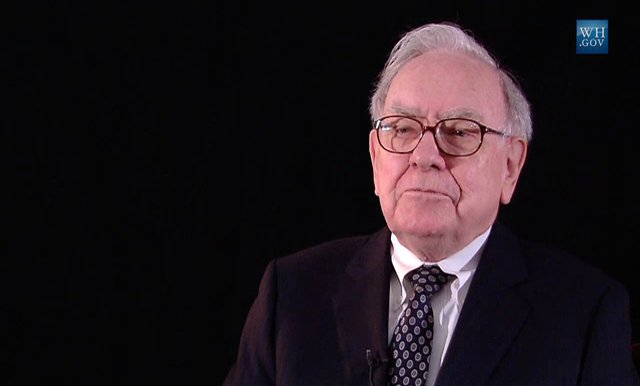
It’s the first quarterly report in which Warren Buffett’s name does not appear as CEO — and ironically, it’s one of the strongest in recent memory. Berkshire Hathaway released its Q1 2026 numbers on Saturday, the first full quarter under Greg Abel as Chief Executive. Operating earnings rose 18 percent year-over-year, net income roughly doubled to $10.1 billion, and cash reserves are approaching the historic $400 billion mark. For investors who had watched the transition skeptically, the message is clear: the machine keeps running — very well, in fact.
The Numbers at a Glance
Revenue reached $93.68 billion, up roughly 4.4 percent from $89.73 billion in Q1 2025. Net income jumped from $4.67 billion to $10.18 billion — more than a doubling, though influenced by changes in equity portfolio valuations. More importantly, operating strength was solid: the insurance segment improved its results despite a tough year-over-year comparison, BNSF — the railroad subsidiary — posted profit growth of 13 percent to $1.38 billion, and Berkshire Hathaway Energy edged up 2 percent.
Particularly notable was the recovery in the insurance business. Re- and primary-insurance underwriting earnings rose 29 percent to $1.72 billion, driven by property and casualty reinsurance, which had been weighed down by California wildfires in the prior year quarter. However, at Geico, the auto insurance subsidiary, pre-tax underwriting earnings fell 35 percent — higher accident claims and increased marketing costs hurt the result.
The Growing Cash Mountain
The headline that’s truly sparking debate: Berkshire’s cash reserves are approaching $400 billion. This is not just the largest cash position of any U.S. corporation — it’s a historic figure. For comparison: Apple’s cash position currently sits at around $165 billion, Microsoft’s at roughly $80 billion. Berkshire holds more liquidity than the next two U.S. corporations combined.
This cash position raises the obvious question: when will it be deployed? Greg Abel did not announce specific acquisition plans in his first quarterly report, but market observers interpret the cash buildup as a signal: Berkshire is either waiting for a market correction to strike massively, or positioning itself for a major acquisition in the tens of billions. Experience teaches: when Berkshire hoards cash, there’s usually a strategic reason — and that often becomes apparent only years later.
Insurance Float and the Underestimated Strength
One detail that often gets lost in headlines: the Insurance Float — meaning the insurance liabilities Berkshire collects but has not yet paid out — reached $176.9 billion at quarter-end, a slight increase of $500 million since year-end 2025. This float is essentially interest-free borrowed capital that Berkshire can invest. Buffett has called the float for decades the real secret behind Berkshire’s outperformance — and under Abel, this mechanism appears intact.
The Abel Era Begins Quietly
It was a remarkably unspectacular first quarter — and that’s a compliment. Greg Abel has made no dramatic announcements, declared no major strategy changes, made no attempt to distance himself from the Buffett legacy. Instead: solid execution, quiet improvements, transparent communication. Exactly what Berkshire shareholders had hoped for.
The stock has reacted positively. Class-B shares posted modest gains in the days before and after the report, Class A held steady. The market appears to be placing trust in the transition — though the truly tough tests still lie ahead, such as the next major acquisition or the next market correction.
What to Watch Next
Three things investors should monitor closely over the coming quarters. First: how will the cash mountain be deployed? A major acquisition or an increase in share buybacks would clearly move the market. Second: will operating strength at BNSF and Berkshire Energy remain stable — these segments are the reliable cash-flow generators of the conglomerate. Third: Geico’s underperformance — will this be a one-off or a structural problem?
For long-term investors, the Berkshire story remains intact. The model is robust, the transition is running quietly, and with nearly $400 billion in cash, the optionality is unique in the U.S. market. The compelling question is not whether Berkshire continues to function — but what Greg Abel will concretely do with this historic cash position.
Try TradingView Free for 30 Days
Plus get a $15 discount on your first subscription through this link.