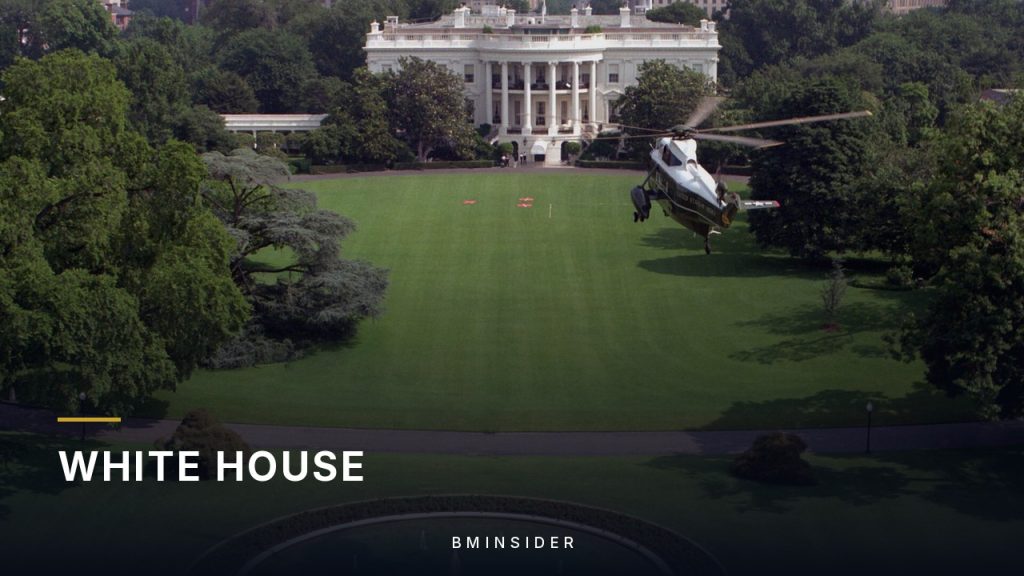
At around 4 p.m. on Wednesday, Xi Jinping’s aircraft will touch down at Joint Base Andrews outside Washington, and Donald Trump will be standing on the tarmac. It is only the second time in his second term that the president has met a visiting leader at the plane; the first was Vladimir Putin in Alaska in August 2025. Thursday brings the arrival ceremony at the White House, the honor guard in the Rose Garden and a state dinner; on Friday, Xi flies home. He is skipping the United Nations General Assembly in New York, which meets the same week. It is the first state visit by a Chinese president to Washington since September 2015, when Xi came to see Barack Obama with an order for 300 Boeing jets worth $38 billion in his luggage. Eleven years, one trade war, tariffs that briefly reached 145 percent and two presidencies later, he is back, and the question the market is asking is remarkably small: will the tariff truce that expires on November 10 be extended, and if so, for how long?
That the question is so small is the real story. Trump told reporters in the Oval Office on Friday that there would be “a lot of different deals” and that “we’re not just doing it for our health.” Trade Representative Jamieson Greer promised “some announcements on agriculture and non-tariff barriers.” According to consistent reporting, what is on the table is a reciprocal cut in tariffs on non-strategic goods worth roughly $30 billion per side, a possible removal of China’s 15 percent tariff on American liquefied natural gas, more soybeans, perhaps more aircraft. That is not nothing. But measured against goods trade between the two countries of roughly $415 billion in 2025, $30 billion a side is about seven percent. The market has priced that in before Xi has boarded the plane.
What Expires on November 10 — and What Hangs on It
The truce dates from October 30, 2025, when Trump and Xi met on the sidelines of the APEC summit in Busan, South Korea. At the time, both sides were days away from hitting each other with tariffs above 100 percent. The compromise was a trade of suspensions. Washington shelved the so-called Affiliates Rule, which would have automatically extended U.S. export controls to every subsidiary of a sanctioned Chinese company. Beijing put its export controls on rare earths on ice and resumed purchases of American farm products. Both run for one year, until November 10, 2026, five weeks after the summit and one week after the U.S. midterm elections on November 3.
The length of the extension is still being fought over. Washington wants six months; Beijing wants the rest of Trump’s term, through January 2029. The negotiators, Treasury Secretary Scott Bessent and Greer on one side and Vice Premier He Lifeng on the other, are meeting in New York this weekend for the final round of preparation. Most observers expect the result to be about a year. For the market, the duration matters more than the tariff cuts, because what hangs on the truce is not a tariff rate but a supply chain. By industry estimates, China mined 59 percent of the world’s rare earths in 2024 and refined 91 percent. Even with the controls suspended, Chinese exports of these metals are still running roughly 50 percent below the level before the restrictions. Anyone who builds electric motors, wind turbines or guided missiles needs the extension more than the $30 billion.
The Tariff Stack the Supreme Court Rebuilt
To understand what is being negotiated in Washington, you need to know the stack of tariffs sitting on Chinese goods, because it looks different from a year ago. On February 20, 2026, the Supreme Court ruled that the International Emergency Economic Powers Act does not authorize the president to impose tariffs. That wiped out the fentanyl tariffs and the so-called reciprocal tariffs of April 2025 in one stroke. Four days later the administration replaced them with a global 10 percent tariff under Section 122 of the Trade Act, which caps such surcharges at 15 percent and 150 days. That clock ran out on July 24, and in its place came a new Section 301 tariff, justified by forced labor in supply chains, of 10 to 12.5 percent on goods from 60 economies. China pays the top rate of 12.5 percent.
Underneath that still sit the original Section 301 tariffs from Trump’s first term, which run from 7.5 to 100 percent depending on the product list, plus the Section 232 tariffs on steel, aluminum, copper and autos. Add it up and most Chinese consumer electronics and machinery pay an effective rate today of somewhere between 30 and 37.5 percent, more than any other country of origin. And it was supposed to get higher: a further Section 301 investigation into Chinese overproduction was complete, with an opening rate of 7.5 percent. The administration has postponed announcing those tariffs until after the summit. That is the lever Trump brings into the room: not a threat to raise tariffs, but an offer to leave a finished tariff in the drawer. Trump himself reminded everyone on Friday where the stack once stood: “I had it up to 145 percent at one point, but it was too much. It was really hurting them badly.”
Soybeans, Jets and LNG: What Beijing Brings
Beijing is not arriving empty-handed, but the bills it carries have largely been paid already. Under the U.S. reading of the Busan agreement, China committed to buy 12 million metric tons of American soybeans in the last two months of 2025 and 25 million tons a year from 2026 through 2028. Bloomberg reported on September 14 that China has already taken close to 13 million tons this season, more than half the annual target, and that state traders booked at least one million tons in the prior week alone. The timing is not an accident. Buying accelerated over the summer and again before the trip, so that Xi can point in Washington to a promise kept rather than a promise broken. For growers in Illinois and Iowa, that has been the difference between a harvest sold and a harvest stored: China was the largest single export customer before the trade war, and its absence in the fall of 2025 left cash prices in the western Corn Belt well below where the futures board said they should be.
Boeing is murkier. When Trump visited Beijing in May, Washington spoke of a Chinese order for 200 aircraft, the first since 2017, when China ordered 300. Industry talk had put the number at up to 500 Boeing 737 MAX jets, and that larger figure has been described as stalled ever since. A contract with a signing ceremony at the White House would be the summit’s most visible yield for Boeing, but it would not be a new yield; it would be the notarization of an old one. The same goes for gas. China levies a 15 percent tariff on American LNG, a leftover from the retaliation rounds. If it goes, exporters on the Gulf Coast such as Cheniere gain a customer they have barely had since 2025, but it does not change the fact that Chinese cargoes have been a rounding error in their order books. The Chinese side, according to reports, expects roughly $30 billion in duty-free or low-tariff access to the U.S. market in return for having honored the May commitments. Washington believes it will extract further purchases for the same concession. Both readings fit into the same press release.
Nvidia: The Deal Both Sides Approved That Isn’t Happening
At Thursday’s state dinner, Trump, Xi and Jensen Huang will be in the same room, and the story being negotiated there is a lesson in the difference between a license and a sale. In January, Trump allowed Nvidia to sell its H200 chip to China on the condition that 25 percent of the revenue go to the U.S. Treasury. On May 14, during the Beijing summit, the Commerce Department cleared ten Chinese buyers, among them Alibaba, Tencent, ByteDance and JD.com, with Lenovo and Foxconn as distributors. To date, according to a senior U.S. trade official, “very few” chips have shipped. Beijing has in effect barred its own companies from buying them in order to protect domestic chipmakers. Huang said in May that Nvidia’s market share in China had fallen to zero and told investors to “expect nothing” from there. The company has excluded China from its guidance for a year.
For the market, that is the more interesting question than soybeans. An H200 business that actually flows would be worth a double-digit billion-dollar figure a year to Nvidia that nobody currently has in their estimates. A Blackwell export, by contrast, remains banned after this summit too; the controls on the B100, B200 and B300 survived the Beijing summit intact even though Huang was added to that delegation at the last minute. The dinner’s guest list, alongside Nvidia, includes the heads of Amazon, Alphabet, Tesla, Dell and OpenAI. It is a list of companies that want something from China, not a list of companies that are allowed to sell something to China. That is the difference between 2015 and 2026.
What the Market Already Knows
There is no summit fever in the prices. The CSI 300 in Shanghai and Shenzhen has lost nearly 4 percent over the past four weeks, the Hang Seng about 1 percent, and neither move is explained by Washington but by the Federal Reserve, which on Wednesday raised rates for the first time since 2023. A Goldman Sachs survey found that 38 percent of onshore Chinese investors and 26 percent of offshore investors expect incremental progress from the summit; the majority consider the meeting symbolic. The South China Morning Post summed up traders’ expectations in one word, “minimal,” and banks talk of a “fragile détente” that persists. In Wall Street previews, the summit appears as a “wildcard,” which in the jargon means: not the base case, but the event you hedge against.
The S&P 500 closed the week at 7,650.50, essentially flat, the Dow lost 1.7 percent, the 10-year Treasury yield touched 5.00 percent on Friday, oil held above $95, diesel in the U.S. is above $6 a gallon, and inflation stands at 3.4 percent. In that mix, a summit that brings no escalation is not an event for the market but a relief that has already been priced. A summit that brings an escalation would be an event. That is the asymmetry investors carry into the week: little upside, a lot of downside.
Who in America Hangs on This Deadline
The list of U.S. stocks with a direct line to Thursday is shorter than the guest list, and it is ranked by what each company can actually lose. Boeing tops it because a signing ceremony is the one deliverable the White House controls entirely; the stock has traded on China headlines since 2019, when Beijing grounded the 737 MAX before anyone else did. Nvidia is second, because it is the only name for which a summit outcome could add revenue nobody has modeled, and the only one for which the blockade sits in Beijing rather than Washington. The farm complex comes third: Deere, Archer-Daniels-Midland and Bunge do not need a new promise, they need the existing one honored through 2028, and the soybean tally at 13 million tons says it is being honored so far. Apple, Qualcomm and Tesla belong to a different category, companies whose exposure runs through what they make in China and sell in China, and for them the Affiliates Rule staying suspended matters more than any tariff cut on $30 billion of goods.
For a retirement account, the practical question is not which of these to buy before Thursday but how much China risk is already sitting in an S&P 500 index fund without anyone having chosen it. The five largest stocks in the index all derive a meaningful share of revenue or production from China, and an escalation on November 10 would hit a 401(k) through them long before it hit a soybean farmer. Rare earths are the quieter version of the same exposure: MP Materials, the only integrated U.S. producer, has become a policy stock whose valuation rises when Beijing tightens and falls when it relaxes, which makes it one of the few tickers where a good summit is bad news.
The Counter-Argument: What Speaks Against the Calm
The expectation that nothing happens can also be too comfortable. Three things argue against it. First, Taiwan. An arms package of up to $14 billion, cleared by Congress in January, has still not been formally notified, after an $11 billion package was announced in December. Taipei has a written assurance from Washington on the next sale. If Beijing reads the state visit as the price for delaying that notification and Washington proceeds shortly after the summit anyway, the “fragile détente” ends within a day. Second, Iran. The United States has been at war with Iran since February, added secondary sanctions on its enablers in August, and China is the largest buyer of Iranian crude. Foreign Minister Wang Yi met his Iranian counterpart Abbas Araghchi on September 16, eight days before the summit. Anyone who believes oil above $95 and a trade summit are two separate stories has not read the guest list.
Third, the midterms. November 3 falls one week before the truce expires, and the postponed overproduction tariffs are sitting finished in the drawer. A president who wants to show he can still act after a lost congressional election has in those tariffs an instrument that requires no vote. Conversely, China’s bargaining position is not as strong as the rare-earth card suggests. Retail sales grew just 0.4 percent in August, fixed-asset investment fell 7.2 percent from January through August, the government has injected 360 billion yuan into state banks and insurers, and the growth target of 4.5 to 5 percent is the lowest in decades. “China’s got a bunch of challenges,” says Scott Kennedy of the Center for Strategic and International Studies in Washington, “growing very, very slowly, not 5 percent.” A country running a trade surplus of roughly a trillion dollars for the second year in a row needs open markets more than the market that is closing them.
Outlook: Three Numbers to Measure the Summit By
The first number is the length of the extension. Six months would mean Washington keeps the truce as a campaign instrument; a year would mean both sides want quiet through the APEC summit in Shenzhen on November 18 and 19 and beyond; anything out to 2029 would be a sign that Beijing paid more than has been disclosed. The second number is the size of the tariff cuts and whether it includes the postponed overproduction tariffs or merely leaves them in the drawer. Thirty billion a side on non-strategic goods would be exactly what the market expects, which is to say nothing that moves it. The third number is the only one that could trigger a price reaction: a concrete count of H200 chips delivered or released. It would not appear in the White House press release but in Beijing’s, because that is where the blockade sits.
When Xi came to Washington in 2015, the Boeing order was the headline and the trade surplus the footnote. This time it is reversed: the jets are long since ordered, the soybeans half delivered, the chips licensed and not shipped. What the summit can deliver is not a deal but a deadline, and the market has learned to value deadlines more highly than deals. “The visit is the message,” says Edgard Kagan of CSIS. For investors, that means the message arrives on Thursday and the news on November 10.
Try TradingView Free for 30 Days
Plus get a $15 discount on your first subscription through this link.