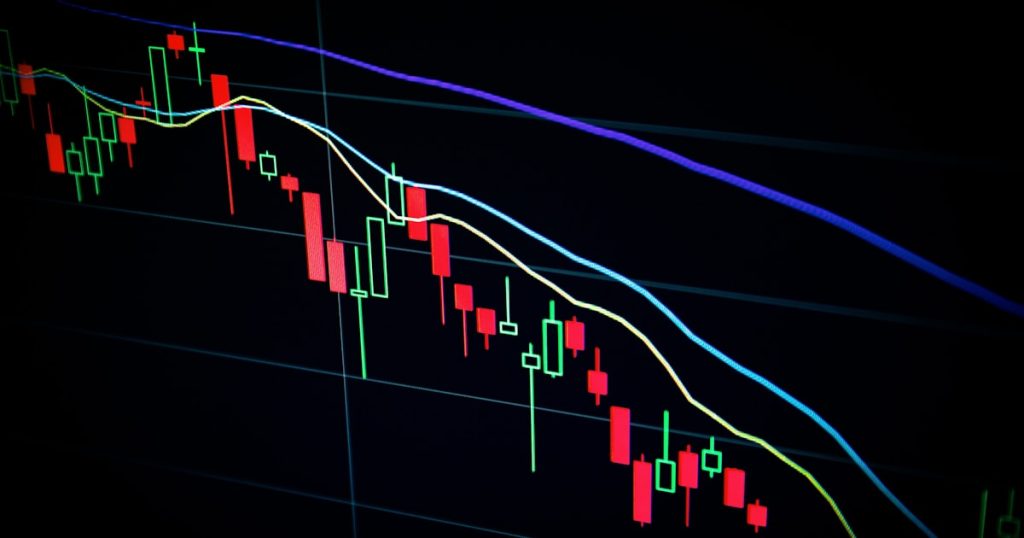
Technical Analysis Basics — Trends, Indicators, Patterns
Technical analysis (also called charting) is the practice of inferring future price movements from historical price data. Traders and investors around the world use it daily — from Wall Street day traders to retail investors with a Robinhood or Trade Republic account. But does it really work, or is it modern astrology? This guide explains the most important tools, their genuine strengths, their brutal limitations, and why most professionals never use technical analysis in isolation.
What Is Technical Analysis?
Technical analysis rests on three principles formulated by Charles Dow at the end of the 19th century. First, the market price already reflects all known information — fundamentals, news, expectations. Second, markets move in trends that persist until clearly broken. Third, market behavior repeats itself, because the same human emotions — greed, fear, FOMO, panic — drive every buy and sell decision.
The result is the core idea of charting: instead of reading balance sheets and computing P/E ratios, the chartist looks at the price itself and searches for patterns, indicators, and market structure. The question is not “What is Apple really worth?” but “Where are market participants actively buying and selling right now?”. This distinction explains why chartists dominate short-term trading while fundamental analysts shape long-term investment decisions.
Pros: Charts visualize supply and demand in real time, are language- and sector-agnostic, and provide clear entry and exit points. Even fundamental investors benefit from technical analysis when timing trades — for example, to avoid buying right at an all-time high. Charting works on every asset class: stocks, ETFs, commodities, FX, Bitcoin.
Cons: Past prices are no guarantee of future moves. Studies show that many chart patterns deliver the expected direction in just 50 to 60 percent of cases — barely better than a coin flip. Charting is also strongly self-fulfilling: support holds because enough traders see it as support and buy there. Without volume, risk management, and a sense of the bigger picture, it quickly turns into crystal-ball reading.
Trend Identification: Up, Down, Sideways
The first step of any chart analysis is identifying the trend direction. Markets never move in a straight line — they make steps forward and steps back. The question is: in which direction does the dominant move flow?
Uptrend: Higher highs (HH) and higher lows (HL). Each pullback finds buyers at a higher level, and each rally extends further than the previous one. Classic example: the S&P 500 between March 2020 and January 2022 — from 2,200 to 4,800 points with consecutively higher pullback lows.
Downtrend: Lower highs (LH) and lower lows (LL). Each rally fails earlier and each decline extends further than the previous one. Example: Nasdaq 100 from November 2021 to October 2022 — from 16,500 to 10,700 points with successive lower highs.
Sideways trend (range): Price oscillates between an upper and lower boundary. Neither higher highs nor lower lows. Statistically the most common phase — markets spend roughly 60 to 70 percent of their time in sideways action. Example: Tesla between July 2023 and February 2024 ranged between approximately $200 and $290.
The practical tool for trend identification is trendlines. In an uptrend, you connect at least two higher lows with a line — as long as price stays above it, the trend is intact. In a downtrend, you connect lower highs. A trendline becomes more meaningful the more often it gets tested without breaking. When it breaks decisively on volume, it’s often the first clear signal of a trend reversal.
Moving Averages: SMA and EMA
The moving average (MA) is the most popular trend indicator ever. It smooths out price fluctuations and shows the average move over the last X days. Two variants dominate:
SMA (Simple Moving Average): Plain average of the last X closing prices. A 200-day SMA adds the last 200 closes and divides by 200. Classic period lengths: 50 days (medium-term trend), 200 days (long-term trend). When price trades comfortably above the 200-day SMA, analysts speak of an intact bull market.
EMA (Exponential Moving Average): Weights recent prices more heavily than older ones, reacting faster to trend changes. Popular: 9-, 20-, and 50-day EMAs for short-term trading. Drawback: faster also means more false signals in volatile markets.
A frequently-used setup is the Golden Cross: the 50-day SMA crosses the 200-day SMA from below — considered a long-term buy signal. Its counterpart, the Death Cross, is the reverse and serves as a sell signal. These signals are slow — they often arrive weeks after the trend change has already happened. Investors who waited for the Death Cross in the S&P 500 in March 2022 missed the first 12 percent of the bear market.
Rule of thumb: SMAs work best for long-term investing and the big picture. EMAs work best for short-term trading. Combining both often delivers the clearest view.
RSI: The Relative Strength Index
The RSI is a momentum oscillator developed by J. Welles Wilder in 1978. It measures, on a scale from 0 to 100, how strong recent price gains have been relative to recent declines. Standard period: 14 days.
Interpretation:
- RSI above 70 = overbought. A correction becomes more likely, but is not guaranteed.
- RSI below 30 = oversold. A bounce becomes more likely.
- RSI around 50 = neutral momentum.
Pro tip: in strong trends, the RSI stays above 70 or below 30 for weeks without any reversal. Anyone who sold Nvidia between May and June 2024 because the RSI hit 80 missed another 30 percent of upside. The RSI signals exaggerations, not turning points.
More valuable than the absolute level are RSI divergences. If price prints a new high but the RSI prints a lower high, momentum is fading — bearish divergence. It often precedes trend reversals. The mirror image holds for bullish divergences at the end of a downtrend.
MACD: Moving Average Convergence Divergence
The MACD (pronounced “Mac-Dee”) was developed by Gerald Appel in 1979 and is one of the most versatile indicators. It has three components:
- MACD line: 12-day EMA minus 26-day EMA. Measures trend acceleration.
- Signal line: 9-day EMA of the MACD line. Smooths the MACD line.
- Histogram: Difference between MACD and signal line as a bar chart.
Classic signals: when the MACD line crosses the signal line from below, that’s a buy signal. When it crosses from above, a sell signal. When the MACD crosses the zero line, it signals a transition from a downtrend to an uptrend (12-day EMA above 26-day EMA).
The MACD performs especially well in strong trending phases. In sideways markets it produces many false signals. Investors should never use it in isolation but always in the context of trend identification and volume.
Support and Resistance: The Walls of the Market
Support is a price level where demand becomes large enough to halt further declines — buyers step in. Resistance is the mirror image: a price level where supply becomes large enough to halt further advances — sellers dominate.
How do these zones form? Through the memory of market participants. If the S&P 500 bounces three times around 4,800 points, traders take note. On the fourth test they place buy orders there, reinforcing the support. When it eventually breaks, price often falls quickly because many stop-loss orders are clustered there.
An important rule: broken resistance becomes support — and vice versa. If the S&P 500 was capped at 4,800 for years and finally breaks through, that level becomes the new support. On the next pullback, 4,800 is the first zone where buyers become active. This logic, known as polarity, is one of the most robust concepts in technical analysis.
Practical tip: always pay attention to round numbers (10,000, 100, 1,000) and to historical highs and lows. These zones tend to act self-fulfillingly strong. Also pay attention to volume profile: levels at which large volume changed hands tend to be stronger support or resistance than levels with thin trading.
Chart Patterns: The Classic Formations
Chart patterns are recurring price formations that historically tend to lead to specific follow-up moves. They are not guarantees — more like statistical tendencies with success rates between 50 and 70 percent. Three of the best-known:
Double Top and Double Bottom: Price reaches the same high or low twice and cannot break through. If it then breaks the neckline (the intermediate low in a double top), it’s considered a trend-reversal signal. The price target equals roughly the height of the formation projected in the new direction. Apple printed a textbook double top around $175 in summer 2022 before falling to $125.
Head and Shoulders (H&S): Three highs, with the middle one higher than the two on either side. Connecting the two lows between the highs creates the neckline. A break below the neckline is regarded as a strong topping signal. Inverse H&S formations often mark bottoms. Success rate in academic studies: about 65 percent — one of the more reliable patterns.
Triangles: Three subtypes — ascending (flat top, rising bottom — bullish), descending (flat bottom, falling top — bearish), and symmetrical (narrowing swings — direction open). Triangles are consolidations in which energy builds up. The breakout typically occurs in the direction of the prior trend. Apple repeatedly forms symmetrical triangles ahead of earnings reports — the market is waiting for new information.
Volume: The Confirmation of Every Move
Volume is the truth behind price. A price move without volume is suspicious — it shows that few participants are joining in. A move on above-average volume shows real conviction.
Three volume rules:
- Trends need volume. A healthy uptrend shows rising prices on rising volume. If price rises while volume falls, that’s a warning — the trend is losing fuel.
- Breakouts need volume. When price breaks resistance, volume on the breakout day should be clearly above average. Otherwise a fakeout is likely — a false breakout that quickly reverses.
- Climactic volume spikes often mark turning points. A massive sell-off day on record volume at the end of a downtrend often signals capitulation — and thus a bottom.
Real-World Examples: S&P 500, Nvidia, Tesla
S&P 500 (2024): The index showed a clean uptrend all year with higher highs and higher lows. The 50-day EMA acted repeatedly as dynamic support — every pullback was bought right at that line. Anyone using the trendline as a strategy stayed invested.
Nvidia (May 2024): After a textbook breakout above $950 resistance, the stock ran to $1,250 — an almost vertical move on above-average volume. The RSI stayed above 80 (classically overbought) for weeks, yet the rally continued. The lesson: in strong trends, RSI sell signals are often false signals.
Tesla (2022): The stock formed a massive double top around $410 in November 2021 and April 2022. The break below the $280 neckline led to a crash to $100 by January 2023 — a classic example of how technical analysis can flag risks early.
Tools for Your Own Analysis
Technical analysis costs nothing. Free pro-grade tools like TradingView offer all indicators, drawing tools, and patterns. To filter stocks by market cap, dividend, or P/E ratio, use our Stock Screener. For fundamental data on individual stocks, browse our Stock Profiles. Our Finance Glossary covers the full terminology.
Technical Analysis: A Tool, Not a Magic Bullet
Anyone starting with technical analysis goes through the same learning curve: at first it feels magical — patterns appear everywhere. After a few months come the first losses, because patterns fail. After a year, humility sets in: the investor realizes that charting delivers probabilities, not guarantees.
What technical analysis can do: visualize market structure, define risk levels (stop-loss points), improve timing, and enforce discipline.
What technical analysis cannot do: calculate the fair value of a company, predict black swans, identify macroeconomic trends, or be profitable every single day.
The best investors — whether Warren Buffett or Stanley Druckenmiller — combine fundamental analysis for selection (“What do I buy?”) with technical analysis for timing (“When do I buy?”). Anyone ignoring either discipline gives up part of their edge. Technical analysis is a tool — precise and powerful, but never magical.
Frequently Asked Questions about Technical Analysis
Does technical analysis really work? Partially. Studies show that many patterns have hit rates between 50 and 65 percent — slightly better than random. With consistent risk management (stop-loss, position sizing), that can be enough to trade profitably long term. Anyone treating it as a crystal ball will fail.
Which indicator is the best? There is no “best” indicator. Most professionals use a combination of trend indicator (e.g. 200-day SMA), momentum indicator (e.g. RSI or MACD), and volume. More than three indicators at once usually leads to confusion rather than clarity.
Which timeframe should I use? It depends on your investment horizon. Day traders use 1- to 15-minute charts, swing traders hourly to daily, long-term investors weekly and monthly. Multi-timeframe analysis (big picture in the weekly chart, entry in the daily chart) often offers the clearest view.
Do I need expensive software? No. Free pro tools like TradingView, Yahoo Finance, and the chart packages of most brokers (Interactive Brokers, Charles Schwab, Trade Republic, Scalable Capital) cover 99 percent of all use cases. Paid versions only become worthwhile for intense traders who need specialized indicators or multi-screen setups.
Can I trade with technical analysis alone? In theory yes, in practice not recommended. Pure chart traders exist (so-called tape readers or price-action traders), but they have years of experience and razor-tight discipline. Beginners do better combining fundamental analysis (What do I buy?) with technical analysis (When do I buy?).
This article is part of our Academy series — investment education for beginners and beyond.
Continue Learning
Compare brokers, fees, and savings plans in our overview.
Try TradingView Free for 30 Days
Plus get a $15 discount on your first subscription through this link.
Ray Dalio Investment Principles — as PDF
The key lessons from "Principles", the All Weather Portfolio and Bridgewater — distilled into 12 pages. The cheat sheet every investor needs.
- The 5 most important investment principles
- All Weather Portfolio: concrete allocation
- Risk Parity, plainly explained
- Lessons from 50+ years of Bridgewater
🔒 No spam. Just the PDF and occasional smart-money updates.