Ford Starts U.S. LFP Battery Output in Michigan Under CATL License
Ford has begun shipping LFP battery cells from its $3B Michigan plant under CATL license, giving investors a tangible blueprint to lower EV costs.
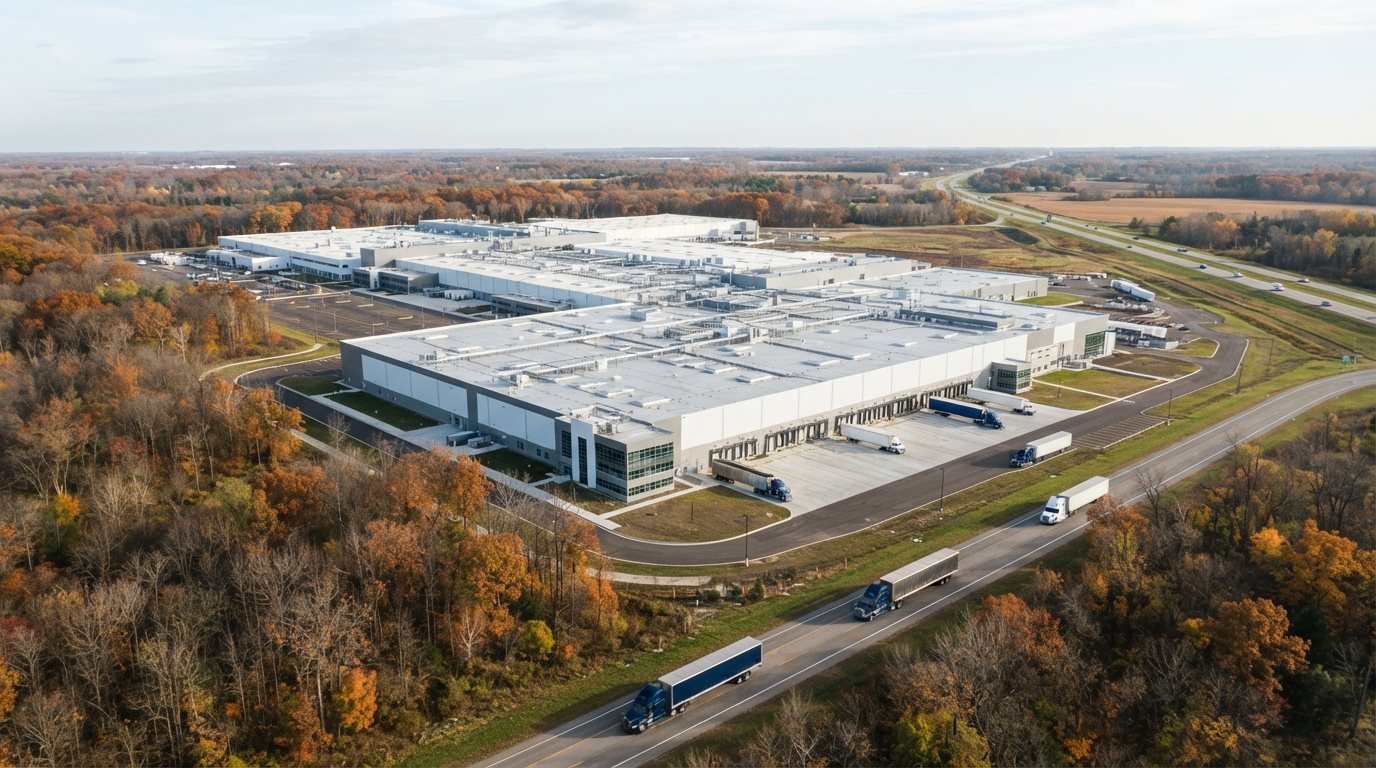
Ford Motor officially launched commercial cell production and initial shipments late Wednesday night at its $3 billion BlueOval Battery Park Michigan in Marshall, dispatching its first domestic lithium iron phosphate (LFP) cells to Kentucky ahead of Thursday's market open. For investors, the milestone proves that Ford's closely scrutinized licensing arrangement with China’s CATL is fully operational, establishing a tangible path to reduce battery pack costs and stem multi-billion-dollar electric vehicle deficits.
What happened
The 2 million-square-foot facility in Marshall shipped its inaugural batch of production-grade prismatic LFP cells to the Louisville Assembly Plant. These cells will power pre-production validation prototypes for the Fathom, Ford’s upcoming sub-$30,000 midsize electric pickup truck built on its new Universal EV (UEV) architecture.
Designed to reach an annual capacity of 20 gigawatt-hours (GWh) at an assembly line speed of 40 cells per minute, Marshall is the first U.S. facility producing automotive-grade LFP cells for mass-market vehicles. Rather than forming an equity joint venture, Ford structured the plant as a wholly owned subsidiary, paying per-cell royalties to Contemporary Amperex Technology Co., Limited (CATL) for chemistry and manufacturing know-how while contracting technical specialists for line calibration.
Ford shares (NYSE: F) closed Wednesday up 0.31% at $11.38, trading at a low P/E ratio of roughly 6.5x and supporting a 5.3% dividend yield as investors awaited Thursday's opening bell.
Why it matters
The operational launch represents a high-stakes turning point for Ford’s Model e unit, which forecasts an operating loss of roughly $4.0 billion in 2026 following a $4.8 billion deficit in 2025. Batteries constitute up to 40% of EV bill-of-materials; by shifting entry trims to cobalt- and nickel-free LFP chemistry, Ford aims to lower pack costs by roughly 20% to reach unit break-even by 2029.
The plant also serves as an industry test case for surviving U.S. Foreign Entity of Concern (FEOC) rules. By maintaining full operational control and asset ownership, Ford preserved its federal manufacturing credits under Section 45X, offering a viable blueprint for automakers seeking to bolster profit margin metrics without waiting years for domestic battery supply chains to mature independently.
What to watch next
- Louisville prototype integration (Q1 2027): Pack assembly performance and cell yield metrics ahead of the Fathom's planned late-2027 commercial rollout.
- Regulatory and FEOC scrutiny: Further congressional inquiries into CATL engineering support and intellectual property royalties.
- Model e burn rate: Whether domestic cell sourcing accelerates cost deflation in Ford's quarterly income statement and cash flow reports.
- Marshall scale-up: Reaching the targeted 40-cell-per-minute run rate across all active assembly lines.
Sources (3)
This analysis is for information only and is not investment advice. Prices and figures as of publication.