Tesla Plans Autonomous Model Y Without Steering Wheel or Pedals
Elon Musk announced a factory-built Tesla Model Y without steering wheel or pedals for 6 to 7 passengers, cutting robotaxi tooling costs to expand fleet reach.
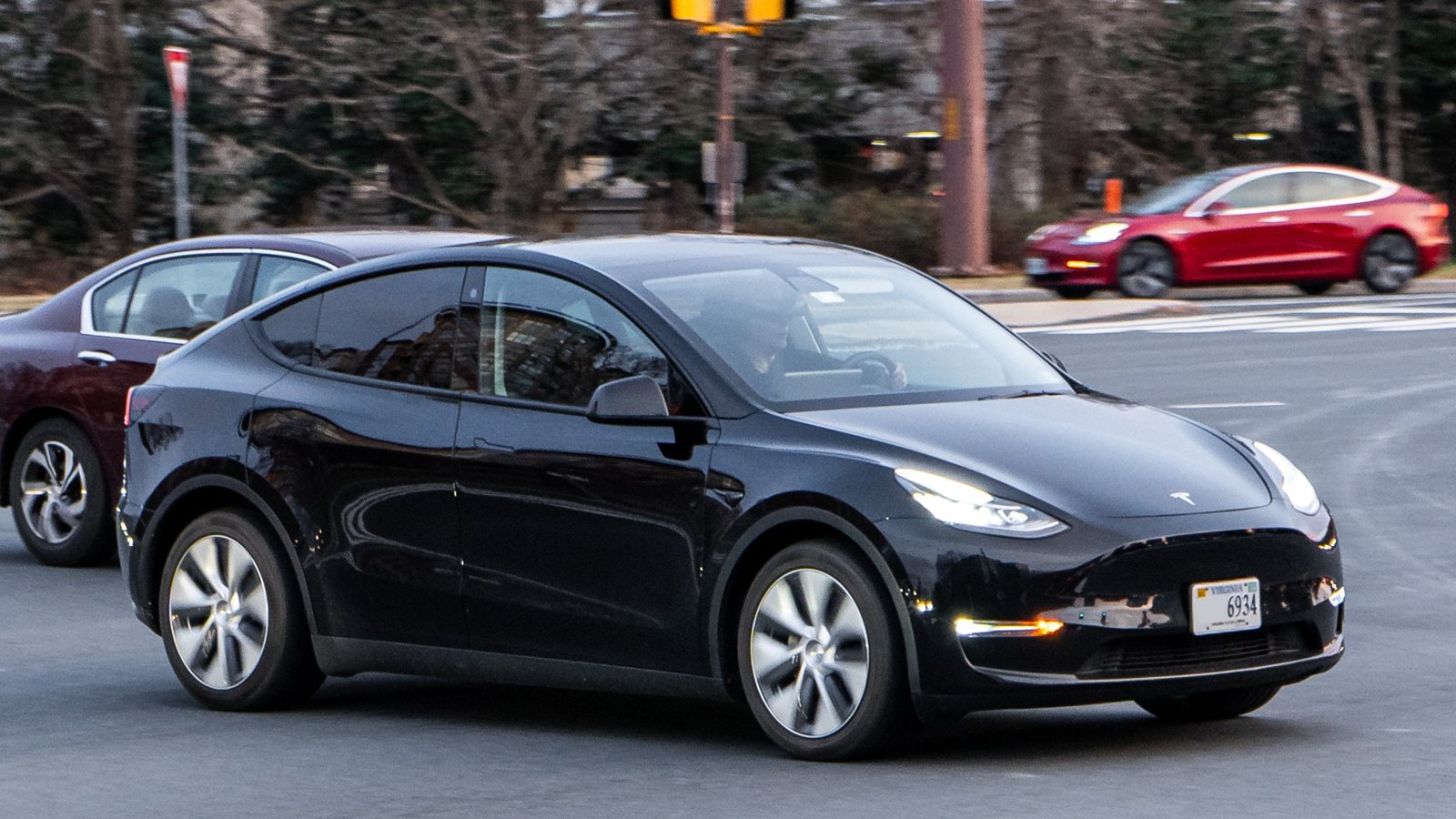
Tesla is preparing a factory-built version of its best-selling Model Y without a steering wheel or pedals to accommodate six to seven passengers, CEO Elon Musk confirmed at The New York Times DealBook Summit, as reported by Business Insider early Thursday. For investors, repurposing the world's most popular SUV architecture allows Tesla to scale group autonomous ride-hailing far faster and with substantially lower upfront capital expenditure than building a dedicated multi-passenger van from scratch.
What happened
According to reports published Thursday morning, Tesla plans to produce a specialized variant of the Model Y stripped entirely of manual driver controls straight from the factory floor. While consumer versions of the crossover will continue to feature traditional steering wheels and pedals, this autonomous fleet configuration is engineered to transport larger groups and families of six to seven riders.
Wall Street reacted calmly to the news. Tesla shares traded around $382 in Thursday morning trading, up 0.4% after closing at $380.61 on Wednesday, November 18, 2026, pegging the automaker's market valuation near $1.23 trillion.
Why it matters
The strategic pivot directly addresses a structural limitation of Tesla's autonomous roadmap. While the purpose-built, two-seater Cybercab covers the vast majority of solo commuter trips, it cannot service lucrative multi-rider segments such as airport runs, shared carpools, and family travel. Competitors like Waymo and Uber have aggressively courted larger passenger volumes using multi-row SUVs.
Financially, adapting an existing assembly line avoids the massive capex and extended factory ramp associated with introducing an entirely new chassis like the conceptual Robovan. By leveraging existing supply chains and stamping dies, Tesla can drive marginal manufacturing costs down. However, the commercial viability of controls-free vehicles remains entirely tethered to Tesla solving unsupervised Full Self-Driving (FSD) and obtaining regulatory exemptions from federal and state transportation authorities.
What to watch next
- NHTSA regulatory exemptions: Approvals required under Federal Motor Vehicle Safety Standards (FMVSS) to deploy vehicles lacking standard driver controls on public roads.
- Unsupervised FSD milestones: Critical software safety validations and intervention-free fleet test data in initial launch markets.
- Production and capex guidance: Factory retooling timelines and fleet rollout targets expected at Tesla's upcoming quarterly investor update.
Stocks in this analysis
AI stock analysisFree on aktienanalyse.ai: score profile, ratios versus the industry and business model. Plus, if you want it, the full analysis with fair value and bull, base and bear case. Prices and ratios as of Nov 18, 2026.
Sources (2)
This analysis is for information only and is not investment advice. Prices and figures as of publication.