BHP Faces Scrutiny Over Copper Growth Strategy as Red Metal Takes Center Stage
BHP shares slide as an Australian investor tour highlights the multi-billion-dollar challenge of sustaining 5% copper growth amid falling grades at Escondida.
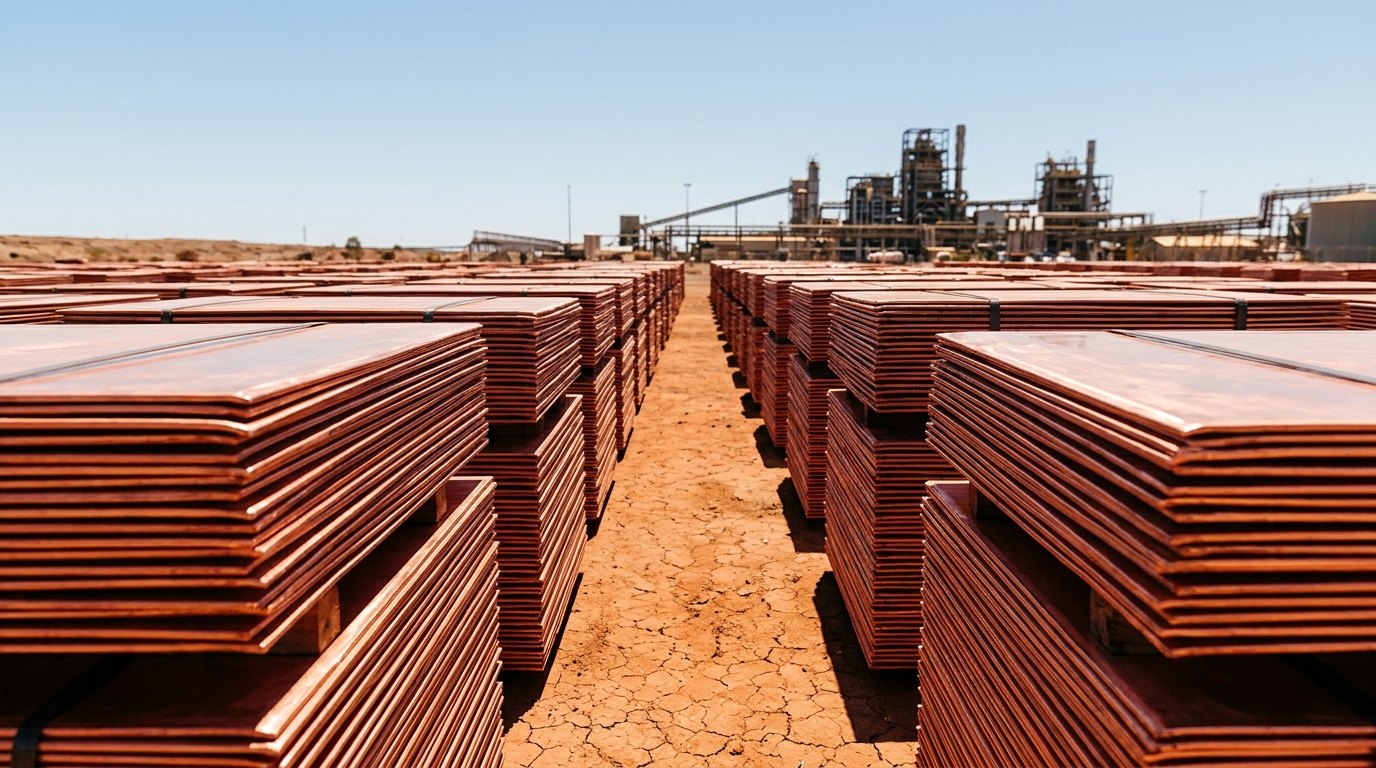
BHP Group faces intensifying scrutiny this week as it hosts institutional investors across its Australian operations, with shares tumbling 3.7% to A$52.34 in Sydney on Thursday, November 19, 2026. With the red metal now generating over 50% of group earnings, investors are demanding concrete proof that the mining giant can deliver its targeted ~5% annual copper production growth through 2035 despite relentless ore grade degradation at its flagship Chilean mines.
What happened
The Wall Street Journal highlighted BHP's growing execution challenge on Thursday morning, noting that while the miner successfully sold markets on the long-term copper demand boom, management must now demonstrate tangible volume delivery. During the multi-day tour of its Copper South Australia hub—including Olympic Dam, Carrapateena, and Prominent Hill—executives showcased a >A$2 billion capital program and a massive 10.73-billion-tonne block-cave mineral resource update aimed at scaling provincial output toward 500,000 tonnes annually by 2035.
Yet market skepticism outweighed the geological scale. BHP's Sydney-listed stock dropped A$2.00 to close at A$52.34 on Thursday, while its NYSE-listed American Depositary Receipts (BHP) traded at $70.33. The sell-off reflects both broader pressure across commodities—following a sharp copper market pullback from autumn highs—and analyst concern over FY27 production guidance dipping to 1.65–1.80 million tonnes.
Why it matters
Copper has officially eclipsed iron ore as BHP's central earnings engine, carrying divisional EBITDA margins near 70% amid surging demand from grid electrification, electric vehicles, and artificial intelligence infrastructure. However, holding the crown requires massive capital expenditure. At Escondida in Chile—the world's largest copper mine—natural ore grade decline threatens baseline output, forcing BHP to plan a $5.4 billion to $6.3 billion new concentrator to replace aging facilities.
For retail investors scrutinizing the company's balance sheet, the strategic trade-off is clear: organic growth shields BHP from overpaying for expensive mega-mergers, but it saddles shareholders with multi-year execution risk, prolonged multi-billion-dollar capex commitments, and potential margin compression if LME copper prices soften further.
What to watch next
- Olympic Dam Smelter FID (CY2027): Board approval and final capital cost estimates for the Smelter and Refinery Expansion (SRE) project in South Australia.
- Escondida Concentrator Decision (2027–2028): Final investment decision on the US$5.4B–$6.3B facility to arrest Chilean grade decline.
- FY27 Volume Trajectory: Whether near-term production dips below 1.70 million tonnes before brownfield expansions come online.
- Capital Allocation Discipline: Management's balance between sustained dividend payouts and rising copper growth capex.
Sources (3)
This analysis is for information only and is not investment advice. Prices and figures as of publication.