SpaceX Catches Starship Upper Stage, Yet Tech Selloff Hits SPCX Shares
SpaceX caught its Starship upper stage in midair, widening its lead over legacy rivals, but SPCX shares fell to $136 as a tech rout pressured valuations.
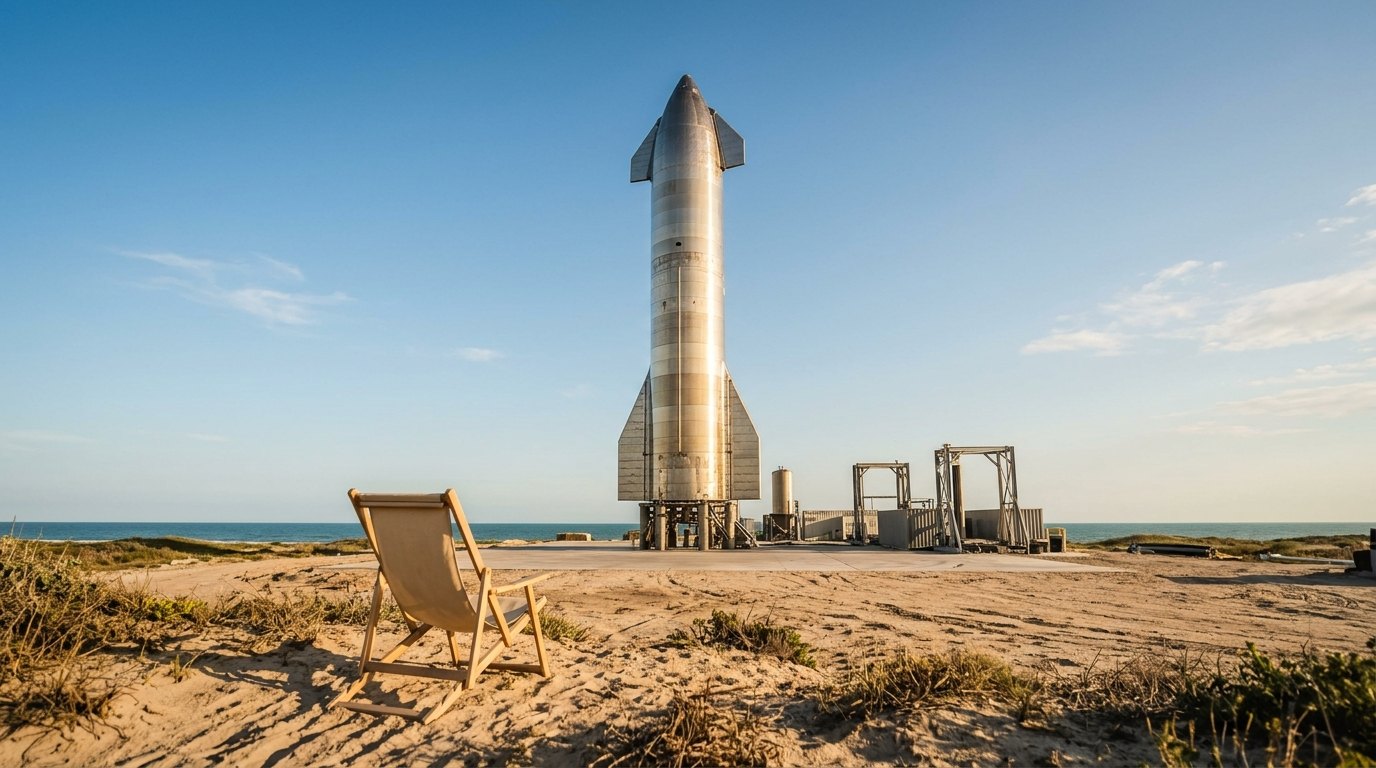
SpaceX pulled off a historic aerospace milestone over the weekend by catching its 171-foot Starship upper stage out of orbit with the launch tower's mechanical arms, yet shares of Space Exploration Technologies Corp. (NASDAQ: SPCX) slipped 1.8% to $136.60 on Monday morning. For equity investors, the divergence highlights an intensifying clash between breakthrough engineering that widens SpaceX's competitive lead and a macro-driven tech selloff compressing premium multiples.
What happened
During Starship Flight 15, SpaceX deployed 26 Starlink satellites and guided the Ship 42 upper stage back to its Starbase facility in Texas, where the "Mechazilla" tower's mechanical chopstick arms caught the spacecraft in midair. While the Super Heavy booster suffered a fuel shortfall and exploded during an ocean splashdown in the Gulf of Mexico, Wall Street treated the booster loss as manageable given previous successful catches. Raymond James analyst Brian Gesuale described the orbital stage recovery as a "major de-risking event" capable of eventually reducing orbital launch costs by up to 77%.
Market reaction, however, defied the technical triumph. Dragged down by a broader rout across the Nasdaq as 10-year Treasury yields topped 5%, SPCX shares dropped as low as $136.25 from Friday's close of $139.11.
Why it matters
The successful catch expands SpaceX's economic moat at a moment when legacy aerospace rivals are stumbling. Just days earlier, United Launch Alliance's Vulcan rocket suffered a catastrophic flight failure, destroying all 40 low-Earth-orbit satellites intended for Amazon's rival Project Kuiper constellation. While competitors grapple with baseline launch reliability, SpaceX is rapidly moving toward fully reusable orbital heavy-lift operations.
Yet public market investors are wrestling with near-term fundamentals. Achieving rapid Starship turnaround demands sustained, intensive capex alongside massive Starlink satellite deployments. With high-beta growth assets facing valuation compression across Wall Street, traders are demanding immediate cash generation over long-term technological dominance, keeping a lid on SPCX's valuation despite historic operational execution.
What to watch next
- Super Heavy telemetry analysis: FAA review and fuel-feed adjustments ahead of Starship Flight 16 to confirm root cause of the booster splashdown anomaly.
- Flight 16 turnaround cadence: Turnaround inspection for the Mechazilla tower and the next full-stack catch attempt targeted for early 2027.
- Starlink deployment pace: Acceleration of Starlink V3 deployments enabled by Starship payload volume, the primary engine for recurring cash flow.
- Macro tech sentiment: Tech sector valuation pressure, 10-year Treasury yield stability, and investor risk appetite for capital-intensive innovators.
Sources (3)
This analysis is for information only and is not investment advice. Prices and figures as of publication.