Nvidia's $950 Billion Rebound Made Policy the Trade; Dec. 3 Senate Hearing Is the Next Test
Nvidia has clawed back roughly $950 billion from AI-rout lows, with Trump's intervention in the Huang saga central to it. The Senate hearings starting this week now matter more than chip demand.
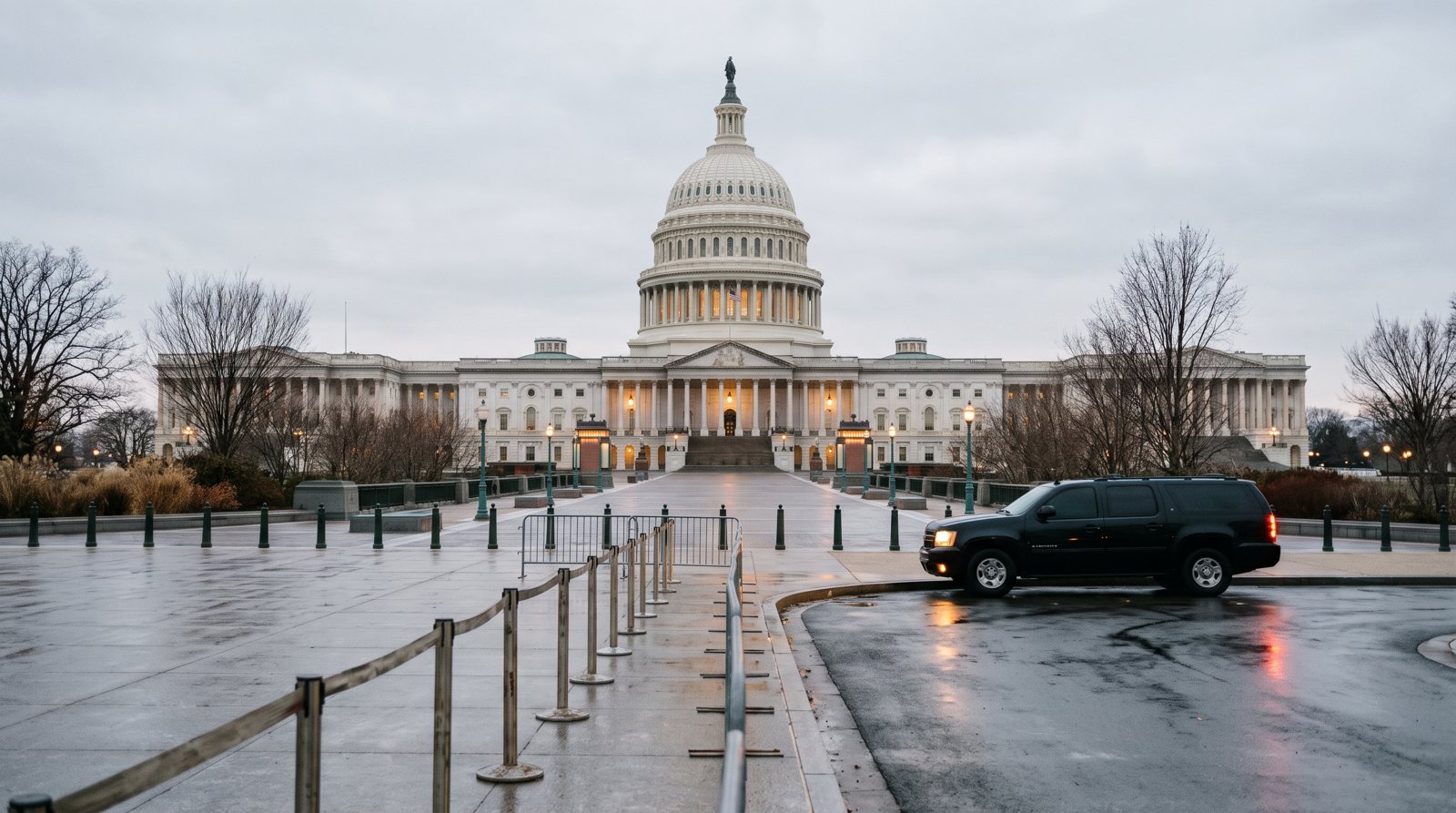
Nvidia has recovered roughly $950 billion in market value from the trough of this autumn's AI selloff, a rebound that ran parallel to — and is widely credited in part to — President Trump's personal intervention in the company's leadership and China situation. The next live catalyst is on the calendar: CEO Jensen Huang appears before the Senate this week, with a session on Dec. 3, and investors now have to price Nvidia on policy outcomes as much as on chip demand.
What happened
The sequence matters. Nvidia slid through November as AI-credit worries, export-control headlines and a governance fight hit the stock; S&P then placed Nvidia's AA rating on CreditWatch Negative, citing board independence and reliance on Huang. Trump pushed the board to reinstate Huang as CEO, and the company's shares jumped sharply on the news — part of the roughly $950 billion swing off the lows that rippled through the whole tech complex.
Friday's session showed the new dynamic in miniature. Tech rallied and the Nasdaq-100 extended gains toward 2%, with the S&P 500 and Dow also higher — but Nvidia itself slipped in the half-day Black Friday session as S&P's key-man warning stayed in the tape. As the Wall Street Journal put it, tech stocks jumped as investors took a break from AI jitters; the bounce was broad, but the leader underperformed.
The political layer is now explicit. Fortune reported that Nvidia gave $25 million to the ballroom project associated with the White House, part of a donor list that also includes other large tech contributions. That is the backdrop senators will be questioning.
Why it matters
For most of this AI cycle, the analytical question was demand: hyperscaler capex, lead times, backlog visibility. That framing is now inadequate. Nvidia's China access, any export-controls relief and — more broadly — the earnings multiple the market is willing to pay for the AI complex increasingly hinge on Washington's decisions.
That cuts both ways. Policy support helped reignite the rally, and investors clearly liked the signal that the White House would protect the AI trade. But the same mechanism that lifts the stock on a friendly intervention can dent it on an unfriendly headline — and the rating agency has already flagged governance as a real, not theoretical, risk.
There is a second-order concern too. When the largest company in the world trades partly on political outcomes, correlation across AI names rises. Names like AMD, memory suppliers and server makers have all moved on Nvidia-specific political news this month, which undercuts the diversification many portfolios assume they own. Investors thinking about position sizing might start here: Diversification and Risk Management are worth revisiting when single-name policy risk is this concentrated.
It is also worth remembering what a market moving on headlines, rather than fundamentals, looks like: sentiment dominates. On that, Market Sentiment is the useful frame — and why swings around hearing dates tend to be larger than the underlying business news justifies.
What to watch next
- Dec. 3: Jensen Huang's Senate appearance. Expect questions on China chip sales, export oversight, the ballroom donation and the board's independence. This is the week's main volatility catalyst for mega-cap AI.
- S&P's CreditWatch review: A one-notch downgrade of Nvidia's AA rating would be symbolically significant and could pressure spreads across AI-related credit.
- Jobs data and the Fed: A December meeting is currently priced for a hike, with core PCE at 3.3%. Hawkish outcomes compress the multiple on long-duration AI growth names.
- Salesforce earnings: Enterprise software read-through on AI monetisation — a check on whether the spending story is still intact beyond chips.
- Export-control follow-through: Fresh rules or new China shipment restrictions have repeatedly moved the stock intraday; treat any announcement as a live event.
The honest read: Nvidia's rebound is real, but it is now a leveraged bet on a political relationship. Holdings that were bought for AI growth are, for the moment, also holdings in Washington's willingness to keep the trade friendly.
Stocks in this analysis
AI stock analysisGet the full AI analysis with fair value and bull, base and bear case right here on BMInsider, ready in minutes, from €1.99. Prices and ratios as of Nov 28, 2026.
Sources (3)
This analysis is for information only and is not investment advice. Prices and figures as of publication.