Celldex Scraps Eczema Drug After Phase 2 Miss, Turning Focus to 2027 Hives Filing
Celldex terminates barzolvolimab in atopic dermatitis as Phase 2 trial misses itch endpoints. Shares hold near $28 with focus shifting to hives and a 2027 BLA.
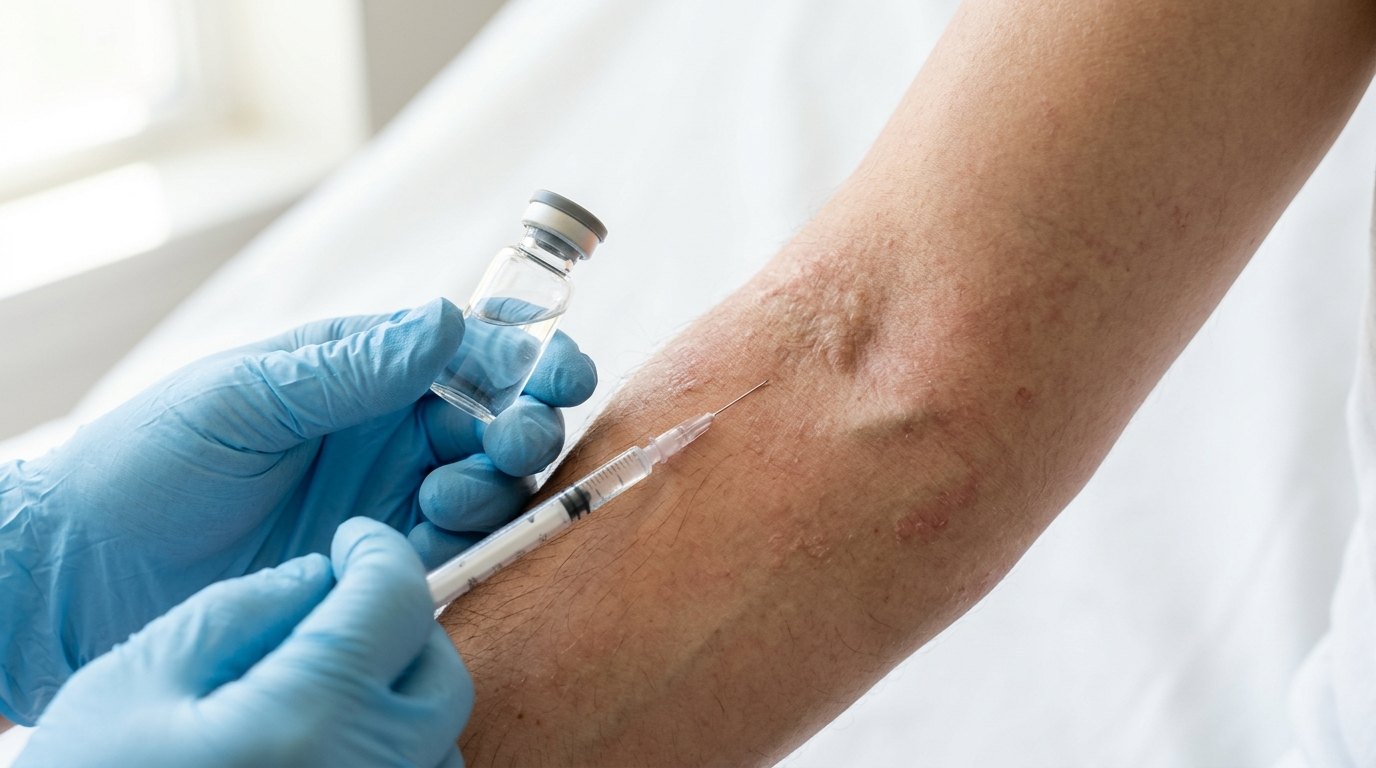
Celldex Therapeutics scrapped the development of its lead antibody barzolvolimab in atopic dermatitis late Thursday after a 131-patient Phase 2 trial failed to separate from placebo on primary itch endpoints. The pipeline cut strips away a multi-billion-dollar market expansion, refocusing the company's $2.2 billion valuation almost entirely on its chronic urticaria franchise ahead of a planned 2027 regulatory filing.
What happened
Top-line results from the 16-week, double-blind Phase 2 trial showed that barzolvolimab did not achieve statistical significance against placebo on itch reduction. Patients receiving the 300 mg dose experienced a 29.2% reduction on the Peak Pruritus Numerical Rating Scale (PP-NRS), while the 150 mg arm saw just 16.2%—lagging or barely topping the 19.5% reduction observed in the placebo arm. Key secondary endpoints, including the Eczema Area and Severity Index (EASI) and investigator skin-clearance scores, likewise failed to demonstrate meaningful clinical differentiation. Extended dosing through Week 32 confirmed no cumulative separation.
Biologically, the drug demonstrated systemic mast cell depletion verified by significant reductions in serum tryptase, confirming KIT receptor target engagement. However, the lack of clinical benefit suggested that mast cells are not a primary driver of atopic dermatitis pathology. Celldex (NASDAQ: CLDX) shares slipped roughly 2% in pre-market trading to $27.96 on November 20, 2026, a relatively muted reaction reflecting prior investor skepticism around eczema alongside confidence in late-stage hive studies.
Why it matters
Atopic dermatitis represented Celldex's largest addressable market opportunity, a commercial battleground dominated by blockbuster biologics where differentiation is paramount. Scrapping the program eliminates a key pillar of pipeline diversification, concentrating commercial risk into chronic spontaneous urticaria (CSU) and inducible hives.
From a financial standpoint, the company faces this setback from solid footing. As of September 30, 2026, Celldex held $650.3 million in cash, cash equivalents, and marketable securities, providing an operating runway through 2028. A careful look at reading the balance sheet highlights that while third-quarter R&D spending climbed to $67.4 million, zero debt gives management the flexibility to advance pivotal trials without requiring immediate, dilutive capital raises.
What to watch next
- Phase 3 CSU filings: Preparation for a planned Biologics License Application (BLA) submission in chronic spontaneous urticaria in 2027.
- Inducible urticaria progress: Enrollment updates from the Phase 3 EMBARQ trials evaluating cold urticaria and symptomatic dermographism.
- Cash burn dynamics: Management of operating burn after reporting a $75.6 million net loss in Q3 2026 as Phase 3 execution peaks.
Sources (2)
This analysis is for information only and is not investment advice. Prices and figures as of publication.